UCLA Affect Labeling Study: What Naming Feelings Does
What UCLA's affect labeling studies found, what they didn't measure, and how to try naming a feeling without expecting instant calm.
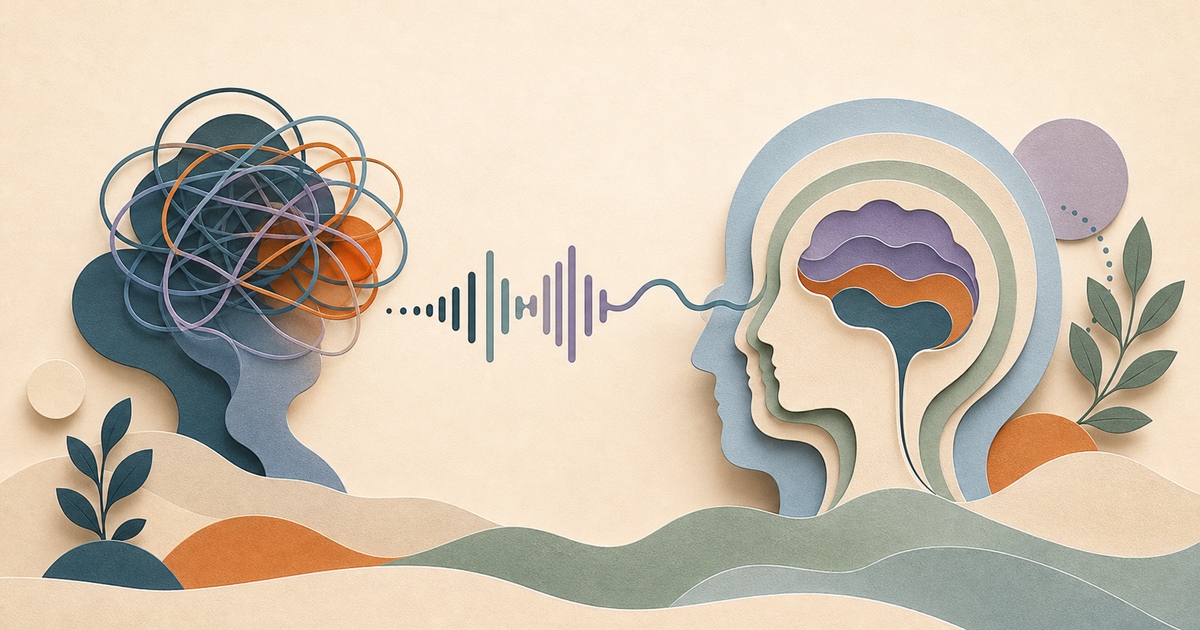
Affect labeling means putting an emotion into words. UCLA research found changes in brain activity during an emotion-labeling task. That finding helps explain why naming feelings interests researchers, but it doesn’t tell you how quickly your own anxiety will ease.
For everyday use, the starting point is simple: “I feel disappointed about that conversation.” You don’t have to explain the whole relationship or make yourself feel better before the sentence is worth saying.
What did the UCLA affect labeling study actually test?
In Lieberman and colleagues’ 2007 experiment, participants viewed emotional faces during an fMRI scan. They chose emotion labels or completed comparison tasks, responding with a button box.
Compared with matching emotional faces, labeling them produced a lower amygdala response and greater activity in the right ventrolateral prefrontal cortex. It did not test whether speaking labels beats writing them, or establish a treatment for an anxiety disorder.
Can your body respond differently before you feel calmer?
A 2012 study by Kircanski, Lieberman, and Craske gives a useful example. People fearful of spiders went through exposure sessions with affect labeling, reappraisal, distraction, or exposure alone.
At the one-week follow-up, the labeling group showed lower skin conductance responses than the other groups. Skin conductance measures changes in the skin’s electrical conductance associated with sweating. Yet the groups did not differ in self-reported fear.
That distinction is easy to lose in a headline. A physiological change did not mean participants reported feeling less afraid than everyone else. This was also a specific exposure experiment, not a test of an everyday journaling app.
- Labels selected for emotional faces
- Lower amygdala response than affect matching
- No spoken-versus-written journal comparison
- Feelings described during spider exposure
- Lower skin conductance at the one-week follow-up
- No between-group difference in reported fear
A practical way to name a feeling
The following is a reflection exercise, not the protocol from either study. Try it with an ordinary frustration rather than your most distressing memory.
- Describe what happened without guessing a motive. “My manager changed the deadline after I’d planned the week.”
- Choose a feeling word that fits well enough. “I feel frustrated and worried.” If you’re unsure, “I think I’m disappointed” is fine.
- Separate the feeling from the conclusion. “I feel overlooked” describes your experience; “nobody respects me” makes a broader claim you may want to check.
- Decide whether anything needs doing. “I’ll ask which other task should move.” Sometimes there is no immediate action, and you can leave the entry there.
You can say those sentences, type them, or think them quietly. If speaking helps you find the words, a short voice-journaling session is one option. You don’t need an app to try the exercise.
What if you only know that you feel bad?
Start there. You might mean tired, embarrassed, lonely, angry, or several things at once. Compare two candidate words against the situation: “Am I disappointed because I wanted the invitation, or relieved because I didn’t want to go?”
You can also note a physical sensation if that’s easier to describe. “My shoulders are tense, and I don’t know the emotion yet” is a usable observation. There is no need to invent certainty or find a perfect label. Our guide to emotional granularity explores ways to expand your vocabulary.
How do you keep labeling from becoming another thought loop?
Watch what happens after the label. “I’m anxious about tomorrow’s meeting” can lead to preparing one question. Repeating the sentence while imagining every possible failure may leave you stuck in rumination rather than reflection.
For a journal entry, try stopping once you have described the feeling and identified any next step. You can come back later. Rechecking your anxiety every few seconds to see whether the exercise has worked adds a task the research doesn’t require.
If naming feelings becomes upsetting or repetitive, stop. Persistent anxiety that disrupts sleep, work, or relationships deserves support from a qualified professional. A reflection exercise is not a replacement for care.
Using a voice journal without turning a label into a verdict
You might record: “I called it anger this morning. Now I think I was embarrassed that I needed help.” Keeping both entries gives you a record of how your interpretation changed. You can use our guide to processing emotions out loud when you want a longer reflection.
Lound can transcribe that recording and help you revisit it. Its AI-generated mood labels are interpretations of your words, not measurements of your brain or a diagnosis. Check them against your own experience. The useful record is what you said and how you understand it now, even when no immediate calm follows.
Questions people ask
What is affect labeling?
Affect labeling means putting an emotion into words, such as 'I feel disappointed.' You can start with an approximate word and change it as you understand the feeling better.
Did UCLA find that naming emotions reduces anxiety by 50%?
The 2007 study measured brain responses, not a general percentage reduction in everyday anxiety. A change in amygdala activity is not a percentage change in how anxious someone feels.
Do I have to name emotions out loud?
No. The 2007 UCLA experiment used button responses, not spoken journals. Choose a format you can use comfortably.
How quickly should affect labeling work?
These studies do not establish a 60-90-second calming deadline. You can describe your experience without requiring the feeling to disappear. Stop the exercise if it becomes upsetting or repetitive.