01Capture
Start with your own words
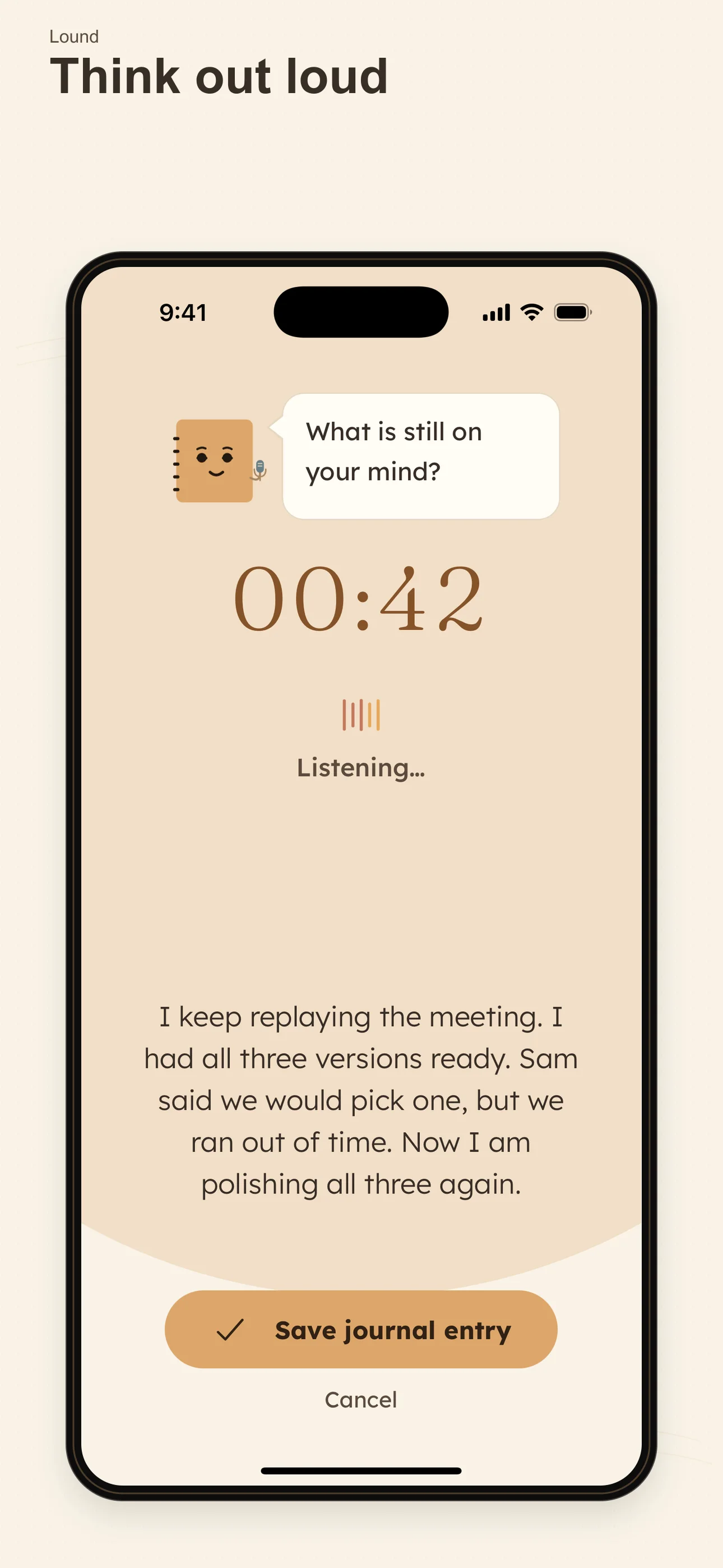
Record what is on your mind, or type it instead. Lound turns a spoken thought into a journal entry you can read and keep.
Tap the image to see the screen at full size.
AI voice journal for people who think out loud.
Talk through a thought. Lound helps you make sense of it and return to it when you’re ready.
Free plan, no subscription required: up to 10 entries and 30 recording minutes a day.
What is Lound?
Record what is on your mind. Lound transcribes it, then helps you find patterns across entries, decisions, moods, people, and recurring themes.
Your original words stay alongside the reflection. You can return to an entry, add to it, or export and delete your journal.
Inside the app
These screens follow one example journal entry, from speaking about a meeting to seeing a pattern and returning to the thought later.
01Capture
Record what is on your mind, or type it instead. Lound turns a spoken thought into a journal entry you can read and keep.
Tap the image to see the screen at full size.
02Make sense of it
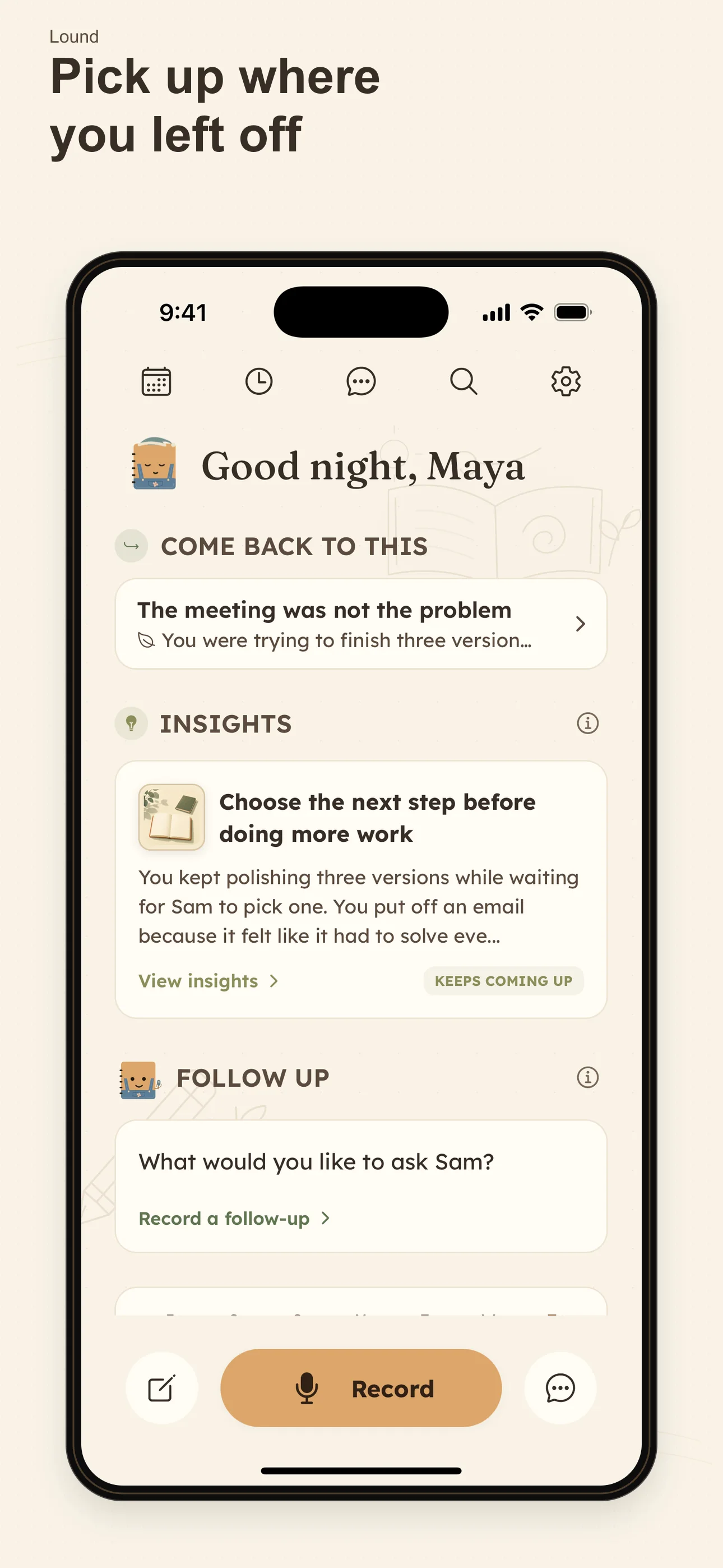
Your entry keeps your original words alongside a title, a short recap, and a reflection. In this example, the useful next step is to ask Sam which version to finish.
Tap the image to see the screen at full size.
03Connect the dots
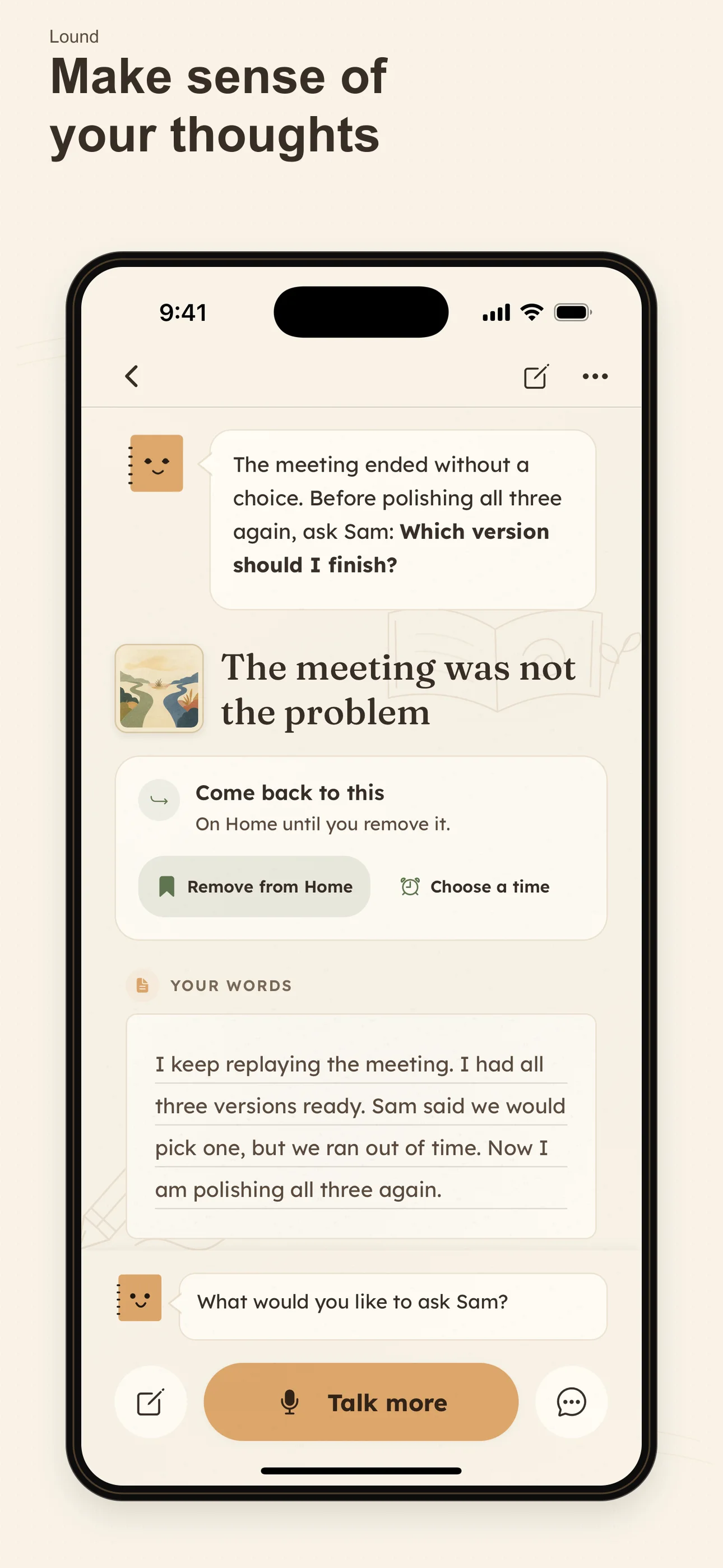
As your journal grows, Insights can connect related entries. Here, two work entries point to the same problem: a missing decision, not a lack of effort.
Tap the image to see the screen at full size.
04Return
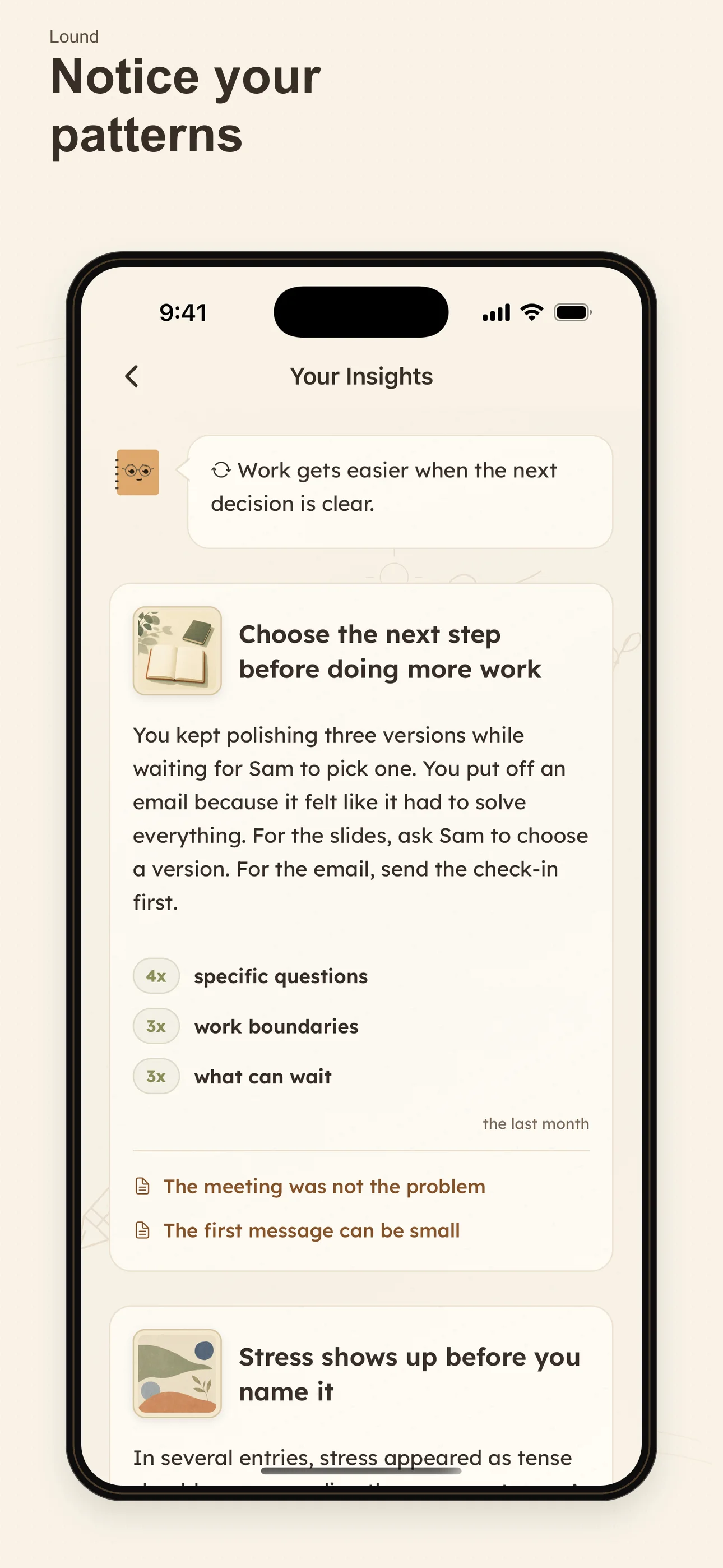
Home brings a thought back when it is useful. You can return to the entry, record a follow-up, write more, or start a chat about it.
Tap the image to see the screen at full size.
Screens show example journal content, not a person’s private entries.
Keep exploring
Find a moment, look across days, or protect the place where you keep it all.
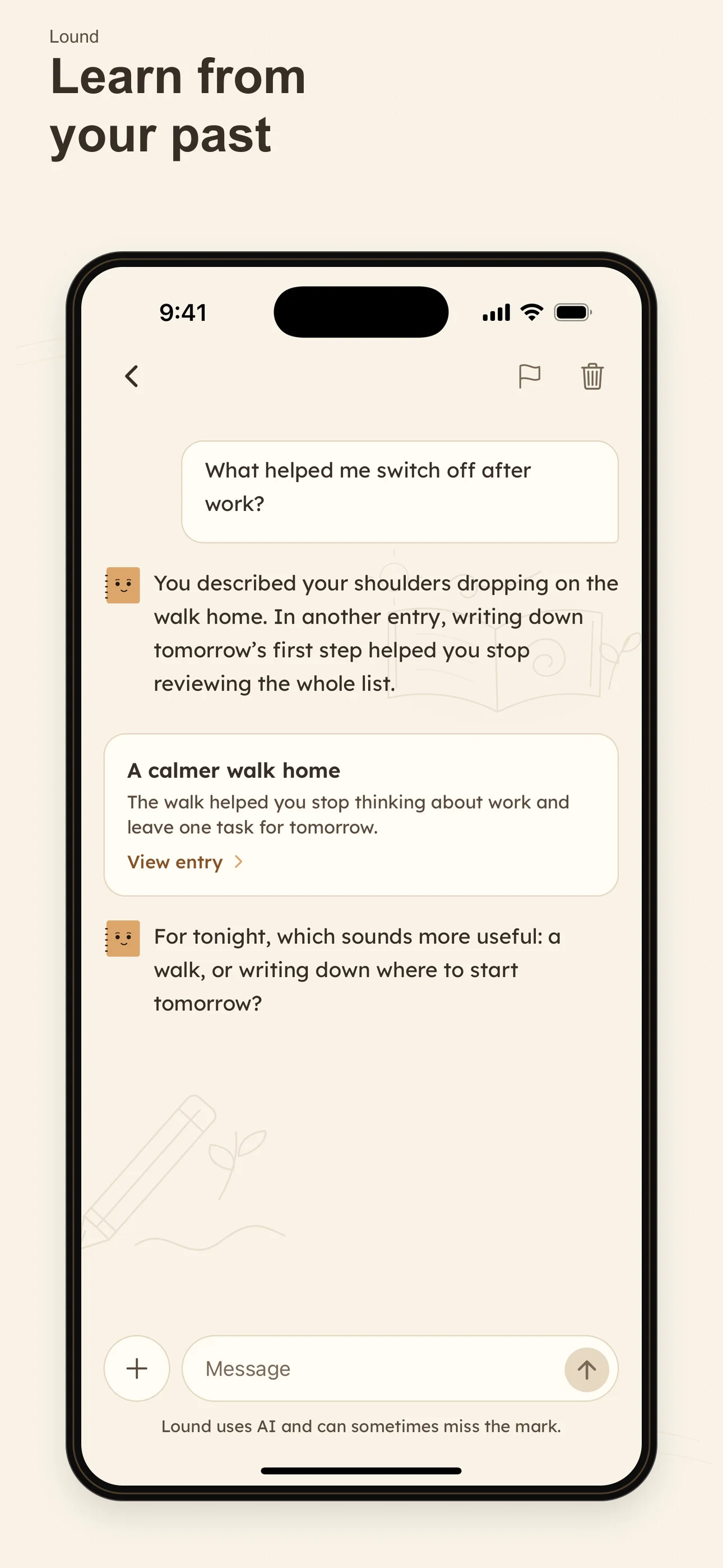
Chat can draw on saved entries. In this example, Lound points back to a walk and a written plan when asked what helped after work.
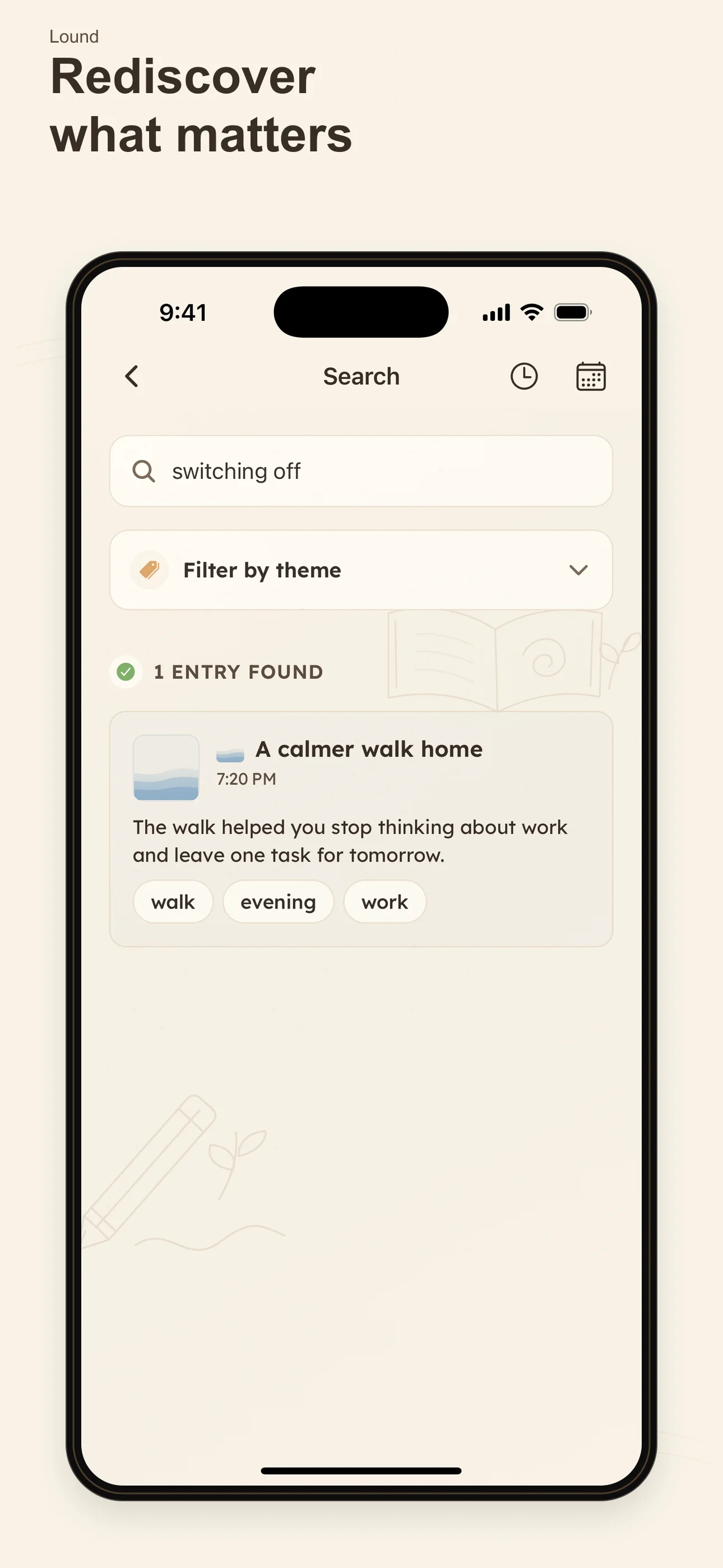
Search for “switching off” and find a thought about a walk home, even when the entry uses different words. Meaning-based search is part of Premium; keyword search is free.
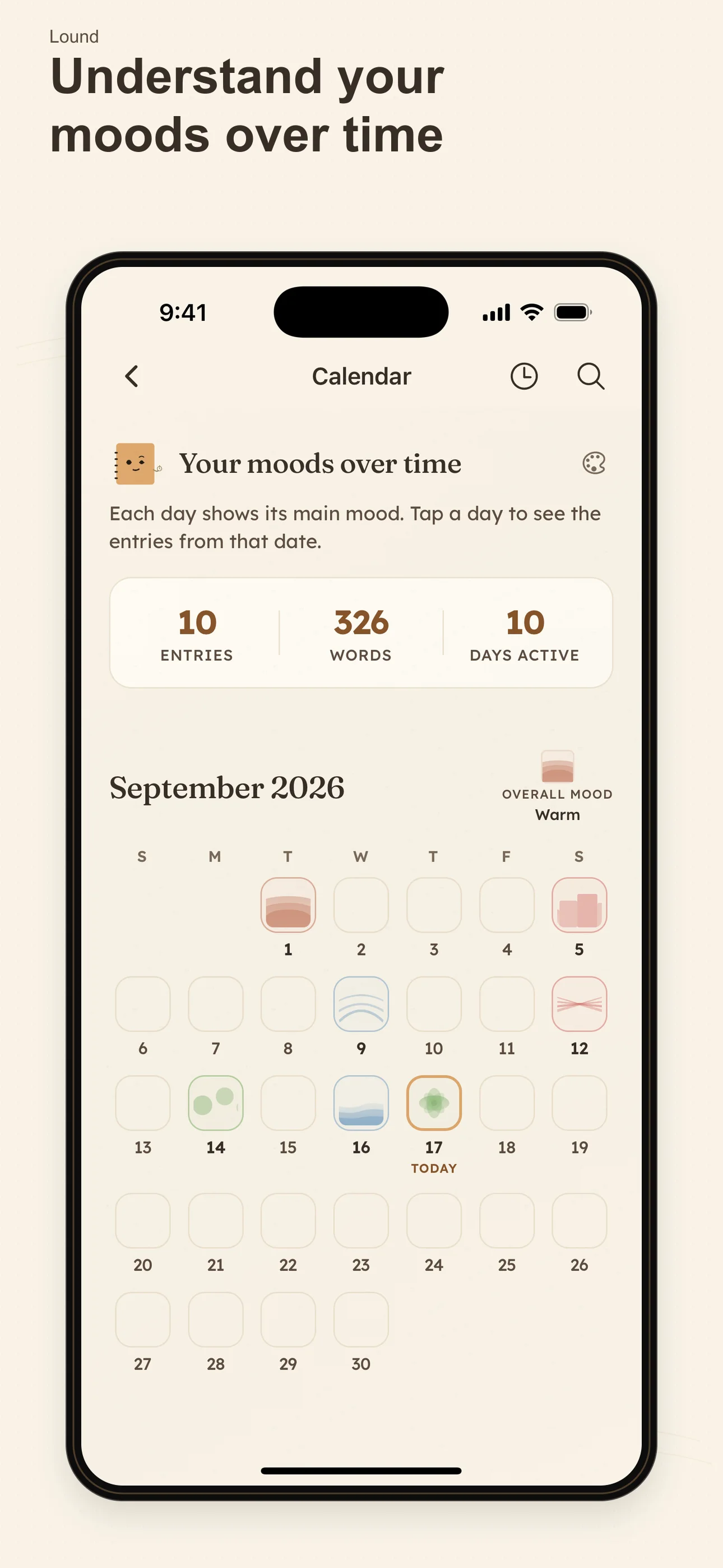
The calendar shows your entries and their inferred moods over time. Tap a day to revisit what you wrote or recorded.
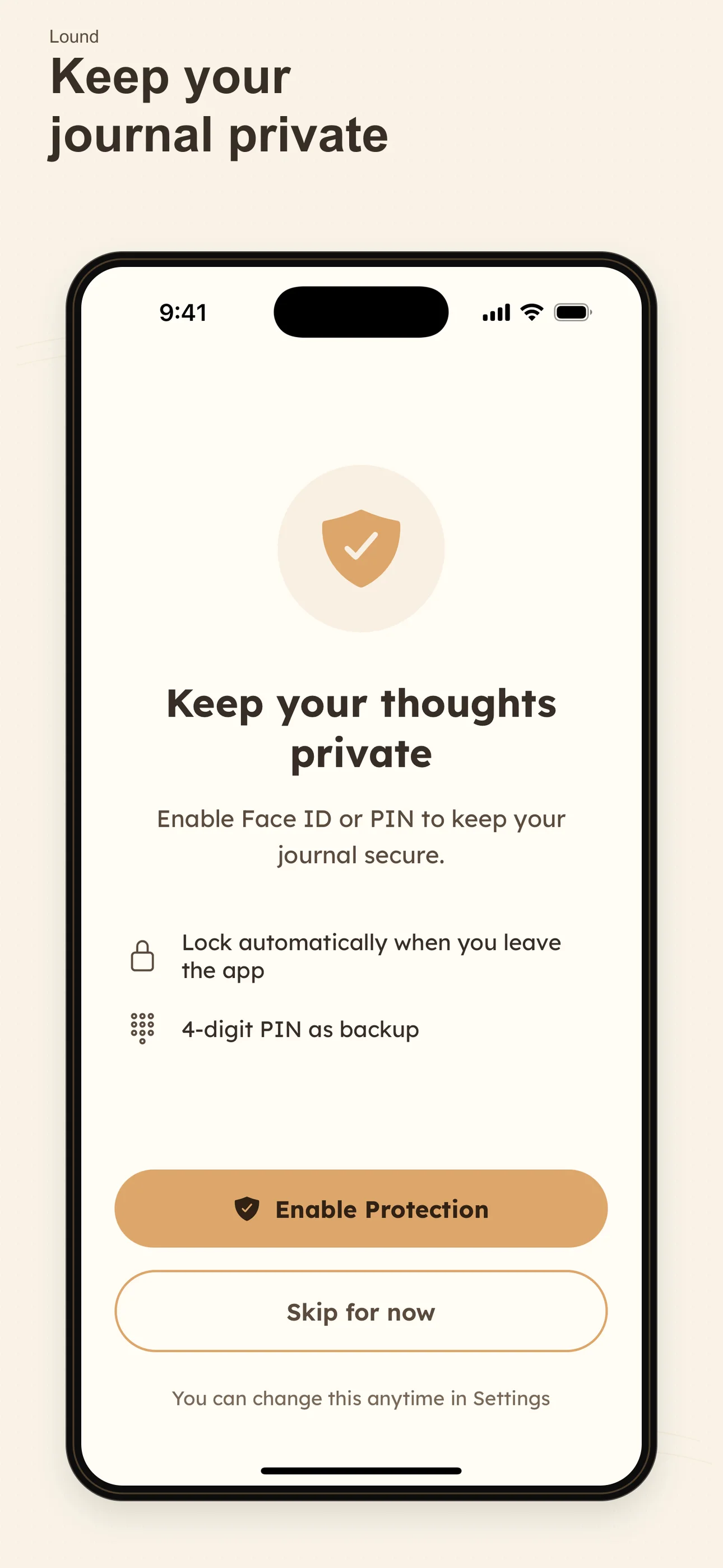
Choose Face ID or a PIN to lock the app. Your entries remain yours to export or delete.
A little more you
Pick one of 14 looks for the notebook character that follows you through the app. The outfit stays the same while Lound’s expression and little accessories fit what you are doing.
You can choose a look during onboarding or change it later in Settings. Your choice is saved on your device.
Try Lound on iOS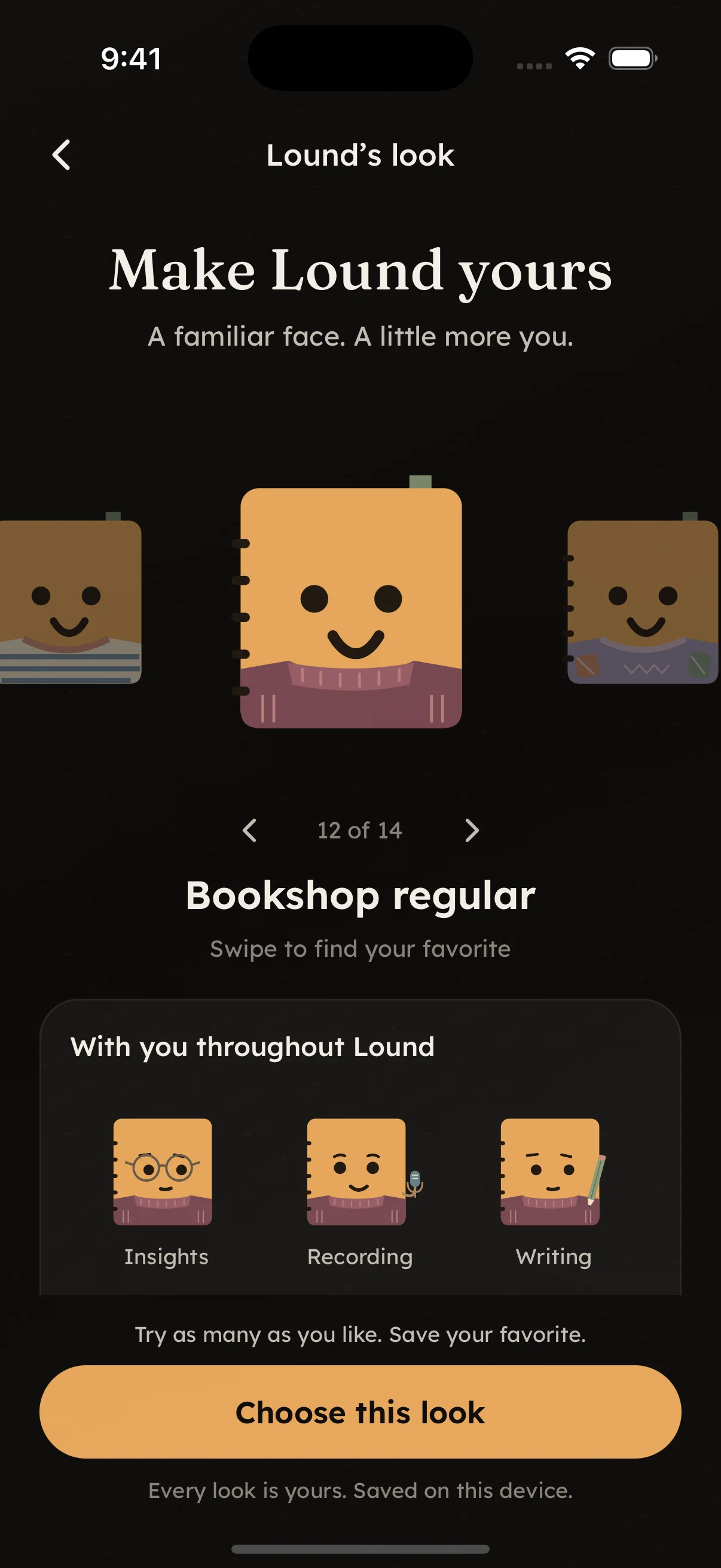
When you speak out loud, you think differently than when thoughts stay in your head. Lound captures this natural process and surfaces meaningful insights.
Time Magazine (2023)
"When you speak out loud, your thoughts slow down. That act of vocalizing helps you process them more clearly than keeping them in your head."
Key insight: External self-talk can support clarity, focus, and problem-solving. Speaking aloud puts scattered thoughts into a sequence you can hear and evaluate.
UCLA Study (2007)
In measured fMRI conditions, affect labeling was associated with lower amygdala activity compared with simply observing emotional stimuli.
What researchers studied: UCLA psychologist Matthew Lieberman and colleagues used fMRI scans to measure what happened when people put feelings into words.
Lound applies the practical side of that idea: say the thought, name what is happening, and give yourself clearer material to work with.
Frontiers in Psychology (2019)
"Verbal self-guidance helps sequence complex tasks and maintains focus during challenging activities."
Proven in practice: Basketball players perform better when they talk through their moves. People find lost objects faster when they say the name out loud. Speaking your thoughts provides real benefits you can't get from silent thinking alone.
Built on cognitive science principles, Lound helps you process thoughts by surfacing patterns and connections you'd miss on your own.
Lound remembers your conversations and connects dots you'd miss alone. See patterns in how you think, what tends to affect you, and what tends to work for you.
See how people like you use Lound to stop overthinking, find patterns, and think clearer.
96% of her decisions turned out fine. The overthinking wasn't protecting her.
His "random" thoughts weren't random. They clustered around three themes.
His anxiety tracked perfectly with how many boundaries he'd broken that week.
Use the free plan without starting a Premium trial. Upgrade later only if you want more room and Premium features.
Talk through what's on your mind. See patterns you couldn't spot yourself. Start capturing what matters most.
Lound is for self-reflection and decision support. It does not diagnose, treat, or replace professional care.