
Guide • 18 min read
The Ultimate Guide to Voice Journaling in 2026
Everything you need to know about voice journaling: the science, the methods, the tools, and the techniques that actually work. Your complete roadmap from beginner to expert.
Research-backed articles about thinking, productivity, and mental clarity.
Core guides for voice journaling, self-talk, and processing emotions out loud.
Everything you need to know about voice journaling: the science, the methods, the tools, and the techniques that actually work. Your complete roadmap from beginner to expert.

Voice journaling means speaking your thoughts instead of writing them. It's 3x faster and captures emotional nuance text can't.
New to voice journaling? Start with these simple prompts. No structure needed—just press record and talk. Complete beginner's guide with examples included.
50,000+ thoughts per day, most self-directed. Your inner voice shapes everything. Here's how to make it work for you.
What UCLA's affect labeling studies found, what they didn't measure, and how to try naming a feeling without expecting instant calm.
When you're mentally overwhelmed, writing helps. But speaking works 3x faster. Here's why voice brain dumps clear your head more effectively than writing.
Speaking your thoughts isn't weird, it's a cognitive advantage. Neuroscience shows verbalization improves problem-solving, memory, and creativity. Here's how it works.

Process an emotion out loud in five steps: notice it, name it precisely, say it in full sentences, find the need underneath, and pick one next step.
Article clusters built around the questions people actually ask before choosing a voice journal.
Guides for starting, sustaining, and improving a voice-first reflection practice.
View all 53 articles →Research and practical methods for using inner and outer speech more constructively.
View all 42 articles →Voice-based tools for rumination, spirals, Sunday scaries, and emotional regulation.
Voice-first workflows for racing thoughts, task initiation, memory, and follow-through.
Less shame-heavy approaches to consistency, resets, and sustainable behavior change.
View all 12 articles →Decision fatigue, deep work, mental load, and practical clarity for busy minds.
View all 94 articles →How digital, AI, and voice journals compare with paper and text-first tools.
View all 30 articles →Processing conflict, communication, boundaries, loneliness, and hard conversations.
View all 32 articles →Evidence-backed explainers on cognition, affect labeling, memory, and verbal processing.
View all 114 articles →
Unsolicited advice can make a sensible idea feel harder to accept. Separate a bad suggestion from bad timing, and keep the decision yours.

Speakers can overestimate how clearly they communicate. Before adding more words, check which facts your listener would need to understand the first ones.

Gratitude-letter writers expected more awkwardness than recipients reported. A specific thank-you can say enough without becoming a perfect speech.

The doorway effect is less universal than the familiar story suggests. Context changes and competing information matter, and returning isn't a sure fix.

Taking turns can disrupt idea generation in a group. Capture your starting idea before the discussion, then use the meeting to develop and compare it.

Believing leisure is wasteful can make it harder to enjoy. Notice when a free evening turns into a demand to justify what you did with it.

People can underestimate how much a simple check-in is appreciated. Reconnect with a specific, low-pressure message that leaves room for a reply.

Counting pages or minutes can increase output while reducing enjoyment. Check whether your tracker is serving the reason you started the hobby.
An empty calendar can hide work that hasn't been scheduled yet. Before saying yes, check what will actually free up the time you're promising.

A photo can preserve a scene while leaving out its sounds and context. Studies show that how you take pictures matters for what you remember later.

The liking gap is the difference between your guess and another person's reported impression. An awkward moment can't tell you their whole verdict.

Before adding another rule, app, or meeting, look for something you can remove. Research suggests that useful subtractive options are easy to miss.

An old entry can sound painfully certain. Learn how to reread it with the facts you had then, check what happened, and add a useful update.

Ordinary details can become unexpectedly interesting later. Capture one small scene instead of forcing a lesson, a gratitude list, or a dramatic event.

A surprise can show effort and still miss the recipient. Gift research offers a useful reason to listen to an explicit request instead of improving it.

The end-of-history illusion makes past change easier to recognize than future change. Record what a preference depends on before calling it permanent.

You don't need a list of clever conversation starters. Follow a detail the person already offered, without turning the conversation into an interview.

An apology can drift into a request for comfort. Name what you did, own the consequence, and offer a repair the other person can accept or decline.

A pause can change how a conversation feels without telling you what anyone thinks. Separate the silence you noticed from the verdict you inferred.

You count the inconvenience of saying yes. The other person also faces the discomfort of saying no. Make your request specific and genuinely optional.

Keeping a choice reversible can keep the comparison alive. Try a review date and a reason to reconsider, while preserving useful ways to change course.

Remembering a story and remembering its listener are separate jobs. Destination-memory research explains why a familiar story can lose its audience.

How you respond to good news can matter for closeness. Ask about the part that made them happy before changing the subject or offering warnings.

A progress check can threaten more than your mood: it may demand an unwanted change. Make the check useful enough to act on, and small enough to do.

Ambivalence can preserve information that a quick yes or no would erase. Separate competing values, missing facts, and the cost you can accept.

Compliment givers overestimated awkwardness and underestimated recipients' enjoyment. A specific, sincere observation is a useful place to start.

Research on 27,432 review comments found that asking for advice produced more concrete input. Here's a question you can use before your next attempt.

A study of 932 conversations found mismatched stopping points. A warm, clear ending can spare both people the guesswork.

Goal sharing can reduce effort in one setting and increase support in another. Audience, goal type, and the response explain the difference.

A 2025 study found that recalled information felt more important. For weekly reviews, scan the record before ranking what mattered.
Memory for information and memory for its source can split apart. Record the speaker, date, and status of a claim before familiarity fills in the gap.

Saving an entry and retrieving it for an AI answer are separate steps. Dates, names, source links, and manual search make important misses easier to catch.
A famous study favored questions over declarations, but later tests found no reliable advantage. The useful part may be answering the question honestly.
People gesture on phone calls and voice notes because gestures can serve the speaker, not only the listener. But the benefit depends on the task.

In experiments, giving advice helped the advisor's motivation and school performance. Try the role switch when you know what to do but haven't started.

A filler can change which object a listener expects you to mention. What speech research says about 'um,' word-finding, and private voice notes.

An exact journal quote can support the wrong conclusion when context, timing, or later corrections disappear. Check more than whether the words match.

A familiar cue can bring back an intention after you finish it. Marking the outcome and retiring the old reminder can make the task's status clearer.

A note can name the topic yet lose the reason you saved it. Add the distinguishing detail and unfinished question that will make sense next week.

An upcoming appointment can make available time feel too short to use. Research on bounded time suggests a smaller task with a clear stopping point.

Bad time estimates often leave out setup, decisions, and finishing. A short record of the last attempt can reveal what your next estimate is missing.

A busy mind can reflect worry, planning, creative thought, stress, or unfinished tasks. The pattern and impact matter more than mental volume.
If you record only when life hurts, your archive samples distress rather than your whole life. Ordinary snapshots produce a more representative pattern.

AI can detect repetition without knowing whether it is meaningful, causal, or representative. Use four tests before trusting a journal pattern.

A pattern can become self-sealing when you record confirming examples and miss exceptions. An exception log keeps your journal honest.

A journal question can steer attention, memory, and behavior before you answer it. Learn how to spot loaded prompts and ask cleaner ones.

We tune stories to fit listeners, and that tuning can alter later recall. A private first telling gives your memory an audience-free baseline.
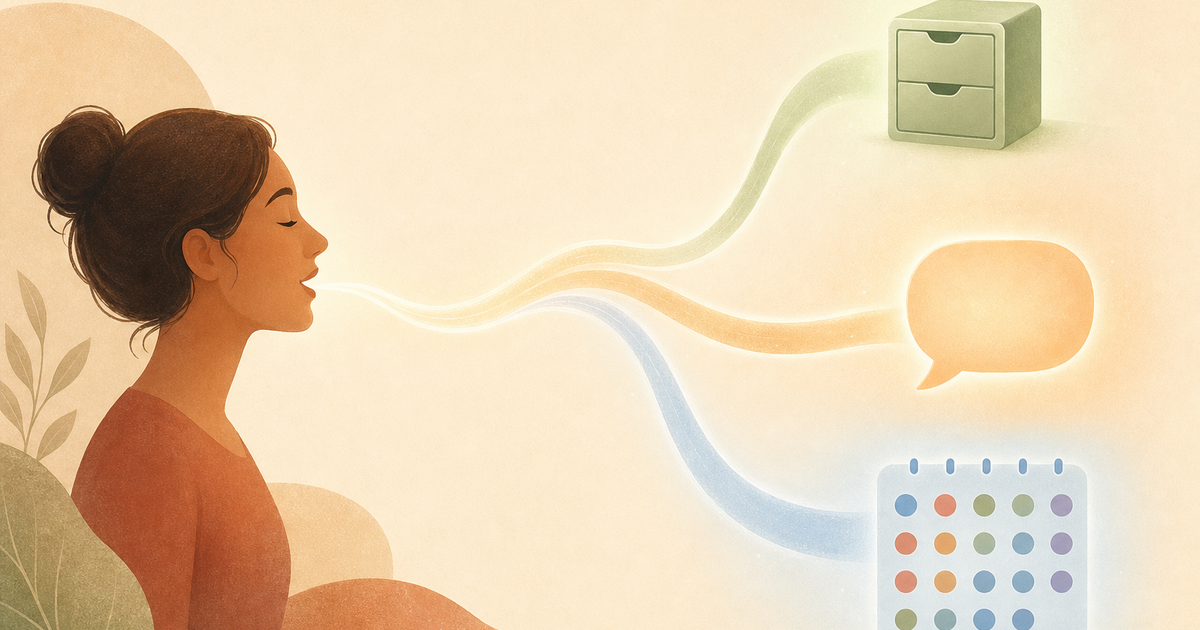
Voice memos capture, ChatGPT and Rosebud talk back, Lound listens and finds patterns. Which app fits how you think out loud, and what each does after.

Day One is the best life archive, but not everyone wants a subscription or photo log. Here are 7 alternatives, from free and built-in to voice-first AI.

Apple's built-in apps, Lound's free tier, Voicenotes, AudioPen, Day One Basic, and Daylio compared on what free really includes and when paying pays off.
The best ADHD journaling app is the one you'll open on a bad day. Lound, Finch, Daylio, Day One, Rosebud, Apple Journal, and Voicenotes, compared.
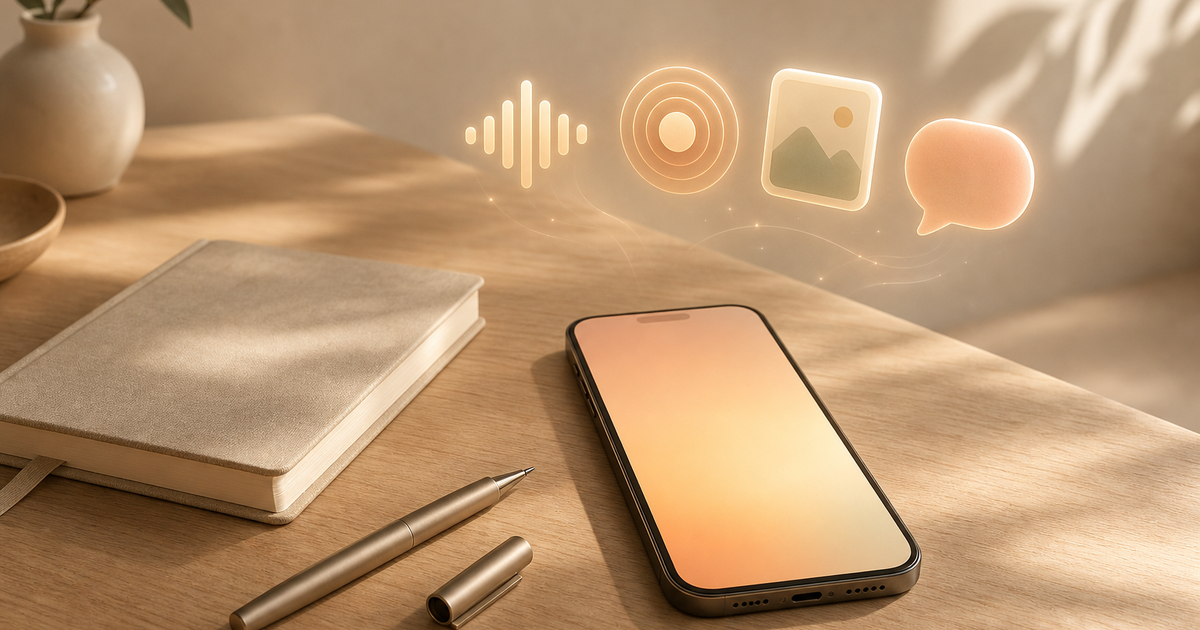
You can journal without writing a word. Voice, taps, photos, and prompts compared across Lound, Daylio, Finch, Apple Journal, Voicenotes, and AudioPen.
Seven journaling apps compared for people who ruminate: Lound, Rosebud, stoic, Finch, Daylio, Apple Journal, Day One. Which helps you get the loop out.

Rosebud is a strong AI coach journal, but it's pricey and chat-first. Here are 7 alternatives for voice, plain archives, routines, and cheaper AI.
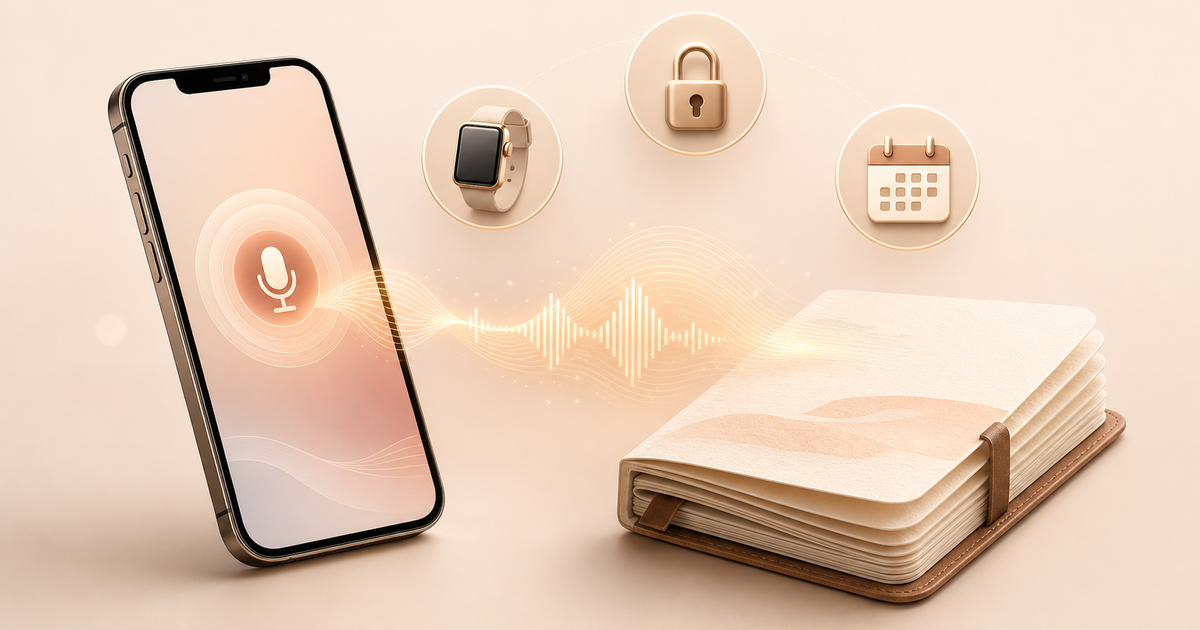
Seven iPhone voice journal apps compared on transcription, audio privacy, AI, and price: Lound, Apple Journal, Day One, Just Press Record, and more.

Life archive, AI coach, voice-first pattern journal, or mood check-in? Day One, Rosebud, Lound, and Reflectly compared on input, AI, price, and privacy.

Apple Journal, Day One, Finch, Journey, Lound, Rosebud, Notion, and ChatGPT compared on where entries live, encryption, AI training, and export.

Three ways to make voice memos a real journal: the DIY transcript-and-paste route, voice-notes tools with cleanup, and voice-first journals with patterns.

Choice blindness shows how easily we can justify an outcome after the fact. A short decision receipt preserves what you actually chose and why.

Repeated reassurance can lower distress for a minute and strengthen the same doubt tomorrow. A better move is to name the uncertainty and choose a test.

Suppressing thoughts often rebounds. A concrete plan or next step gives unfinished concerns somewhere to land.
A thought can feel solid in your head and fall apart in your ears. Speaking and hearing the explanation exposes missing steps.

Words can clarify an event, but they can also overwrite parts of it. For fresh memories, facts first and polished story second.
A vague intention fades fast. A spoken cue-response plan makes the next move easier to notice and easier to start.

Teaching out loud forces retrieval, connection, and gap detection. That is why self-explanation usually beats passive rereading.
External capture can lower mental load before you ever listen back. The useful part is getting the thought, cue, or next step out of your head.
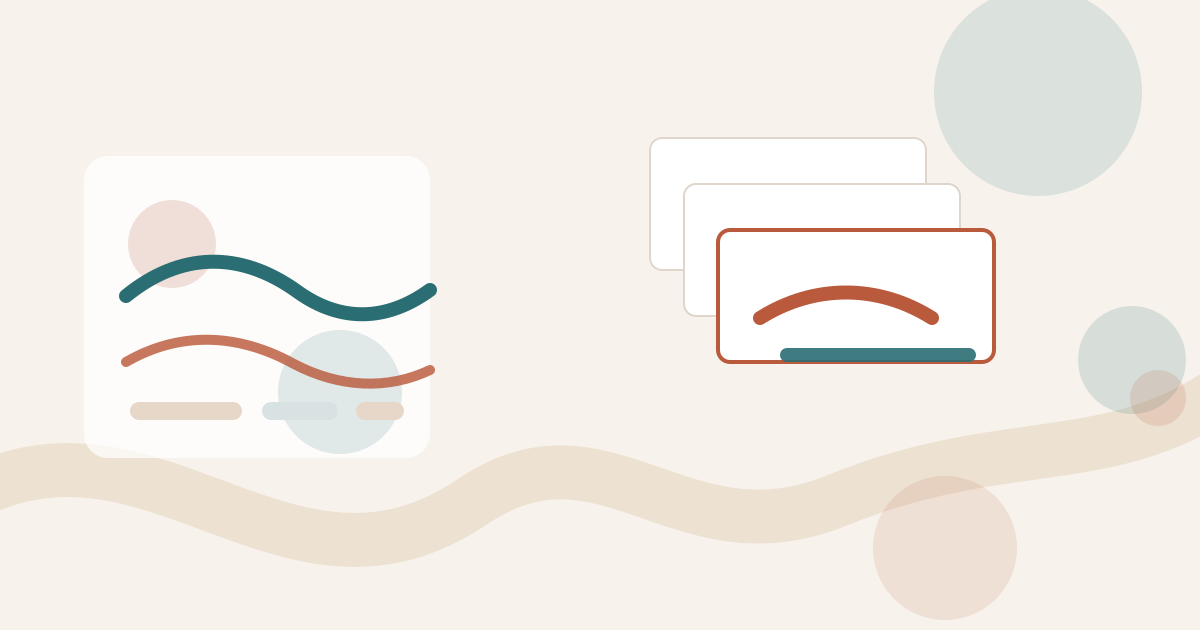
Repetition can raise confidence and credibility even when accuracy does not improve. Familiar delivery is not the same as stronger evidence.
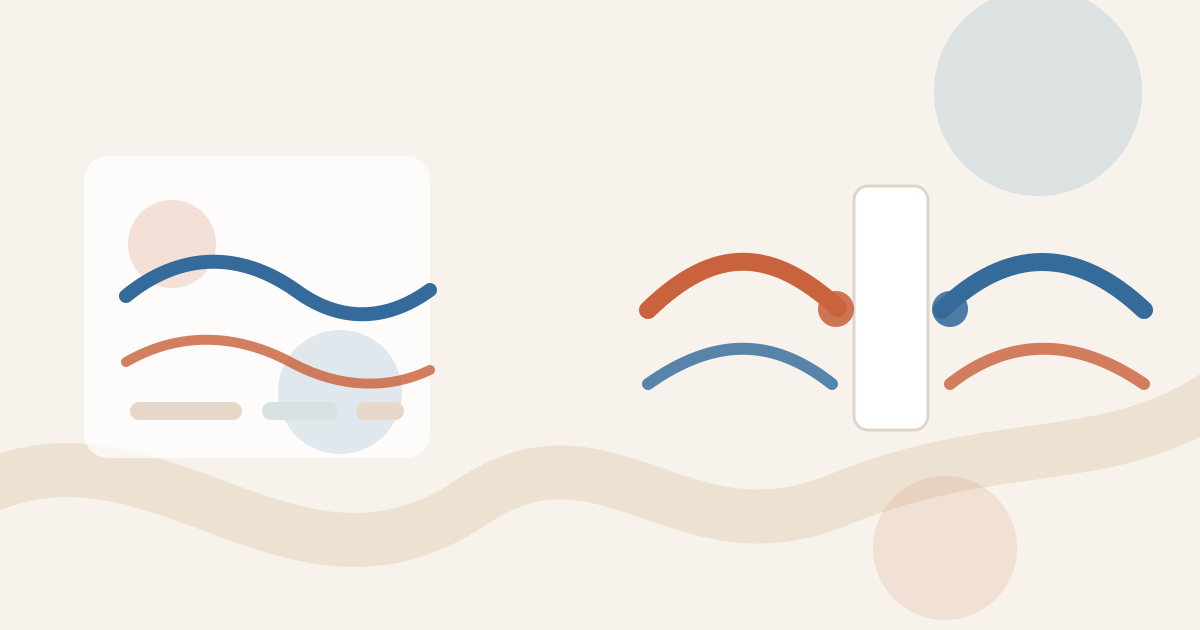
Interruptions pull attention away from the goal you were holding in working memory. A spoken bookmark makes resuming much easier.
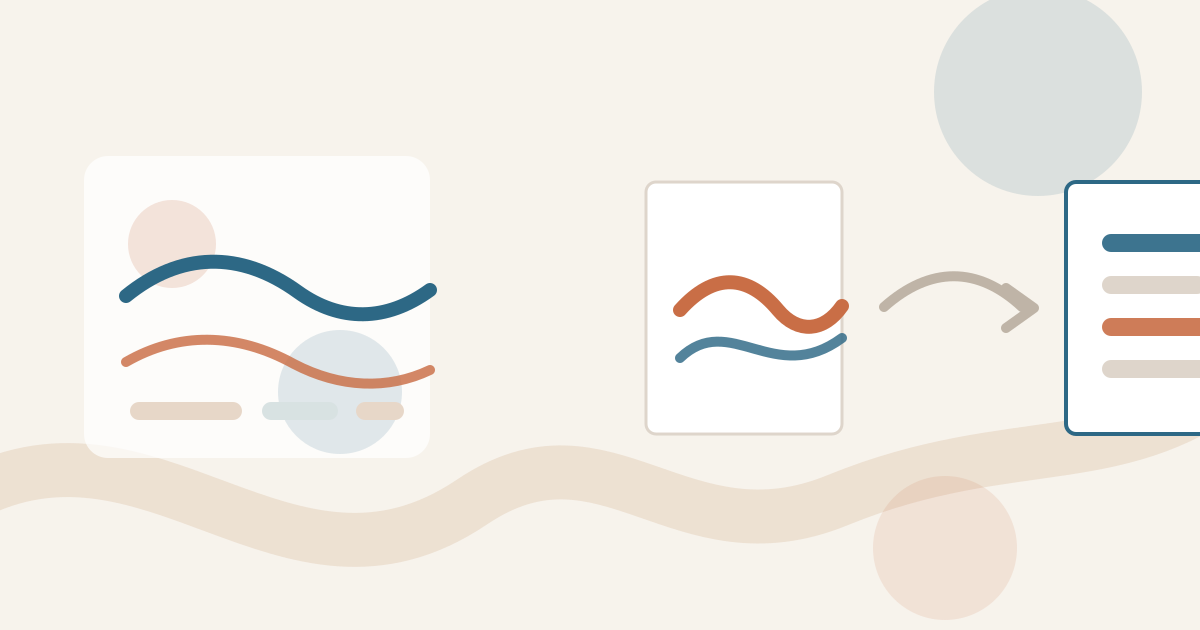
A transcript keeps the words but loses prosody, pacing, and vocal texture. That can change how harsh, warm, certain, or confused you seem.

Upset thoughts can loop because negative affect and rumination feed each other. Naming the loop early works better than stretching it longer.

Some people clarify meaning partly through self-heard speech. Hearing your own words can help specify what you meant, not just what you planned.
The right word often shows up later because meaning can stay active while sound retrieval lags. A brief cue search works better than grinding.

You can lose your point when speech planning outruns working memory. Smaller chunks and verbal placeholders help you keep the thread.
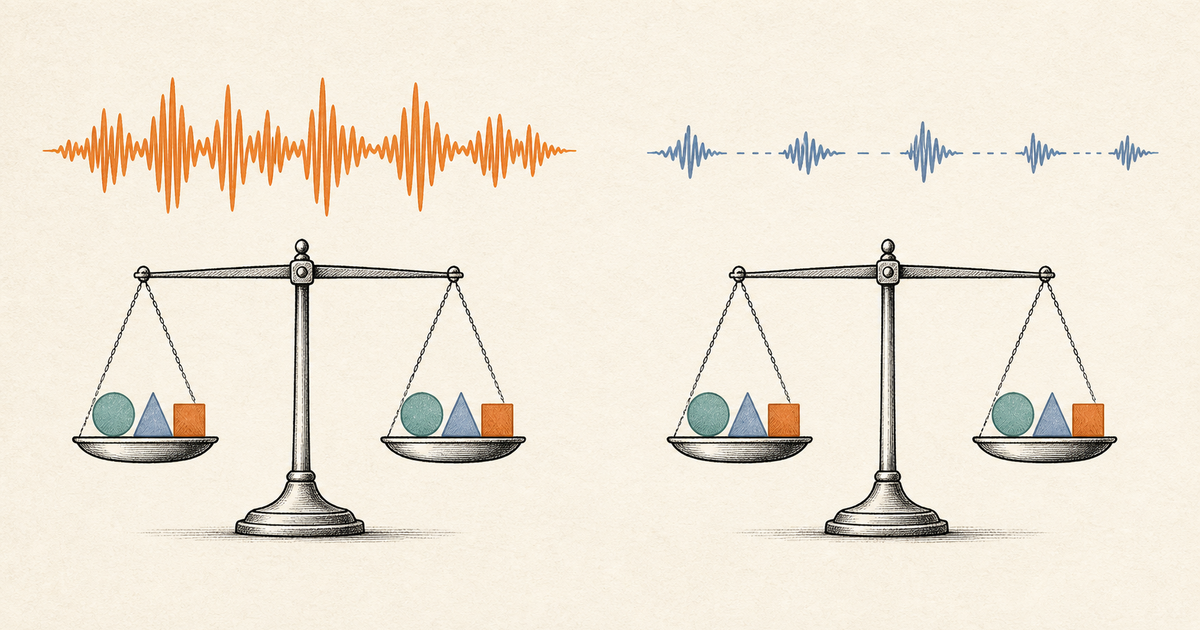
Fast, fluent, louder speech can sound confident and persuasive. Those cues sometimes track retrieval ease, but they cannot verify a claim.
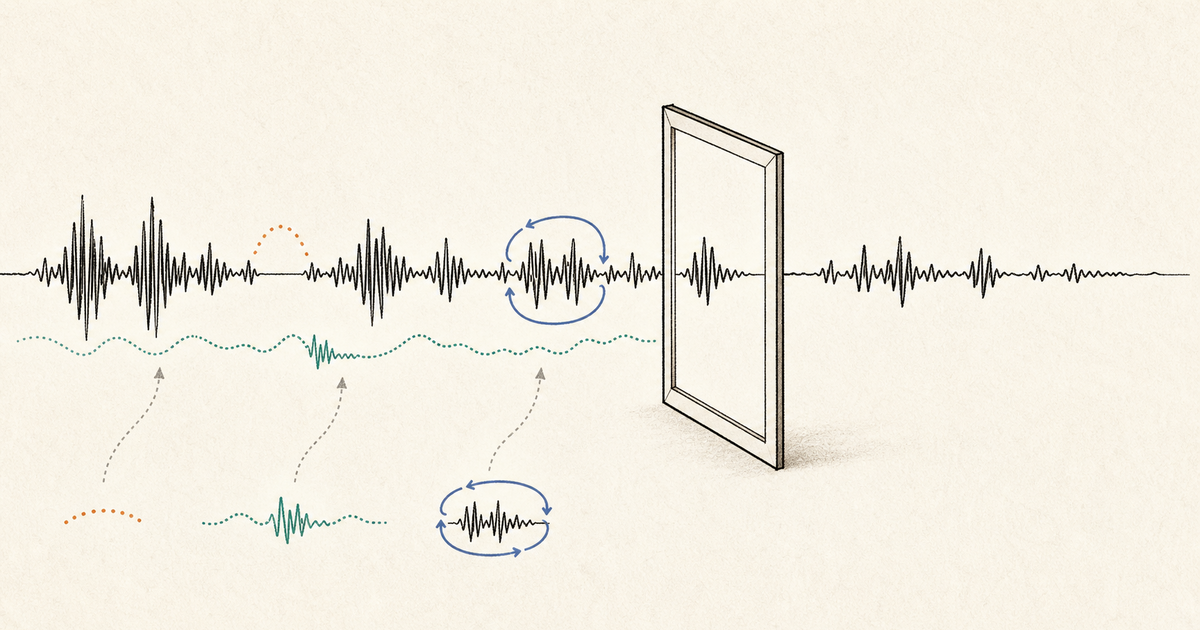
AI summaries compress by selecting. They can lose uncertainty, corrections, and minor threads, so the source entry must remain inspectable.
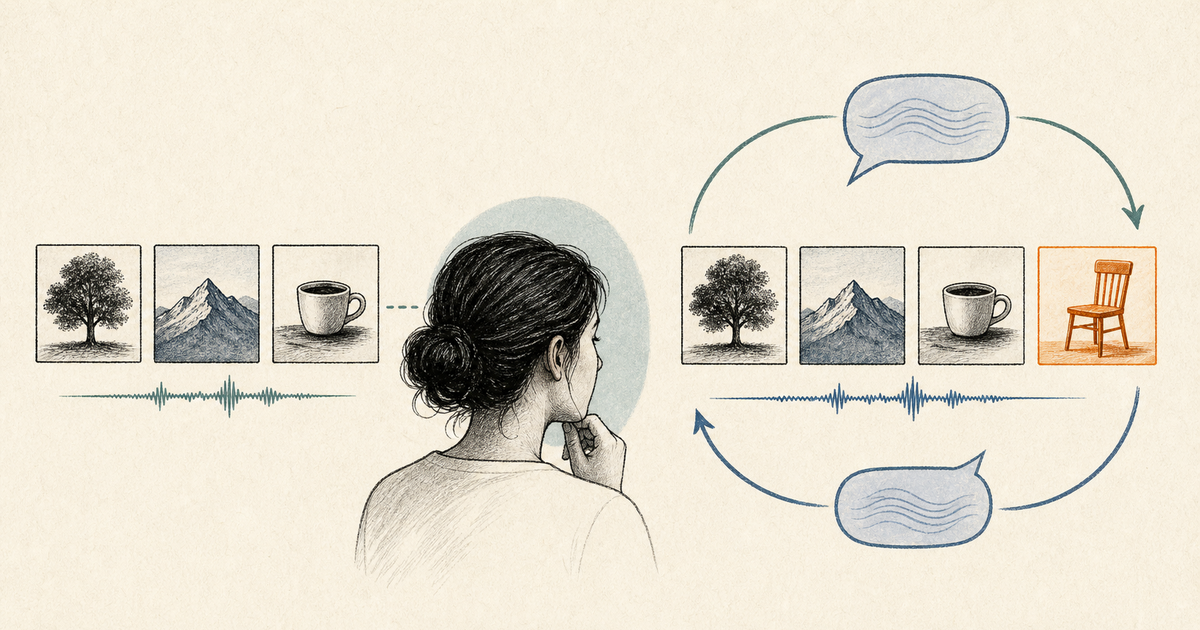
An AI can alter later recall when it introduces or reinforces details. Record your account first, then keep AI interpretation separate.
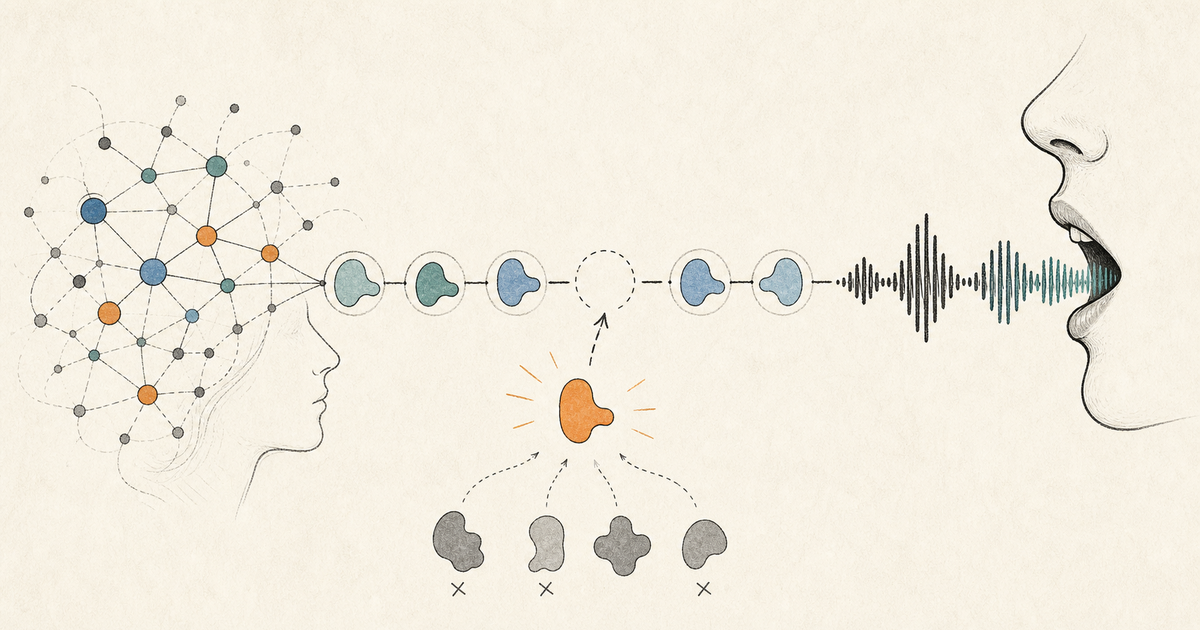
A tip-of-the-tongue state gives you part of a word without enough sound information to say it. Specific cues work better than forcing recall.
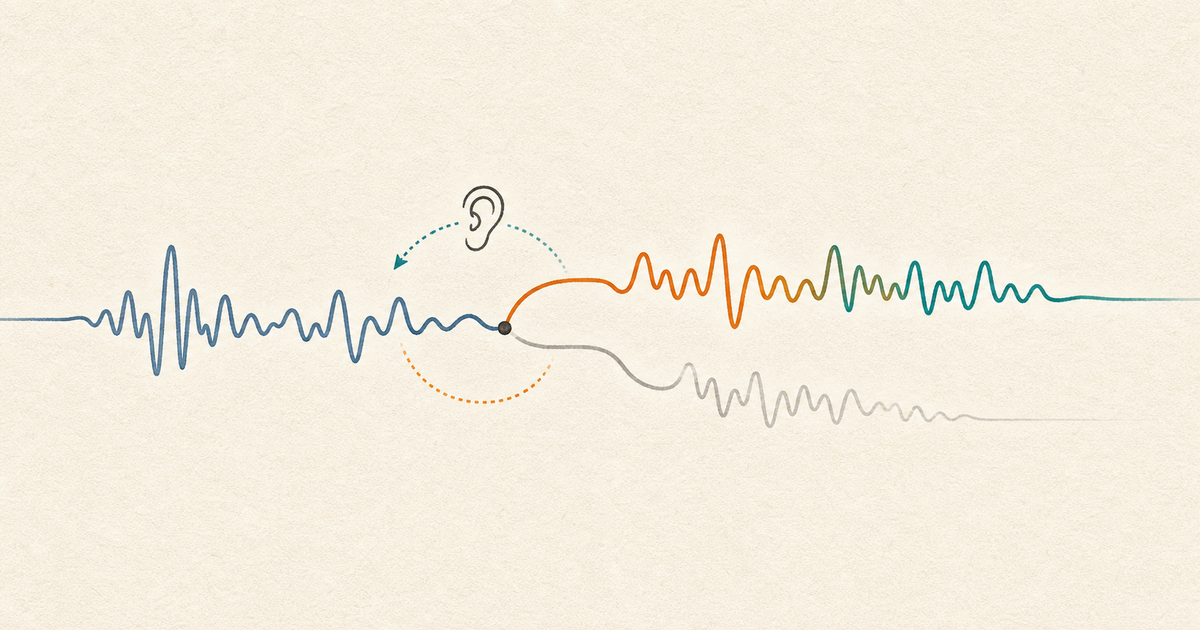
Self-correction means your speech monitor caught a mismatch while you were talking. The type of repair tells you what changed.
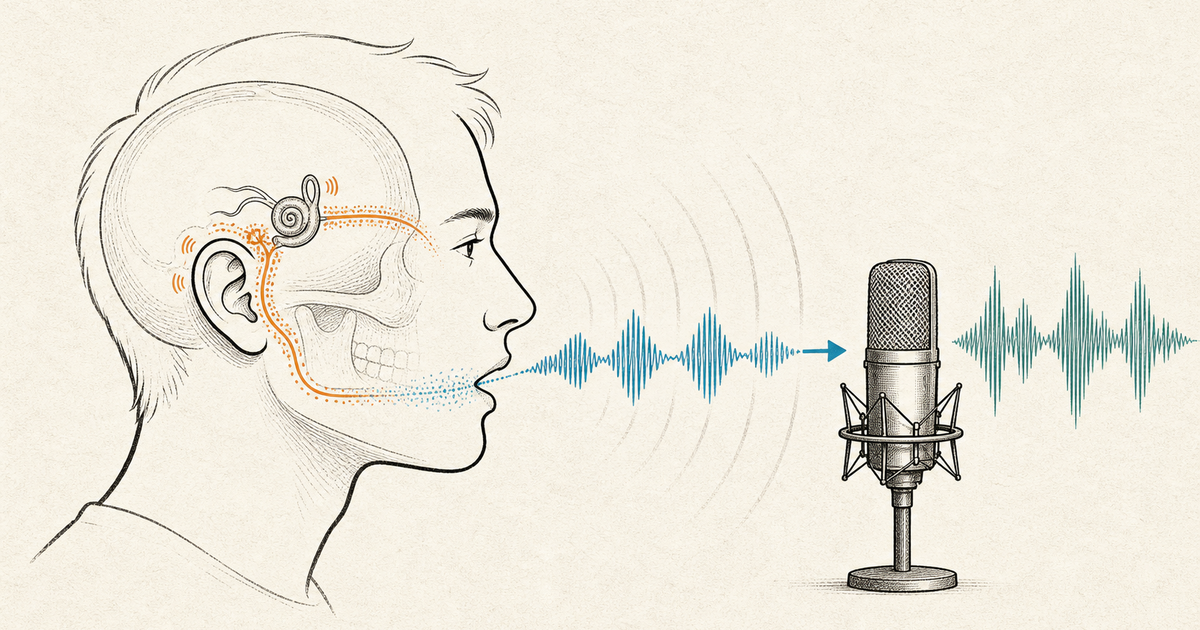
Your recorded voice removes the bone-conducted sound you normally hear. The unfamiliar result is useful, but it is not the whole experience.
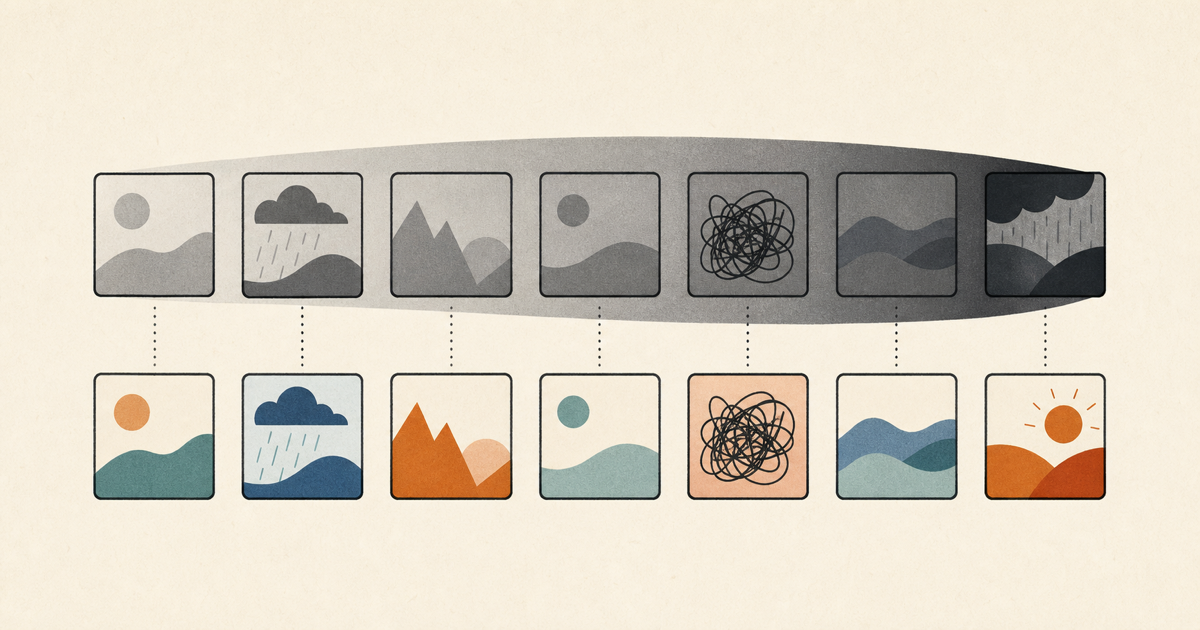
Your current mood can change which memories come to mind and how past events feel. Review the week from records, not one emotional moment.
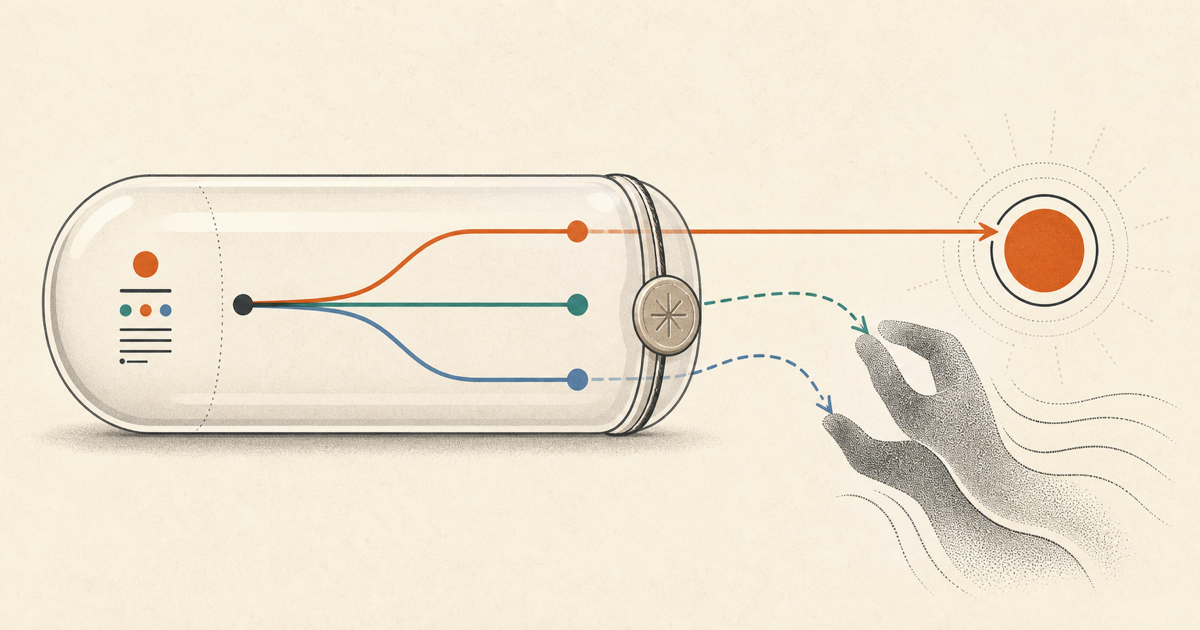
Outcomes edit your memory of what you expected. A prediction journal preserves your confidence, reasoning, and emotional forecast for review.
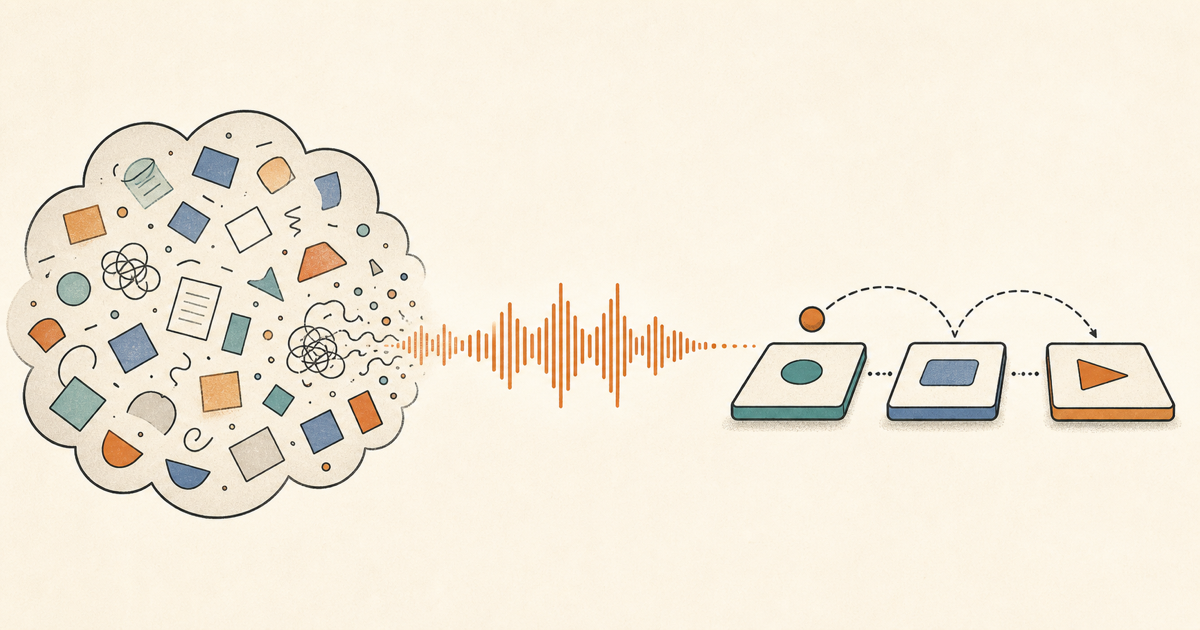
Task narration turns a vague project into a live sequence of visible actions. It works best as a breadcrumb trail, not a motivational speech.
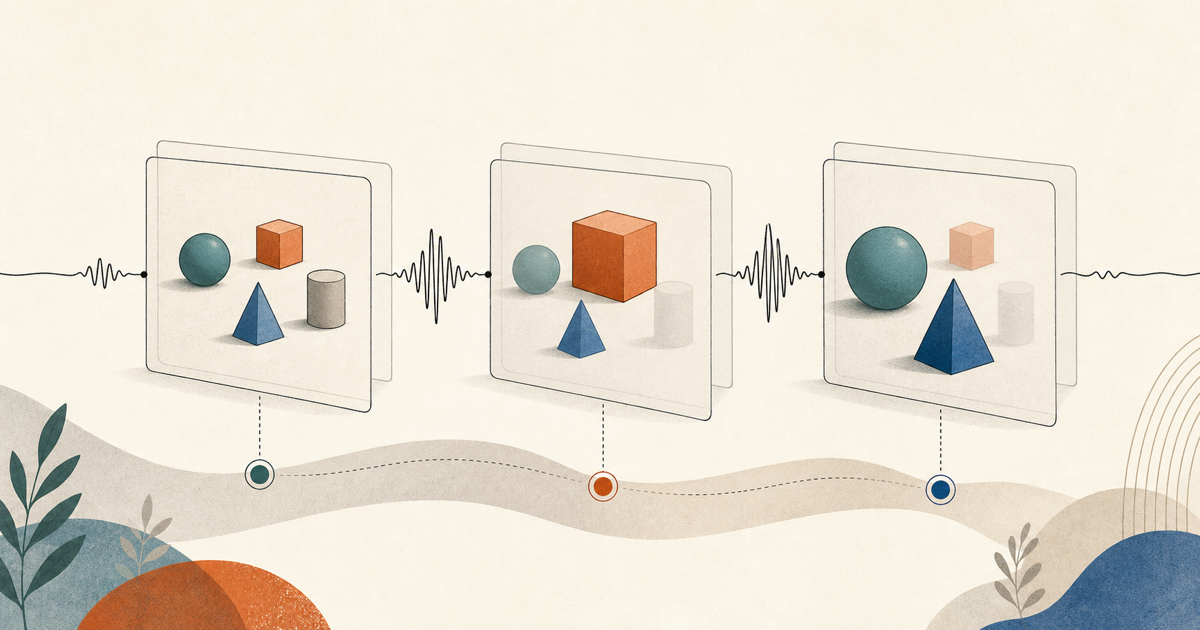
Retelling can preserve an event, but the goal and audience shape what survives. Record facts before the polished version becomes easier to recall.
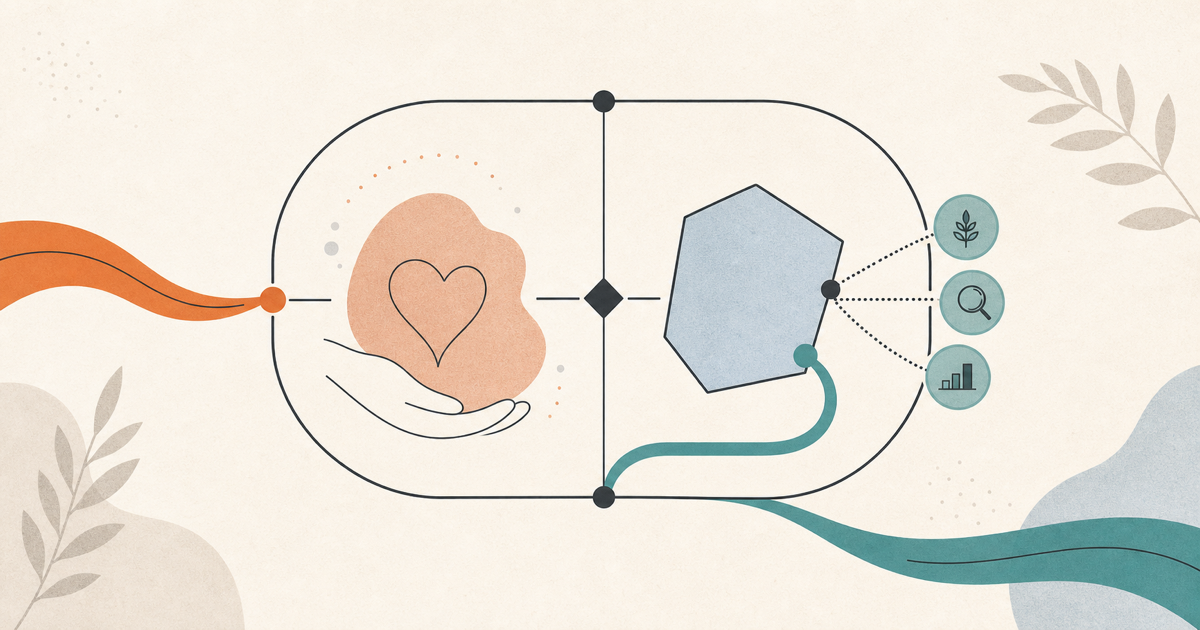
An AI journal should validate feelings without automatically endorsing every conclusion. Useful reflection needs evidence, alternatives, and consent.
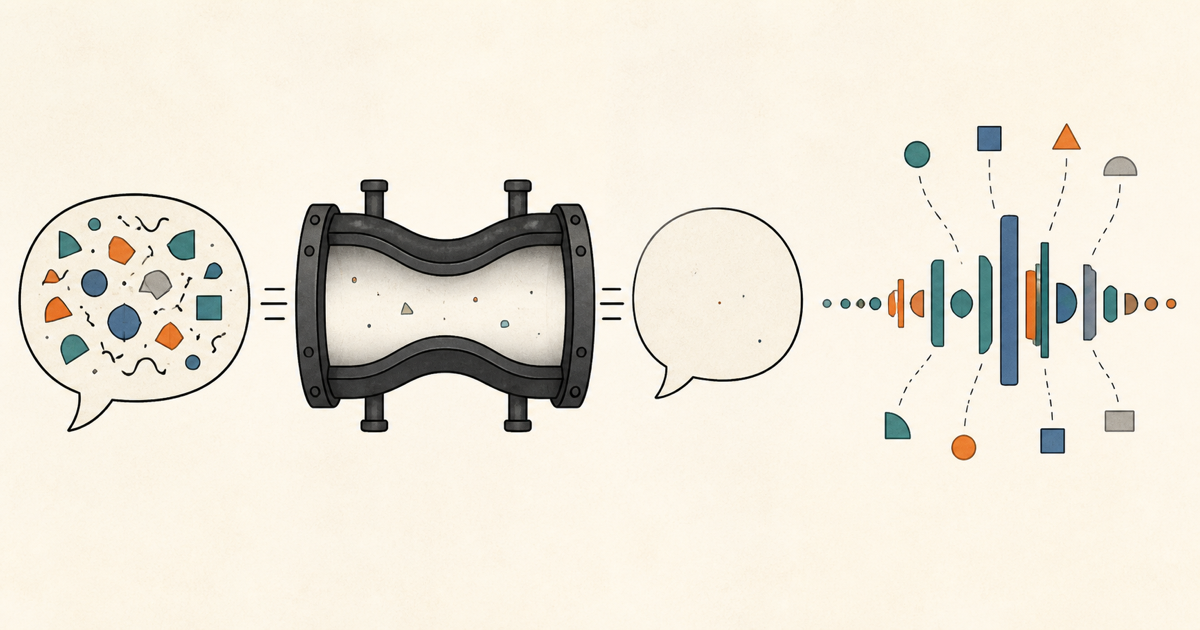
A tense conversation can consume the working memory you need to find words. The useful reply often appears once the social threat is gone.
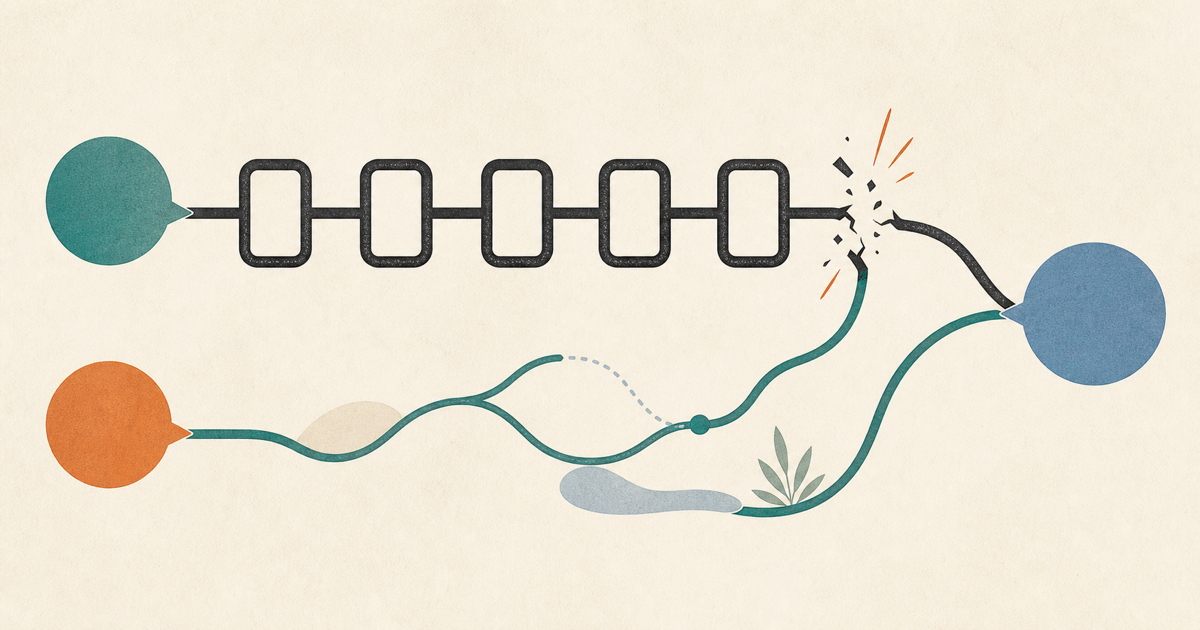
Rehearsal helps when you practice your goal and likely branches. A perfect script can increase anxiety and collapse when the other person improvises.
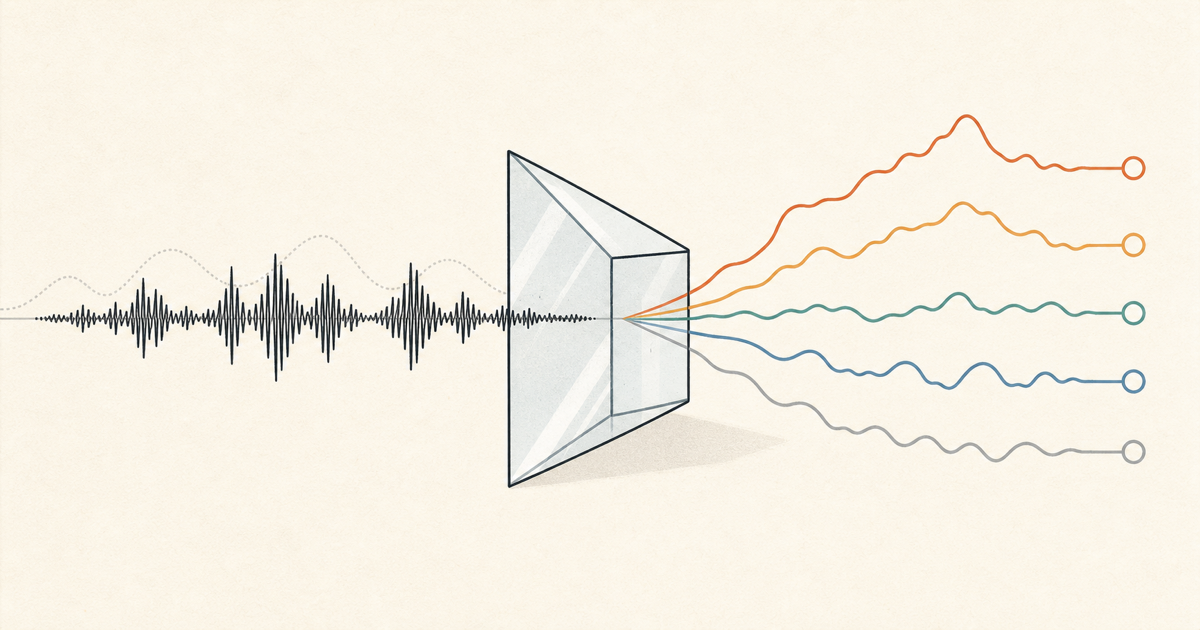
Voice AI can detect acoustic patterns, but emotion labels are uncertain and context-dependent. Here is what the signal can honestly tell you.
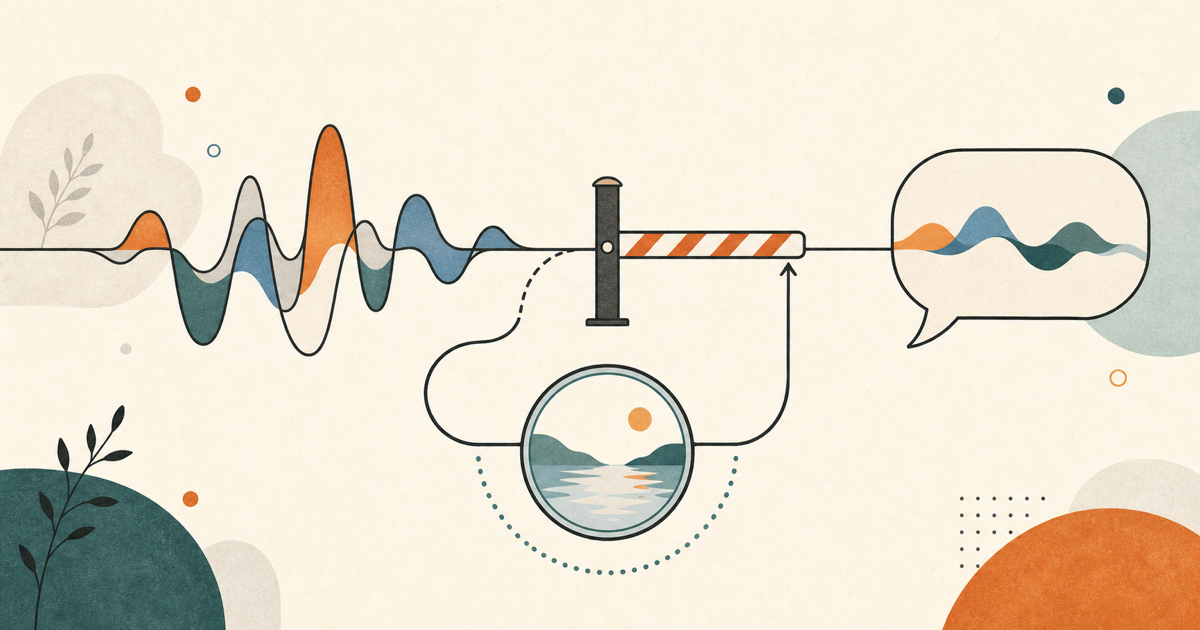
Some people finish forming a thought by hearing themselves say it. Learn why it happens and how to add a pause without losing your train of thought.
Intuition and anxiety can both feel like body-level certainty. Use a voice evidence test to separate signal from threat.
Relief is evidence. Recording what feels lighter after a choice can reveal boundaries, needs, and patterns pain alone misses.
Small irritations often point to repeated friction, unmet needs, or hidden boundaries. Track the pattern before dismissing them.
A task list captures visible chores, but the most draining work is often deciding, remembering, anticipating, and monitoring.
When your mind goes blank, 'I don't know' can open the doorway to what you know, avoid, want, and fear.
Advice is useful, but it changes the room. Record your first answer before other people, search results, or AI overwrite it.
Some thoughts are too early for a decision journal. A maybe journal holds weak signals until enough evidence arrives.
A thought loop repeats the same claim. A thought stack adds new evidence. Voice journaling helps you tell which one you are in.
Once an insight is written down, memory can make it feel obvious. Record what changed before hindsight edits the breakthrough.
Present-you makes plans under clean conditions. Future-you inherits the real conditions. A voice handoff closes that gap.
The most useful journal entry often happens right after the meeting, call, conflict, workout, or decision, before memory smooths it over.
Body signals are easier to use when you name the sensation, location, timing, and context instead of treating them as vague wisdom.
After stress ends, your system may still act like the threat is active. A short voice check helps you notice recovery lag.
Some thoughts are weather, some are signal, and some need to be reviewed later before they become identity.
Mood is only one layer. Voice entries can reveal when your clarity, patience, and ambition actually tend to show up.
Contradictory thoughts are not always confusion. Sometimes they reveal two real needs your journal should preserve.
The best AI journal prompt sends you back to your own evidence with a sharper question, not a louder answer.
The first version of a hard message is for processing, not sending. Voice gives the messy draft somewhere safer to go.
After you choose, memory starts protecting the story. A voice decision journal preserves what you knew before the outcome.
The best journal search finds what you meant, not just the exact word you happened to use that day.
The spotlight effect makes awkward moments feel more visible than they are. A voice debrief turns social panic into facts.
Repeated thoughts can feel like proof because familiarity feels fluent. A journal should separate frequency from evidence.
Half-formed thoughts can feel complete until you explain the mechanism. Speaking out loud reveals the missing step.
Your memory overweights the peak and the ending. A short voice journal entry can preserve the missing middle.
Upset thoughts can feel obvious in the moment and suspicious later. A hot-state voice note helps you tell signal from state.
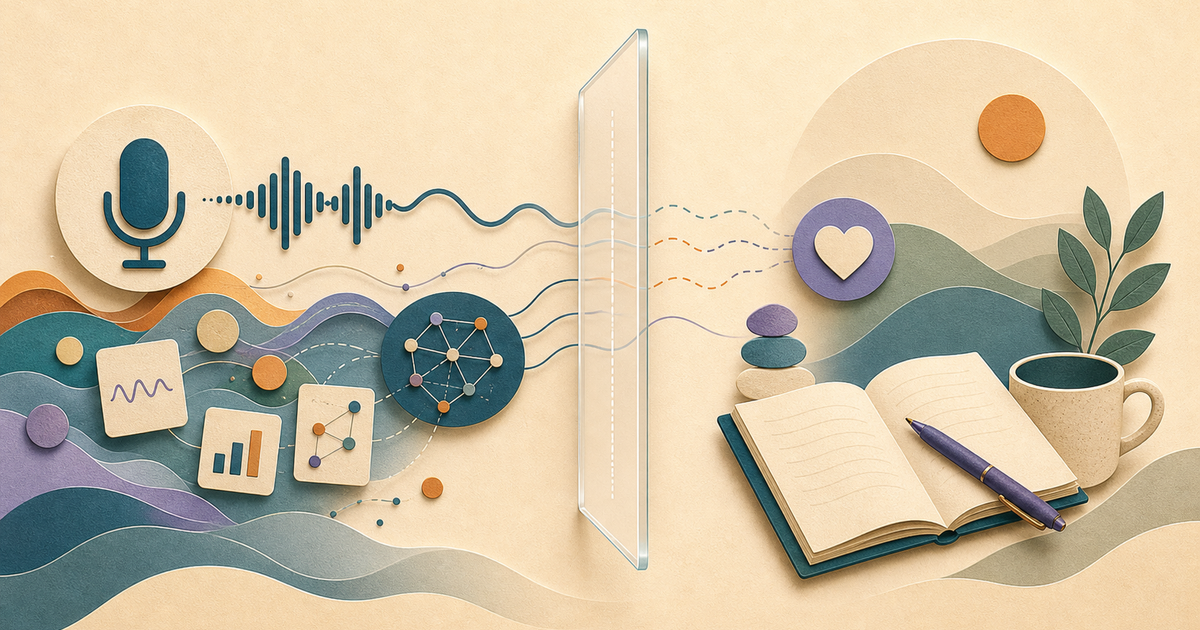
Lound does not diagnose you. It highlights patterns from your own words and hands the decision back.
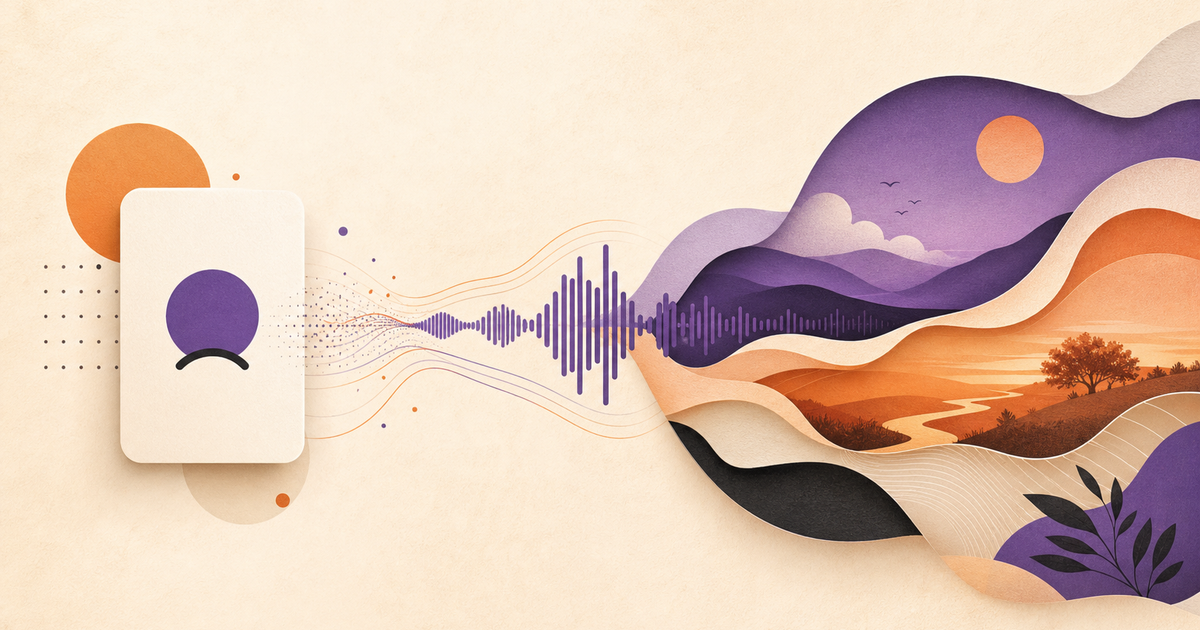
Mood tracking names the state. Voice journaling can preserve the story, context, and pattern behind it.
Do not ask AI what to do first. Ask it what you keep avoiding, then use your own judgment with better evidence.
A therapist helps you heal. Lound helps you remember what you said, so your real conversations can start with better evidence.
The sentence you repeat is usually the decision you have not admitted yet. A voice decision journal helps you hear it sooner.
A useful journal can answer a better question than how was my mood today: when do I actually sound alive?
When journaling stops working, the answer is not always a better question. Sometimes you need to hear the pattern inside the answers you already gave.
For Lound, AI receipts are a sharper promise than AI therapy: a private record of what you said, repeated, avoided, and decided.
The best AI journal response is often a receipt from your own history: you said this last month too.
A journal does not need to become an oracle. The useful version shows the sentence, topic, or decision that keeps coming back.
On hard days, you may not need advice. You may need a private place to say the true version before you make it polite.
Big decisions get harder when every option stays abstract. Speaking the tradeoffs out loud helps separate fear, preference, and practical reality.
If you wait until you are fully drained to process the day, your brain has less capacity. A short voice closeout after work prevents residue from taking over the evening.
Emotional clarity does not always start with the perfect word. Start with body, context, and contrast, then let the label emerge.
A journal becomes more useful when future-you can actually find what past-you figured out. Voice plus semantic search makes that realistic.
Good AI journaling does not need to turn every entry into a lesson. Sometimes the most useful response is noticing, remembering, and waiting.
Your brain needs help switching roles. A short voice ritual can close one part of the day before the next one begins.
Some meetings end on the calendar but keep running in your nervous system. A short voice debrief helps your brain close the loop.
Silence can help some people calm down, but for overthinkers it often removes the distractions that were keeping thought loops quiet.
When every choice feels heavier than it should, speaking the options out loud can reduce mental load and reveal what you already know.
A skipped day is data, not failure. Learn how to restart your voice journaling habit without shame or all-or-nothing thinking.
Patterns in stress, decisions, and relationships need multiple entries to become visible. AI gets more useful as your history grows.
The first signs of real change are often quiet. Learn what to notice before progress becomes obvious.
You do not need to voice journal every day. A most-days practice can build insight without turning reflection into another chore.
Missing one day does not erase your progress. Research on habit formation shows consistency is more forgiving than streak trackers make it feel.
Meaningful voice journaling results come from repeated reflection, not one perfect session. Here is what changes over days, weeks, and months.
Real change usually takes longer than motivation lasts. Here is what to expect as a new habit moves from effortful to natural.
Digital journals can be backed up and preserved, but only if the app gives you exportable data in formats you can use later.
A practical comparison of paper and digital journals across privacy, search, feel, speed, backups, and long-term usefulness.
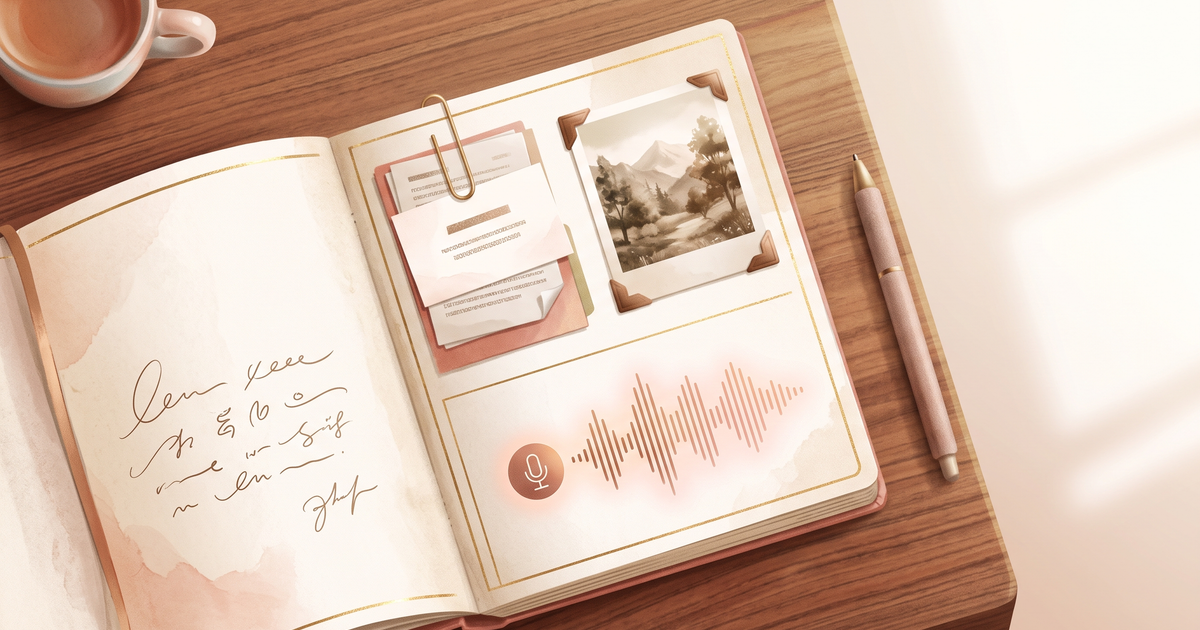
Some digital journals are built for photos, PDFs, scans, and memories. Others are built for thought capture and pattern recognition.
If wrist pain, messy handwriting, or fatigue makes paper journaling hard, digital and voice journaling can remove the physical friction.
You do not have to choose between paper and digital journaling. A hybrid system can preserve the ritual while adding search, backup, and voice capture.
Digital journals can protect you from snooping, but privacy depends on locks, exports, encryption, cloud storage, and AI processing.

The best journal apps help you revisit old entries without making the past feel random, overwhelming, or unsafe.
A digital journal is only safe long term if you can export your entries in a format you can open without the original app.
A searchable journal helps you find old insights, track recurring topics, and stop solving the same problem from scratch.
Handwriting, typing, and voice journaling each shape your thoughts differently. Choose based on speed, feel, privacy, and what you want to do later.
Digital journaling is worth it when you want search, privacy controls, backups, and easier capture. Paper still wins for feel.
A journal is not only for the day you make the entry. Searchable journals help future-you find old thoughts, patterns, decisions, and reminders you would otherwise lose.
An unproductive week can turn into self-attack fast. Here is how to talk through what happened without making yourself the problem.
Caregivers often carry invisible lists, emotions, and logistics. A short voice ritual can help you hear your own needs again.
Sometimes you need to talk something through, but the right person is not available. A private voice note can help when you have no one to talk to.
Therapy is not where your life happens. A private voice note can help you process between therapy sessions without replacing professional care.
When planning turns into paralysis, speaking the first tiny step can help ADHD brains move from stuck to started.
When you feel overwhelmed, one minute of speaking can help you name the real pressure, calm the mental noise, and find the next small move.
After a tense conversation, your mind may replay every line for hours. Here is why conversation rumination happens and how a short voice debrief can stop the loop.
Sunday planning often turns into self-criticism. Try a voice-first reset that helps you notice what matters without punishing yourself.
When your mind feels packed, a two-minute voice unload can create enough space to choose the next step without making a giant plan.
Before sending the tense reply, talk it through once. A 90-second voice note can turn reactive messages into clearer communication.
Writing helps many people, but it can make some emotions louder. Here's when to switch from written journaling to spoken processing.
A short voice debrief after a tense call can stop replay loops, capture what matters, and help you decide what needs to happen next.
If journaling turns into performance, try speaking before you edit. Private thoughts need room to be messy before they become clear.
AI can help you notice recurring themes in your reflections, but the value depends on honest input, clear limits, and human judgment.
If journaling never sticks because writing feels slow, forced, or performative, voice journaling may fit your brain better.
Voice journaling can be private, but privacy depends on where you record, what app you use, and how your recordings are handled.
Overthinking gets worse when thoughts stay silent and circular. Voice journaling helps by turning the loop into something you can hear.
Miami attracts reinvention, but big transitions can leave your thoughts scattered. Voice journaling helps you process change faster than another notes app ever will.
The best time to voice journal is the moment your mind needs somewhere to put a thought. Here are the windows that work best.
Most voice journaling sessions should be shorter than you think. Two to ten minutes is enough for real clarity.
Startup founders and remote builders in Austin often confuse capturing thoughts with processing them. Voice journaling helps clear founder brain faster than another pile of notes.
Meditation helps you observe thoughts. Voice journaling helps you process them. The better choice depends on what your mind needs.
Voice journaling can help anxiety when it turns vague fear into specific language and interrupts silent rumination.
If your brain never stops in New York City, a voice-first journaling app can give you mental clarity between meetings, commutes, and late-night overthinking.
If you press record and suddenly have no idea what to say, start with what is already true. These voice journaling prompts help.
Voice journaling feels strange at first because you are not used to hearing your private thoughts out loud. Here is how to make it feel natural.
Writing and speaking use different brain pathways. Understanding which one is your strength changes how you should journal.
Some decisions are hard to make. Others are hard to leave alone after you make them. Post-decision rumination can drain more energy than the choice itself.
Body doubling helps because your brain stops feeling alone with the task. When nobody else is around, talking out loud can recreate part of that structure and make starting easier.
Sometimes you do not need more opinions. You need a place to hear your own. Self-validation is not pretending you are always right. It is trusting your internal signal enough to hear it clearly.
Imaginary arguments feel like preparation, but usually they're stress rehearsals. Voice processing helps you find the real issue without spiraling into endless fake conversations.
If you keep adding reasons, context, and softness until your point disappears, that's not clear communication. It's often anxiety trying to keep everyone comfortable.
People pleasing usually breaks long before the moment you need a boundary. Practicing 'no' out loud gives your nervous system a chance to catch up before the real conversation.
If you are always the reliable one, the planner, the fixer, the emotional adult, your exhaustion may not be about busyness alone. It may be about overfunctioning.
'Fine' isn't a feeling. It's a placeholder. Emotional granularity means naming the specific emotion, and that precision helps you regulate what you're feeling.
Sometimes the message is simple, but your body reacts like it's not. Reply anxiety often has less to do with the text itself and more to do with what the reply feels like it means.
Scheduled worry doesn't feed anxiety. It contains it. Voice processing makes worry time easier to start, easier to end, and less likely to hijack your whole day.
Process your relationship thoughts individually before the conversation. You'll arrive clearer, calmer, and more honest.
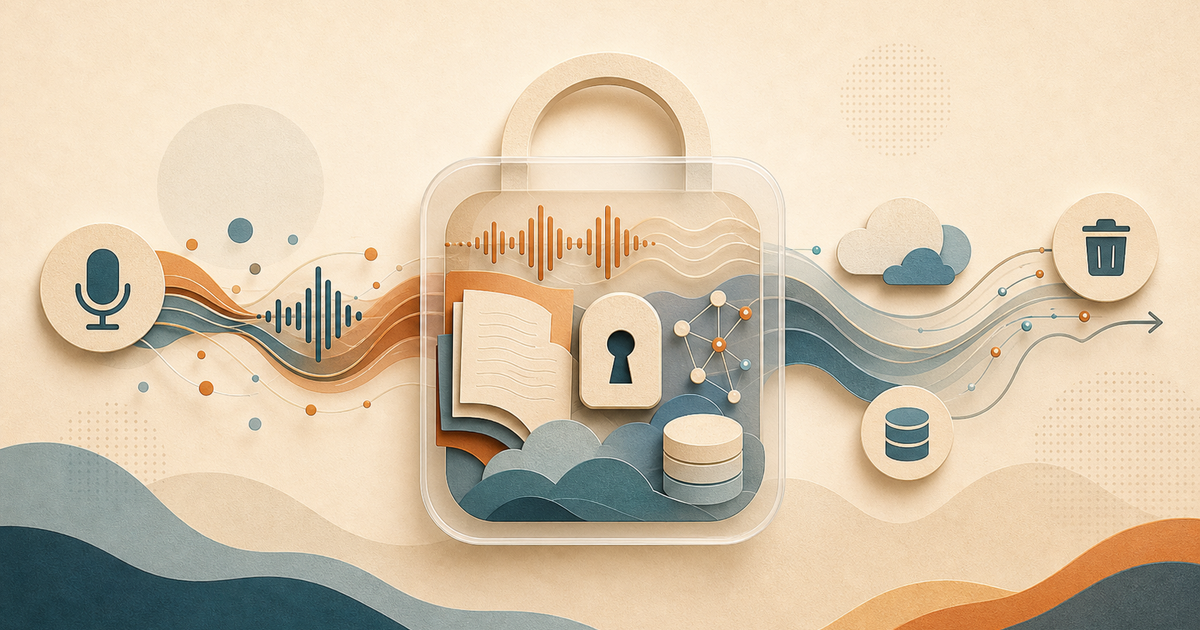
Your journal contains your most private thoughts. Here's what each major AI journaling app actually does with that data.
Rehearsing in your head creates anxiety loops. Speaking your points out loud before the real conversation changes the outcome.
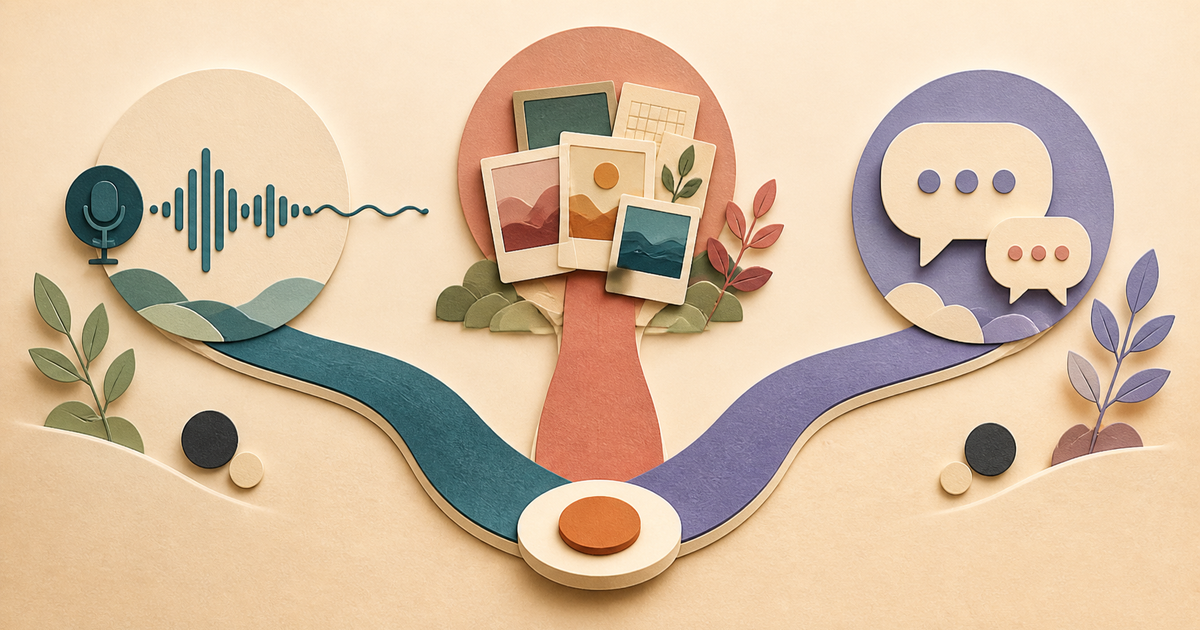
Three very different journaling apps. Voice-first vs multimedia vs AI chat. Here's how to choose the right one.
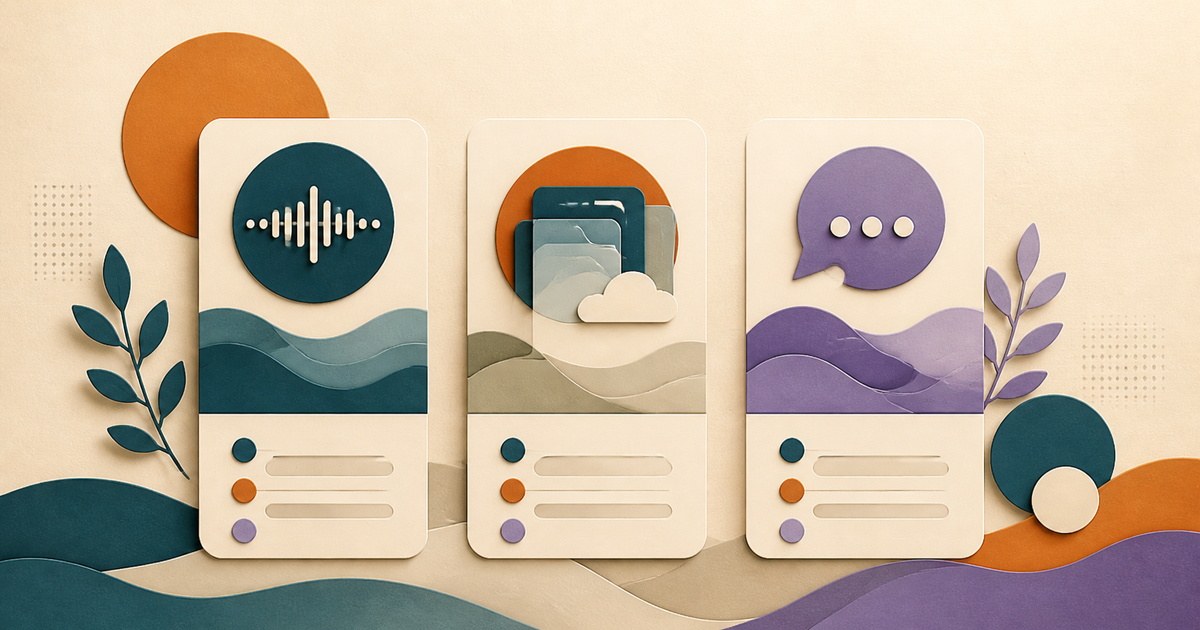
Lound, Day One, Rosebud, and Voice Memos compared on transcription, AI memory, privacy, and price, plus 7 one-on-one comparisons. Checked August 2026.
Dreams fade within 5 minutes of waking. Voice captures them before they disappear. AI finds the patterns across months.
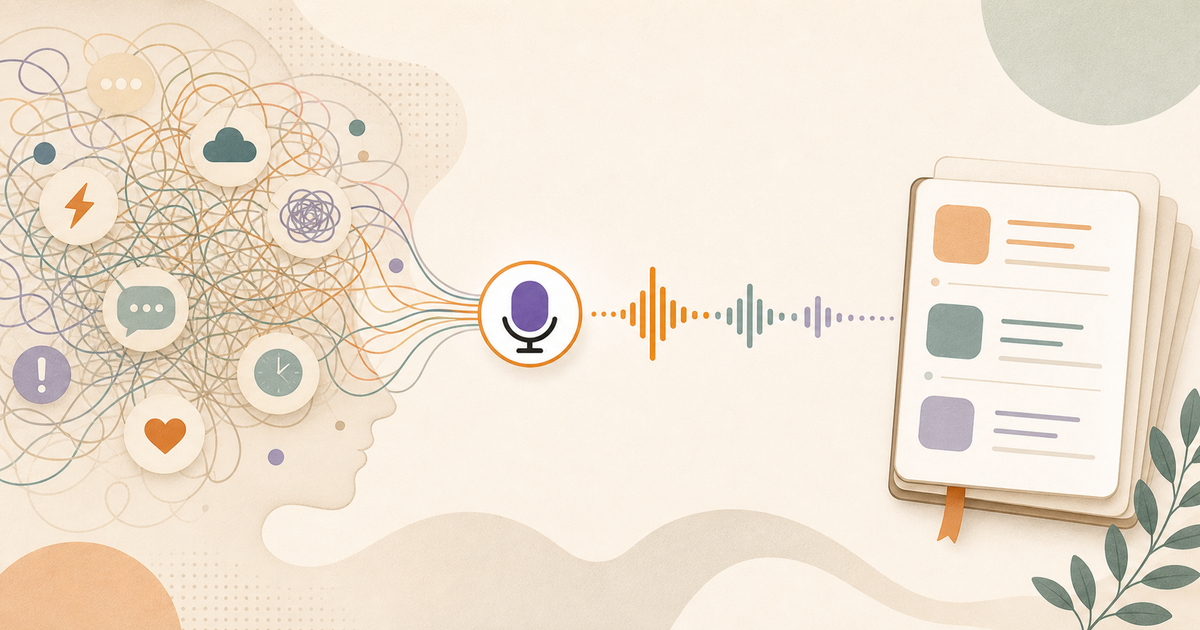
A busy brain isn't broken. Neuroscience explains why some minds won't stop, and why trying to silence them backfires.
Waking at 3am with racing thoughts isn't broken sleep. It's your brain trying to process what the day didn't allow. The fix isn't sleeping pills. It's earlier processing.
Multitasking is a myth. Cognitive science shows your brain processes one problem at a time and pays a steep cost for switching. Here's how to work with this limit.
That Sunday dread doesn't arrive Sunday. Research shows anticipatory anxiety begins days earlier, running silently in the background. Here's what's actually happening.
Verbal processors think by speaking, not before speaking. If you need to talk through problems to understand them, here's why.
You reach for your phone when you need to think. But research shows the device designed for consumption actively prevents the processing you're seeking.
Creatives spend hours staring at blank pages. The block isn't about ideas. It's about mental clutter blocking the path to them. 10 minutes of speaking clears the runway.
Every unmade decision occupies working memory like an open browser tab. Research shows the cognitive cost of deferred choices is worse than making the wrong one.
Every app promises to organize your ADHD brain. None of them do. The tool that finally worked isn't a task manager, a habit tracker, or a second brain. It's your voice.
The world's most common advice for organizing your thoughts doesn't work if you're an external processor. Research shows 30-40% of people need to speak to think. Here's why writing fights their brain.
Venting feels cathartic but research says it often makes things worse. The difference between venting that heals and venting that spirals comes down to one thing.
More self-awareness should mean better mental health. Research says otherwise. The missing piece isn't knowing yourself better. It's the difference between awareness and insight.
You know exactly what needs doing. You have the time. You have the skills. And you're frozen. Workload paralysis isn't laziness. Neuroscience explains why speaking out loud breaks through it.
Anger literally shuts down your prefrontal cortex. Neuroscience explains why you say things you regret and what to do in the 90-second window before your brain recovers.
That drained feeling after an argument isn't weakness. Brain imaging shows emotional events alter cognition for hours afterward. Here's how to recover faster.
Manual mood ratings miss the nuance. Voice entries capture how you actually feel, and AI reveals patterns you'd never spot yourself.
Voice journaling means speaking your thoughts instead of writing them. It's 3x faster and captures emotional nuance text can't.
The Zeigarnik effect means your brain won't stop working on incomplete tasks. Research shows one simple technique closes these open loops and frees cognitive resources.
This structured voice exercise cuts through career analysis paralysis by externalizing what you actually think, not what you think you should think.
Your best ideas arrive in the shower, on walks, at 2 AM. Neuroscience explains why relaxed brains solve problems focused brains can't.
Your working memory holds 4 items. Every unspoken thought occupies a slot. Voice offloads the burden so your brain can think instead of just holding.
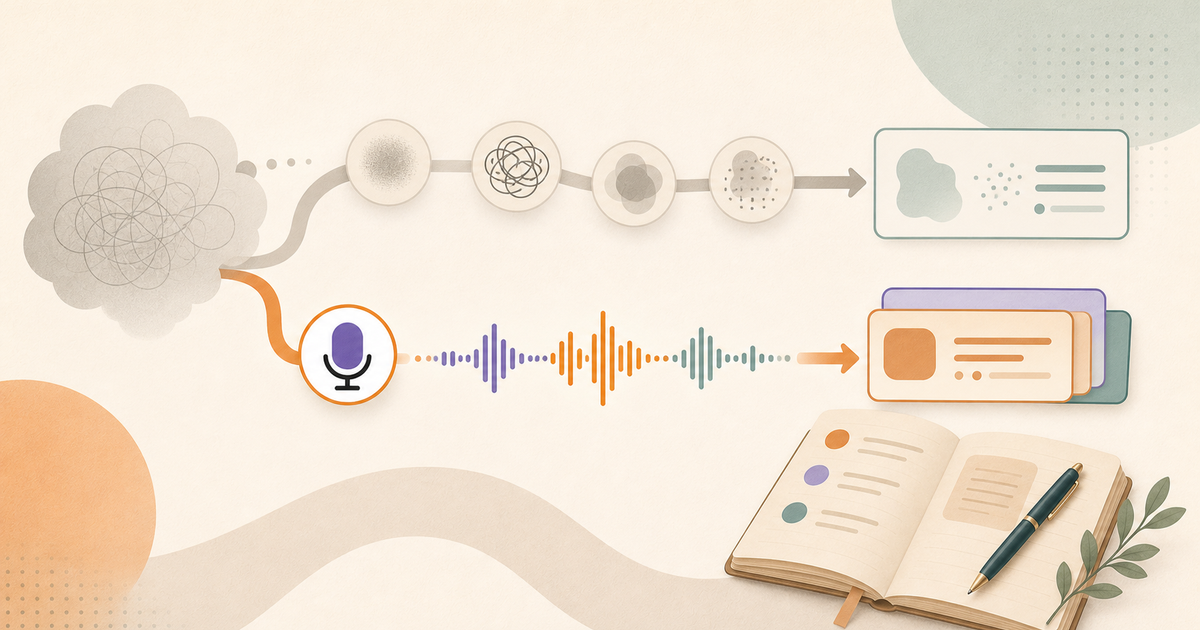
For verbal processors, thinking happens through speaking, not before it. 'Think before you speak' silences the exact mechanism your brain uses to think.
Sunday anxiety isn't irrational. It's your brain running threat-detection on an unprocessed week. A 10-minute voice reset on Sunday can dissolve it.
Remote workers lost more than travel time. They lost 30-60 minutes of daily cognitive processing that happened naturally in the car.
You share a bed, a mortgage, a life. And you feel invisible. The loneliness of being partnered but emotionally alone is real. Here's what helps.
The pressure to forgive can retraumatize. Research shows healing happens through processing, not pardoning. Your anger might be the healthiest thing about you.
The '5 stages' model was never meant as a checklist. Grief returns in waves, years later, without warning. Here's what actually helps.
Always checking exits. Reading every face for threat. Your nervous system is stuck in high alert. Here's the neuroscience and what actually helps.
You've thought about this 50 times. It doesn't resolve. It just loops. The Zeigarnik effect explains why, and speaking breaks the cycle.
17 veterans die by suicide daily. VA wait times average 36 days. The 167 hours between therapy sessions need better tools than a blank notebook.
You say yes to protect the relationship. But absorbing everyone's problems is destroying you. Here's the science of why boundaries protect both sides.
Writing about difficult experiences requires organizing pain into sentences. Speaking just requires opening your mouth. Here's the neuroscience of why voice wins.
You used to surf, travel, work 60 hours. Now your body won't cooperate. The identity gap between who you were and who you are is real. Here's how to bridge it.
Clenched jaw. Tight shoulders. Pit in your stomach. Your body signals what your mind hasn't processed. Here's how naming it out loud changes the response.
Regret loops are your brain replaying decisions without resolution. Speaking regret aloud activates neural pathways that move you from rumination to closure.
Monday mornings set the tone for your entire week. A 5-minute voice ritual clears weekend residue, sets intentions, and creates psychological fresh start.
Heart racing before meetings. Catastrophizing about what might go wrong. A 3-minute voice prep externalizes anxious predictions and grounds you in what's actually happening.
Your best thinking happens at 11pm when the world expects you asleep. Chronotype research shows night owls have peak cognitive performance hours after everyone else.
That brilliant insight you had yesterday? You can't remember it today. The forgetting curve erases most insights within 24 hours unless you externalize them.
Every task screams urgent. Nothing can wait. Your brain treats all demands equally. Voice processing helps separate actual urgency from anxiety-driven false urgency.
Your brain fog at 2pm isn't laziness—it's biology. Ultradian rhythms drain focus every 90 minutes. Voice processing provides clarity when cognitive energy tanks.
You're articulate in conversation but struggle to write coherent thoughts. This isn't a writing problem—it's how your brain processes verbal vs written language.
Anxiety spirals feed on silence. Speaking your fears activates neural pathways that interrupt rumination. Here's the science behind why voice works.
Slack fatigue is real. Async communication creates performative thinking that drains you. Private voice processing provides relief without abandoning clarity.
Burnout drains energy for writing. Voice processing activates different neural pathways than silent thought, making recovery more accessible when you're depleted.
Every decision drains cognitive energy. Voice notes externalize decision processes, freeing working memory and preserving mental resources for what matters.
Context switching between deep work sessions costs 23 minutes of recovery time. A 2-minute voice debrief clears mental residue and prepares for the next task.
Self-talk isn't weird—it's neuroscience. Research shows talking to yourself activates regulatory brain systems that can make emotions easier to handle.
Ideas vanish in 8 seconds without capture. Voice notes are 3x faster than typing, preserve context and emotion, and work when writing is impossible.
Voice is 3x faster and captures emotion. Text is better for reflection and editing. Here's exactly when to use each method for maximum benefit.
New to voice journaling? Start with these simple prompts. No structure needed—just press record and talk. Complete beginner's guide with examples included.
Perfection paralysis stops writing before you start. Speaking bypasses the editor, letting ideas flow freely. You can always edit messy words—you can't edit blank pages.
Changing careers isn't just a job switch—it's an identity shift. Voice processing helps you navigate who you were, who you're becoming, and the grief in between.
Venting feels like relief but often reinforces negativity. Processing creates actual resolution. Here's how to tell the difference and do the one that actually helps.
Parenting is isolating and overwhelming. Voice processing gives you a way to externalize the chaos when writing feels impossible.
Small criticisms feel like rejection. Minor tone changes trigger spirals. Voice processing helps when your emotional reactions are disproportionate to the trigger.
That conversation ended hours ago but you're still replaying it. Voice processing interrupts the rumination loop that keeps you stuck analyzing what you said.
Speaking activates divergent thinking and helps you access creative ideas that stay hidden when you're staring at a blank page.
You're too close to your own thoughts to see recurring patterns. AI detects themes across weeks of voice journals you'd never notice yourself.
Grief moves in waves, and speaking allows you to process emotions as they come without the pressure of coherence that writing demands.
24 jam varieties vs 6 varieties: more choices create paralysis, not confidence. Voice externalizes the paradox and surfaces your real preference.
Processing difficult conversations out loud immediately afterward helps you extract lessons, regulate emotions, and avoid rumination.
The advice to 'sleep on it' isn't folk wisdom—it's neuroscience. Here's what your brain does overnight with unsolved problems, and how to help it work.
Internal reflection works sometimes. Other times it creates rumination loops. Here's the decision framework for when to process out loud.
Not all creative blocks are the same. Mental, emotional, and environmental blocks need different solutions. Here's the voice technique for each.
A 5-minute voice debrief between work and home helps you leave stress behind and show up present for the people you love.
Every unspoken thought, unsaid feeling, and mental to-do is using cognitive resources right now. Research reveals the surprising drain of thoughts you never let out.
75% of ADHD brains are verbal processors. External speech isn't oversharing, it's cognitive scaffolding. Here's why your brain works this way.
Perfectionism keeps you stuck researching forever. This voice technique surfaces your actual decision in under 5 minutes.
Walking increases creative output by 60%. But most brilliant ideas vanish before you get home. Here's the voice capture method that works.
Executive dysfunction makes starting impossible. This voice-based technique bypasses the freeze and gets you moving in 5 seconds flat.
The harder you try not to think about something, the more you think about it. Research reveals why forcing relaxation backfires—and what actually calms racing minds.
50% of everyday forgetting is prospective memory failure. Learn why you forget tasks and how voice captures intentions better than text.
Your working memory holds thoughts for seconds, not minutes. Here's why brilliant insights vanish before you can capture them—and what actually works.
You narrate your day to a pet that doesn't understand you. Weird? Actually, research shows this behavior makes you smarter. Here's why.
You know what you should do. You just don't do it. Research shows speaking intentions aloud makes you 2-3x more likely to follow through. Here's why.
Most therapy happens in the 167 hours between appointments, not the 1 hour in the chair. Here's the simple between-session practice therapists recommend.
Reading and re-reading your notes? There's a faster way. Studies show speaking information aloud boosts retention by up to 92%. Here's why your voice is your best study tool.
Most people end their day without closing the loop. A quick voice review helps you follow through on what matters and let go of what doesn't.
Entrepreneurship glorifies the grind but ignores the mental toll. 72% of founders report mental health challenges. One simple daily practice is changing that.

Decide the outcome, write the one sentence you must say, plan for three reactions, rehearse out loud once, and plan the exit. A 15-minute prep guide.
Most AI journaling advice stops at prompts. Here's what matters: memory, patterns, and systems that reach you first.
Notion databases and Obsidian vaults promise total knowledge capture. But all that filing and linking might be replacing actual thinking.
AI prompts feel magical at first. Then you forget to use them, lose your insights, and quit. Here's why prompts alone aren't enough.
Writing through pain is exhausting. Voice journaling captures how you actually feel, tracks triggers, and helps you communicate with doctors. Here's how to start.
ChatGPT can be a powerful journaling partner. Here are 30 prompts that actually work, plus the gaps you'll eventually notice.
Can't sleep because your brain won't stop? A quick voice brain dump before bed clears the mental queue so you can actually rest.
Writing about anger can make it worse. Research shows speaking it out loud actually releases it faster. Here's why voice processing works when journaling fails.
Speaking decisions out loud offloads cognitive work to external processing. That's why voice memos in the shower lead to better choices than hours of analysis.
Streak-based habit trackers create dependency on the app, not the habit. When the streak breaks, motivation vanishes. There's a better way.
Most productivity advice ignores privilege, caregiving, and real constraints. Here's why the guru playbook doesn't work for most people.
Narrative therapy's externalization technique separates you from your struggles. Speaking problems aloud creates the distance needed to solve them.
People with accountability partners succeed 95% of the time vs 10% alone. Here's why going solo fails and what the research says actually works.
Even Merlin Mann, who coined 'Inbox Zero,' thinks we got it wrong. The obsessive pursuit of empty inboxes creates more stress, not less. Here's what actually works for mental clarity.
Journaling doesn't require writing. If you've abandoned journals because writing feels like a chore, there's another way that might actually work for you.
95% success rate with spoken accountability vs. 10% with silent goals. Voice commitments work when willpower fails.
You handled stress fine for decades. Then at 43, anxiety appeared. What changed—and what actually helps now.
Brain fog after 40 isn't imagination. Research explains why it happens during perimenopause and what actually cuts through the haze.
Empty nest isn't just quiet rooms—it's identity transition. Here's how to process this life stage in a way that helps you move forward.
11pm, exhausted, brain racing. 'Clear your mind' creates more thoughts. Here's what actually quiets them.
47 journals, all abandoned. If traditional journaling has never worked for you, the format was wrong—not you.
Divorce, career change, relocation. Big transitions after 40 require different processing than at 25. Here's what helps.
You haven't 'done anything' but you're depleted. The mental load is invisible cognitive labor—and it's probably why you're tired.
50 practical tips for thinking clearer, worrying less, and getting out of your own head. Organized by situation, backed by research, tested by real people.
Psychologists call it 'private speech.' Athletes, CEOs, and scientists all do it. Here's why talking to yourself works.
30-40% of people think through talking, not writing. If you've abandoned every journal, voice journaling might finally be your format.
Cognitive engagement keeps minds sharp. Voice journaling is daily mental exercise without complex apps or typing.
Your grandchildren can't imagine what you've lived through. Voice journaling preserves your wisdom for future generations.
Long marriages lose intimacy while keeping partnership. Here's how to rediscover connection after decades together.
The average person changes careers 5-7 times. At midlife, the stakes feel higher. Voice journaling helps you think through the transition without the paralysis.
43% of retirees feel identity loss. When work ends, you have to discover who you actually are.
Parents, kids, work, spouse. You're giving 40% of your energy to caregiving. Here's how to process without adding another task.
Hearing yourself explain concepts produces 92% better retention than passive reading. Here's how voice studying works.
Explaining a problem reveals the solution. Speaking changes how your brain processes information. Here's the complete guide.
From silencing racing thoughts at 2am to processing a career change, here are 26 real use cases for voice journaling. Find the one that fits your life.
Voice is 3x faster. Writing is more reflective. Neither is better. Here's how to choose based on your goals.
Skip the 4am ice bath influencer routines. These 15 research-backed morning practices create genuine mental clarity without requiring a personality transplant.
50,000+ thoughts per day, most self-directed. Your inner voice shapes everything. Here's how to make it work for you.
It's not writer's block. Your brain processes writing and speaking differently. Here's the science.
Some people think in pictures. Others think in words. If you need to talk through problems to understand them, you might be a verbal processor. Here's how to tell and why it matters.
Evidence-based strategies for when your mind won't stop racing. From 30-second interventions to daily practices, these techniques actually work.
Process an emotion out loud in five steps: notice it, name it precisely, say it in full sentences, find the need underneath, and pick one next step.
You've been told it's weird. But science says something different. Here's what happens in your brain when you talk to yourself, and why it might be exactly what you need.
'Why did I fail?' vs. 'What did I learn?' The questions you habitually ask shape whether you find solutions or stay stuck.
Stuck staring at the record button? These 30 prompts cover everything from morning intention-setting to processing difficult emotions. Just pick one and start talking.
Everything you need to know about voice journaling: the science, the methods, the tools, and the techniques that actually work. Your complete roadmap from beginner to expert.
Research shows knowledge workers spend 28% of their workweek managing organization tools. Beyond a certain threshold, systems consume more capacity than they enable. Voice capture is radically simple: speak, externalize, done.
Human memory is terrible at tracking mental health patterns. AI voice analysis reveals the cycles you couldn't see: seasonal patterns, weekly rhythms, anniversary reactions, and what interventions actually help.
Skip blank page anxiety. Audio journaling is 3x faster than writing. You already have everything you need.
Research shows over 60% of intensive meditation practitioners report negative effects, including increased anxiety. For minds that can't sit still, active voice processing may provide what stillness cannot.
Written self-reflection often reinforces imposter syndrome by letting you perform competence even in private. Your voice carries hesitation, uncertainty, and fear in delivery—you can't edit your tone in real-time.
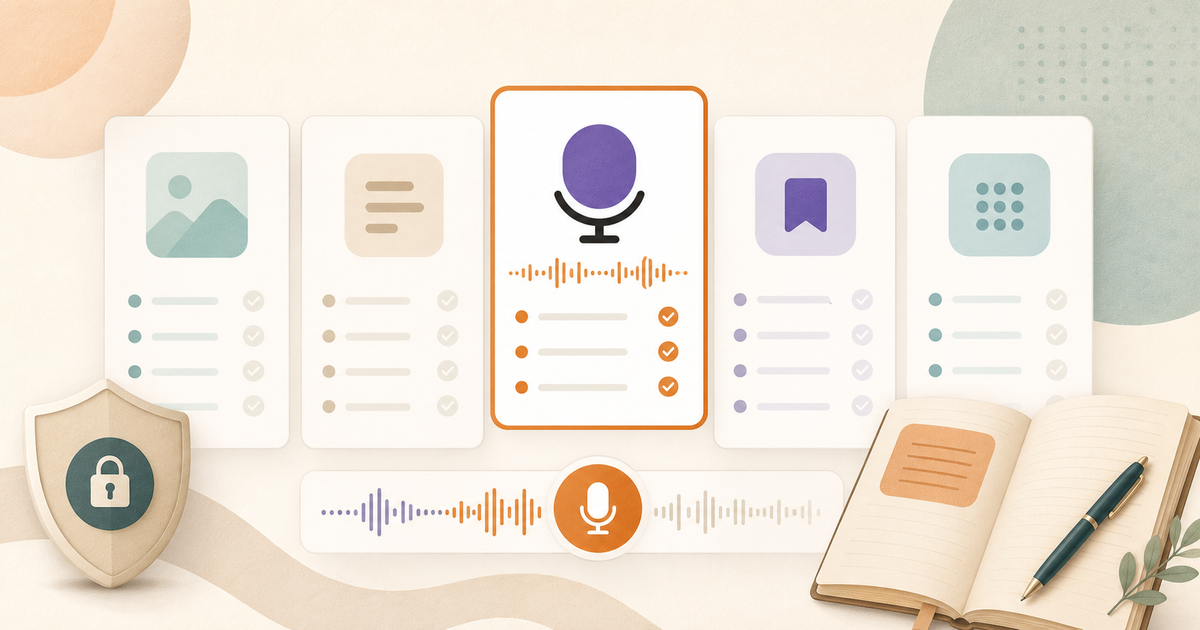
Compare Lound, Rosebud, Mindsera, Day One, and Reflect on voice input, AI responses, privacy, and cost. Plus a practical test before subscribing.
By evening, you're cognitively depleted. Writing requires significant executive function you don't have. Voice journaling requires 40% less cognitive resources—you can process lying down, eyes closed, in fragments.
Harvard psychiatrist John Sharp found we all have an 'emotional calendar' linking moods to seasons, dates, and anniversaries. Most of us don't know ours. Voice journaling makes these hidden patterns visible.
Shane Parrish's Clear Thinking offers a powerful decision framework. But there's a tool he doesn't mention that makes it work faster.
Time is constant but energy is variable. Most productivity tools assume high capacity, making them useless when you're depleted. Voice journaling adapts to your battery level—from deep processing to 30-second acknowledgment.
You know you should pause before reacting. In the moment, it's impossible. Here's a voice-based method that actually works.
Shane Parrish says we run on autopilot more than we realize. Voice journaling creates the gap where real thinking happens.
Kaiser Permanente lists 7 research-backed journaling benefits. Each works better with voice. Here's the upgrade.
Post-conflict rumination amplifies emotional intensity without producing resolution. Voice processing offers a middle path: externalize the full emotional experience without the risk of sending it or documenting it permanently.
Choosing a word of the year feels meaningful. It rarely is. Here's why the practice often backfires and what actually helps you stay intentional.
The fantasy of reinvention is seductive. It's also a setup for failure. Real change doesn't require becoming someone new. It requires understanding who you already are.
Research shows passive social media use increases depression and anxiety through constant upward comparison. Voice journaling offers forced authenticity—you can't curate your tone in real-time.
Goals assume you know what you want. Patterns reveal what you actually do. For lasting change, observation beats intention.
The post-holiday mood crash isn't weakness. It's predictable psychology. Here's what causes January blues and how to prepare before they hit.
Career advice demands clarity you don't have. Voice processing works in uncertainty because it allows you to think without concluding, question without answering, and hold contradictions without resolving them.
Skip the blank page paralysis. These 10 prompts are designed for speaking, not writing, so you can reflect in 2 minutes instead of 20.
Millions buy journals in January. Most quit by February. Here's what the science says about making it stick.
The fresh start effect (Wharton, 2014): Mondays, birthdays, and January 1 make change feel possible. How to use the boost without depending on it.
Your calendar shows where you were. Your emotional calendar shows how you actually felt. Here's how to review your year through the lens of emotional patterns.
Standard self-care advice fails because it requires energy you don't have. Voice processing when burned out isn't about healing—it's about survival-level acknowledgment that takes 30 seconds lying down in the dark.
Before setting goals for the new year, answer these questions. They surface what actually matters and prevent you from making the same mistakes again.
Your mind is carrying more than you realize. Before the new year starts, empty everything out. Here's a 10-minute voice practice to start January with a clear head.
Research shows that writing before bed can increase cognitive arousal exactly when your brain needs to wind down. Voice journaling offers a faster, darker alternative that works with your sleep biology.
When home is the office, you need a psychological exit. A voice shutdown ritual creates the boundary closing the laptop can't.
Three things you're grateful for. Every day. Forever. If it works for you, great. But for many people, forced gratitude becomes just another self-improvement obligation that makes them feel worse.
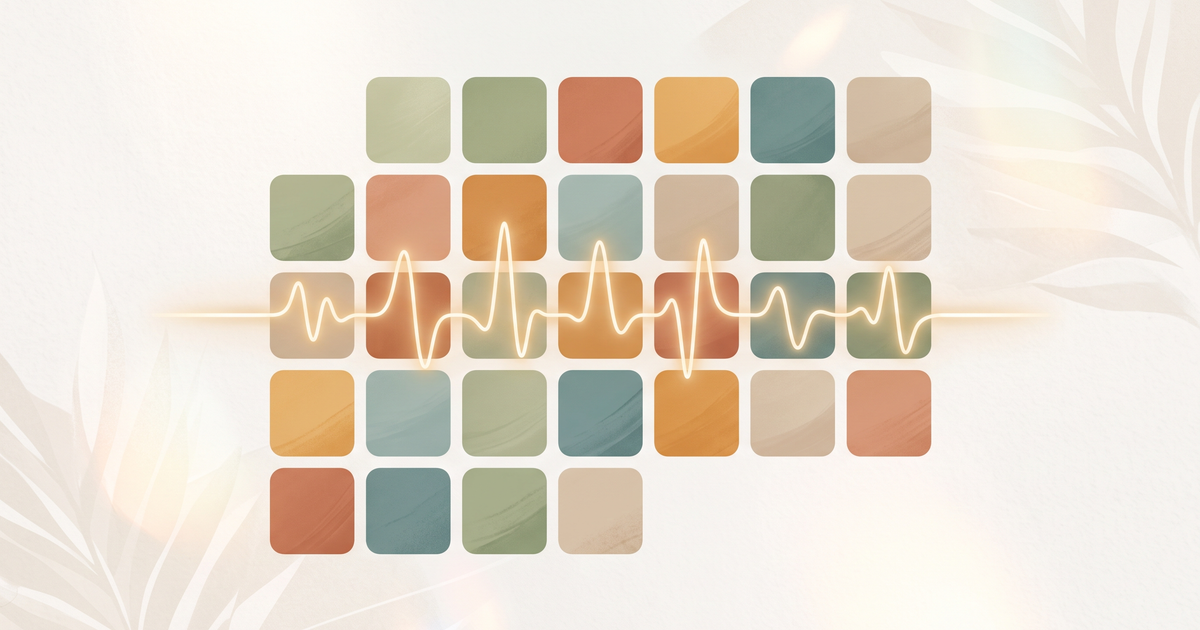
You talk about your day, the AI infers a mood from what you said, and the calendar fills in. Here's what weeks of entries show that a 1-5 rating misses.
Research shows night owls are actually cognitively superior to early risers. Here's why chronotype matters more than wake time, and how to build routines that work with your biology.
Research shows speaking to yourself using your name reduces stress and improves decisions. Here's why this strange technique is surprisingly effective.
That 'where was I?' feeling when you return to complex work costs you 23 minutes every time. A quick voice debrief at the end of deep work sessions preserves the context your future self desperately needs.
Silent worry feeds on itself. Research shows that speaking your anxious thoughts out loud—even to no one—interrupts the mental loops that amplify anxiety.

The best real-world study found a median of 66 days (range 18 to 254). The 21-day figure came from a 1960 plastic surgery book, not habit research.
Research shows more introspection often decreases self-awareness. Here's why speaking works when thinking fails.
You're the worst observer of your own mind. AI surfaces themes and cycles invisible to self-awareness.
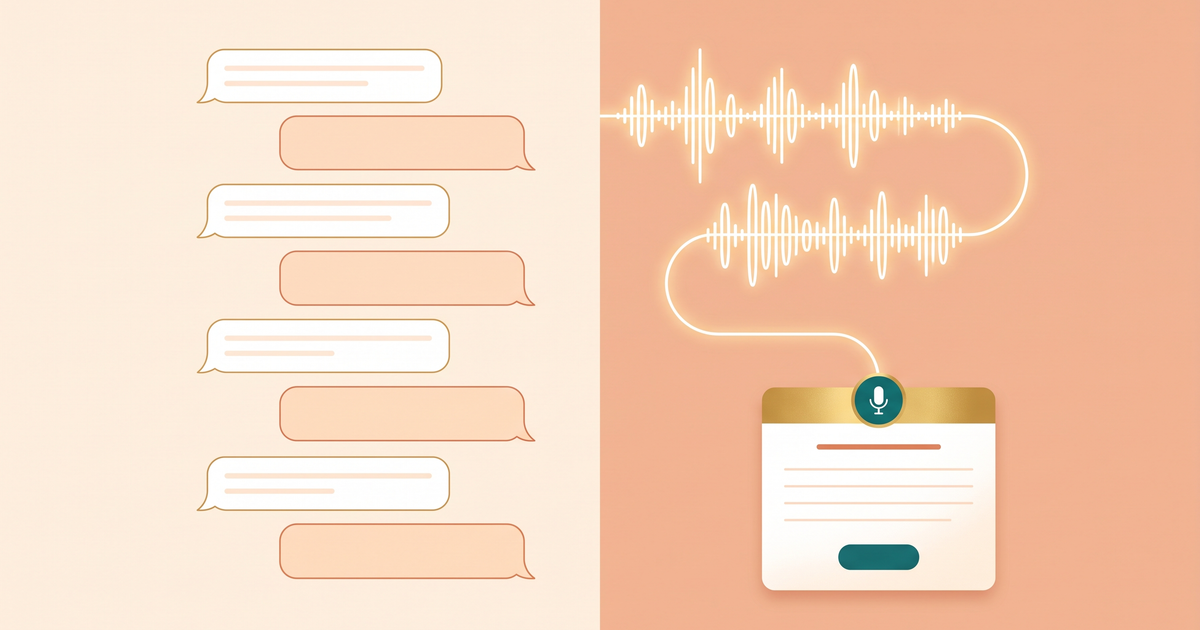
Chat AI is a conversation you type into. Voice-first AI starts with you talking freely and structures it after. Here's what that changes for reflection.
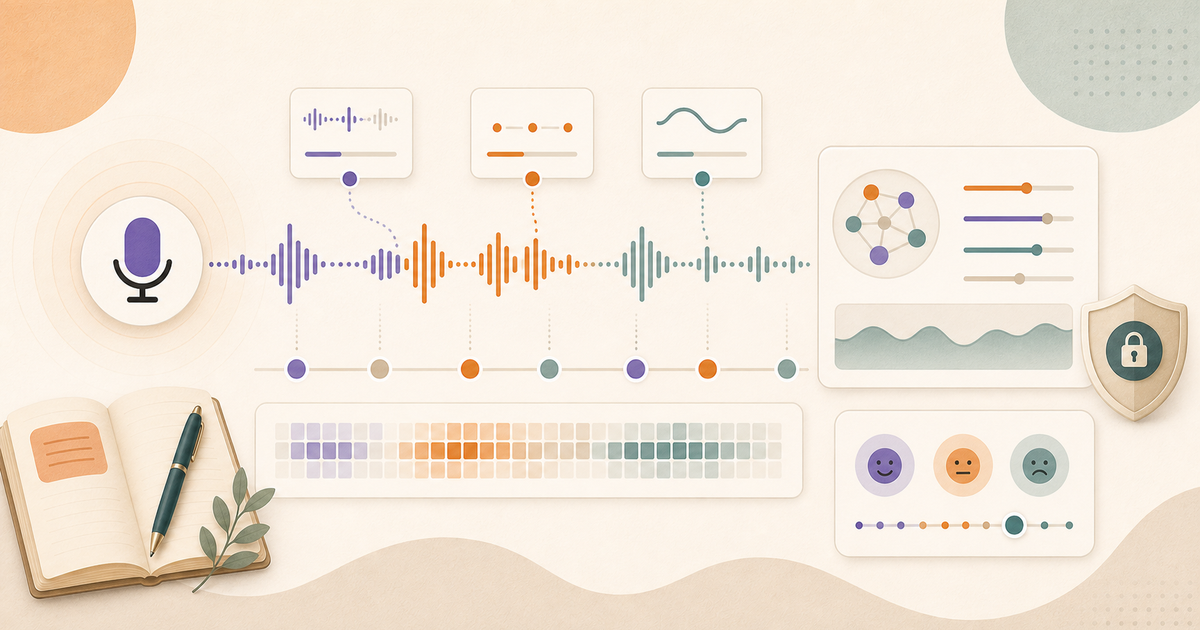
Voice can carry clues through pace, pitch, pauses, and wording. AI can summarize patterns over time, but it should not diagnose you.
Writing demands five executive functions simultaneously—exactly the functions ADHD impairs. Here's why voice journaling bypasses these barriers and finally works with your brain instead of against it.

Talking yourself through a task can feel helpful. What does ADHD research actually show, and how can you keep self-talk from becoming another distraction?
Voice is 3x faster and captures emotion. Text is scannable and precise. Here's when to use each.

The hidden cost of an interruption is reconstructing where you were. Build a useful return note without turning voice capture into another distraction.
Speaking emotions can reduce their intensity. Here's the neuroscience of why verbalizing feelings works.
The optimization mindset treats humans like machines that need constant upgrading. Research shows this pursuit of total control makes life more stressful and empty. Here's why good enough is actually better.

Abandoned another journal? Find the exact sticking point: starting, stopping, privacy, rereading, or the pressure to make every entry profound.
Cognitive defusion: noticing thoughts without being controlled by them. Speaking makes this ACT technique easier.
Over 60% of intensive meditators report negative effects including increased anxiety and depression. Here's what the research reveals about mindfulness side effects that the billion-dollar industry won't tell you.
Forcing yourself to be positive when you're struggling raises cortisol by 23% and increases depression. Here's why authentic emotional expression works better than 'good vibes only.'
Solo entrepreneurship costs more than capital and time—it extracts a loneliness tax most founders don't account for. Voice journaling reduces the psychological toll of building alone.
$100-300 per session, once a week. But you need support daily. Here's how to bridge the therapy gap.
Julia Cameron's Morning Pages transformed millions of creative lives. But hand-cramping three longhand pages takes 45 minutes. Voice delivers the same benefits in 10 minutes—without the notebook.
The invisible labor of parenthood isn't just tasks—it's the mental tracking, planning, and remembering that never stops. Voice journaling externalizes the cognitive overwhelm.
Remote work eliminated commutes and dress codes—but it also eliminated the casual conversations that helped you think. Voice journaling replaces the watercooler you lost.
Writer's block isn't about lacking ideas—it's about perfectionism freezing you before words hit the page. Voice bypasses your inner critic entirely. Here's how.
Solo founders face dozens of decisions daily with no sounding board. A voice decision journal stops the second-guessing.
For millennia, humans thought out loud. Silent internal processing is the historical anomaly. We lost something.
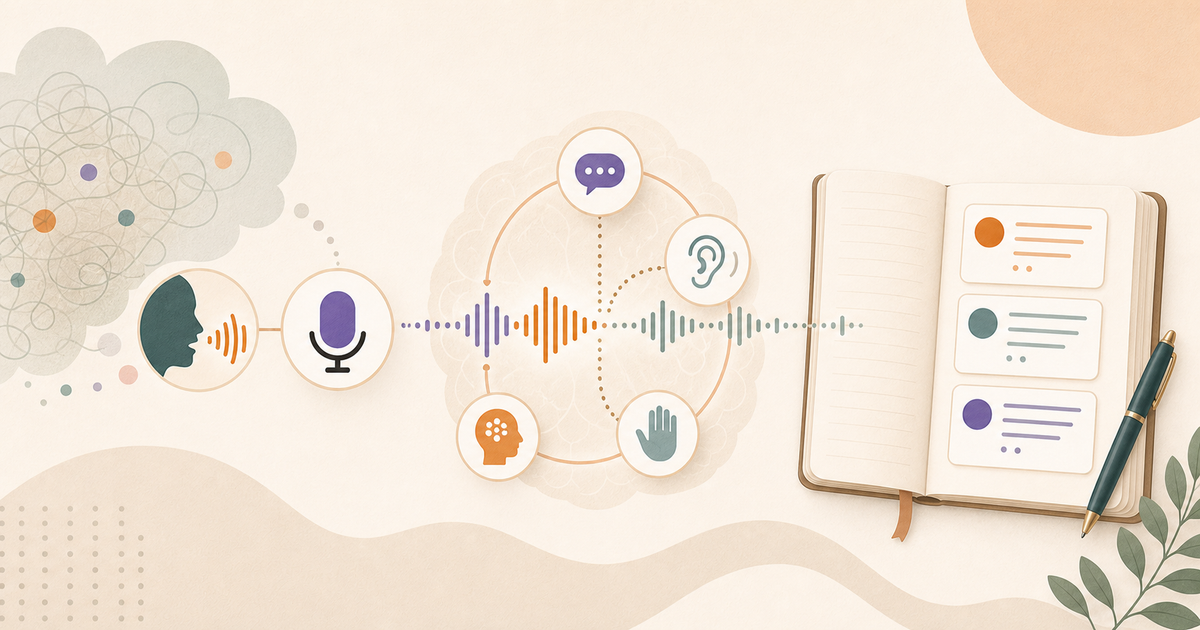
Speaking out loud gives thoughts a second pathway: language, motor action, hearing, and memory all work together.
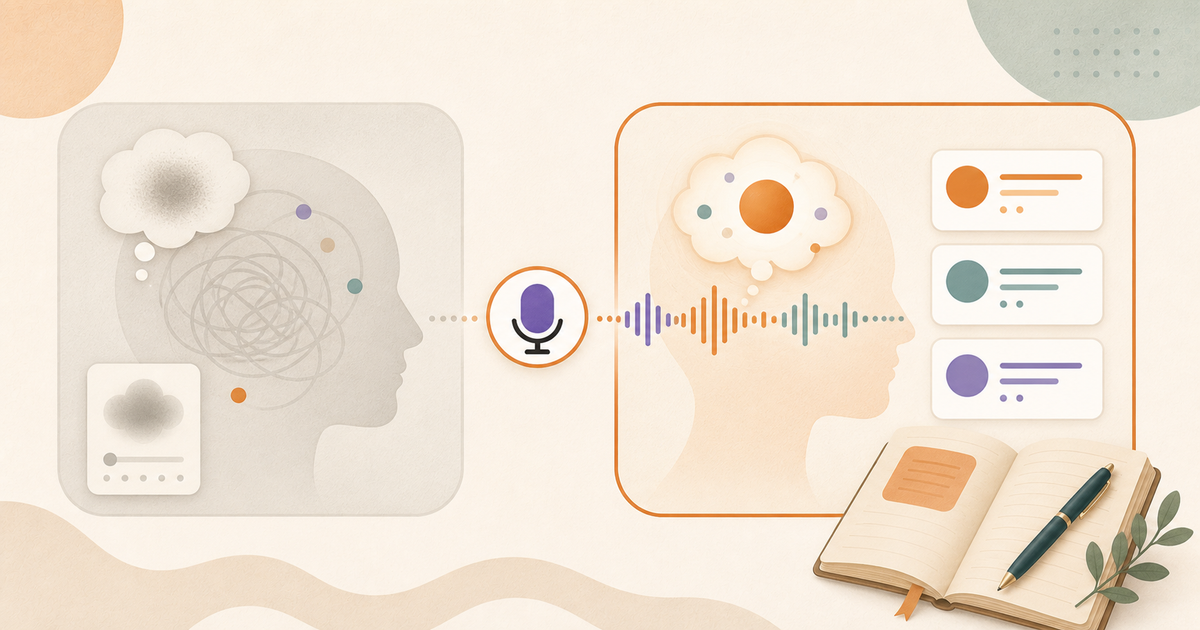
Why can a thought feel clear until you say it? Explore inner speech, spoken self-talk, and a simple way to tell which helps with the task.
Your brain can only hold 3-7 items at once. Voice organization clears the overflow in 10 minutes flat.
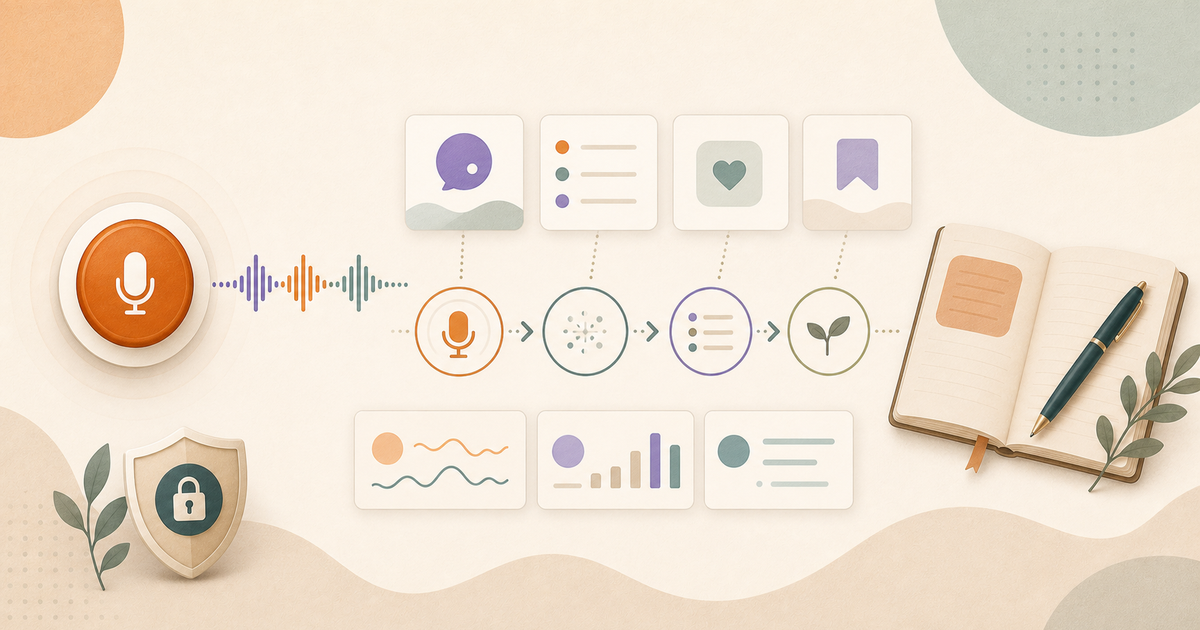
Make a first voice-journal entry you can actually use later. What to say, how to find it again, and what audio, transcripts, and AI each preserve.
No time to meditate? A 5-minute voice reset clears mental fog faster and works in the middle of chaos.
75% of people with ADHD are verbal processors. Voice journaling isn't just helpful. It's how your brain actually works.
When you're mentally overwhelmed, writing helps. But speaking works 3x faster. Here's why voice brain dumps clear your head more effectively than writing.
What UCLA's affect labeling studies found, what they didn't measure, and how to try naming a feeling without expecting instant calm.
Speaking your thoughts isn't weird, it's a cognitive advantage. Neuroscience shows verbalization improves problem-solving, memory, and creativity. Here's how it works.
Self-talk is healthy. Auditory hallucinations are not. Here's the clear difference and when to seek help.
Morning anxiety. Imposter syndrome before meetings. Bedtime rumination. These self-talk patterns are universal.
Stop letting self-talk happen randomly. Train it to help you stay motivated, focused, and calm when it matters most.
Self-talk is usually helpful. But some patterns become toxic. Here's how to tell the difference.
Speaking aloud activates different brain systems than silent thinking. Each has distinct benefits. Here's when to use which.
Your inner critic follows patterns. Reframing, questioning, and third-person techniques can change the script. Here's how.
The way you talk to yourself can protect or harm your mental health. Research reveals which patterns matter.
Motivational, instructional, evaluative, or regulatory. Each type affects you differently. Here's how to use them strategically.
Self-talk regulates emotions, solves problems, and boosts memory. Here's why your brain naturally does it.
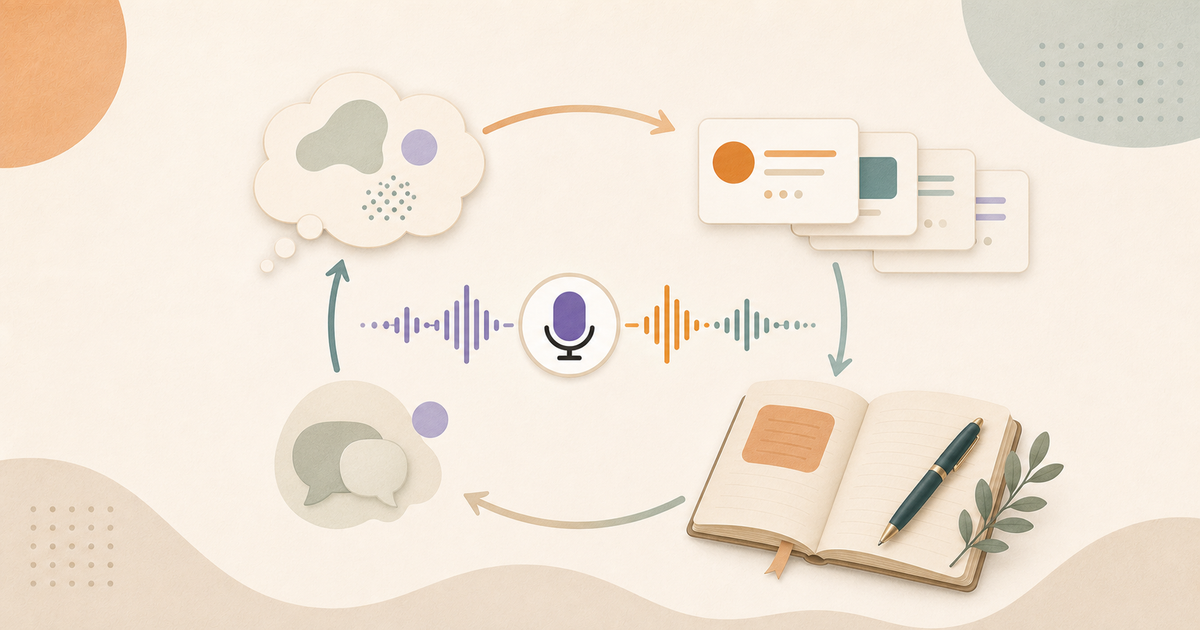
Yes. Talking to yourself, out loud or silently, is normal and useful for most people. What the research shows, and the signs worth raising with a professional.
AI journaling promises deeper self-understanding. But privacy matters. Here's how to use AI reflection safely.
Worry journaling reduces anxiety, but only if done right. Here's how to process fears without rumination spirals.
92% of people who start journaling quit within 2 months. Here's the friction-free method that makes it automatic.
Deep thinking creates solutions. Overthinking creates anxiety. Here's how to tell which one you're doing and flip the switch.
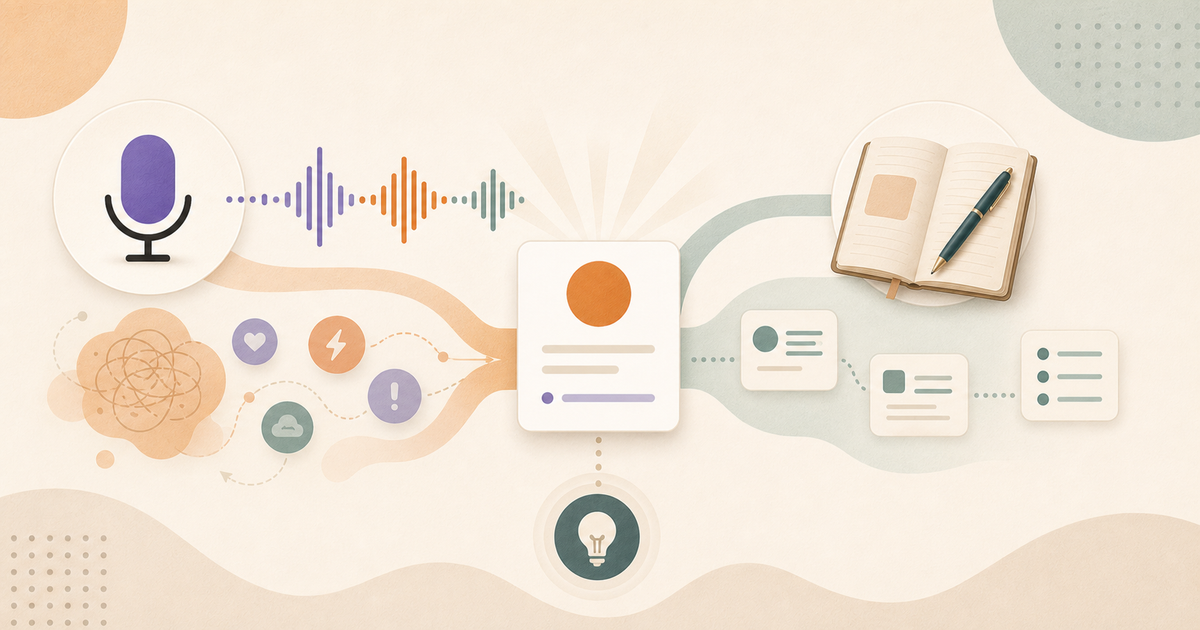
Voice gets a rough thought down; writing lets you inspect it. Compare privacy, editing, recall, and the speed claim that leaves something out.
Internal debates help you think through decisions from multiple angles. It's not crazy. It's problem-solving.
Cognitive reappraisal literally changes your brain's stress response. Here's the technique therapists teach.
Mental fog hits and you don't know where to start. These 10 prompts break through paralysis and give your scattered thoughts direction.
Basketball players score more when they verbalize. You find things faster when you say their name. Here's the research on self-talk and productivity.
The better you understand your own emotional patterns, the more accurately you read others. Self-reflection builds this superpower.
Working memory can only hold 3-7 items. When you exceed that, performance drops. Here's how externalization fixes the bottleneck.
Your working memory holds an idea for 8 seconds. After that, it's gone forever. Here's how to catch every one.
Voice AI taps into how your brain already processes spoken thoughts. It's digital self-talk with memory.
Most self-talk advice is feel-good nonsense. These 3 techniques have real research behind them.
'I am capable' vs. 'I am not good at this.' The words after 'I am' create neural pathways that shape who you become.
Your self-talk can fuel stress or calm it. Here are 8 research-backed phrases that flip the switch.
What to say to yourself before a big meeting, during a workout, or when anxiety strikes. Real phrases that work, organized by situation.
Stanford research found surprising results: verbal processing helps some people but hurts others. Here's how to know which you are.