Your Mood Tracker Says Sad. Voice Explains Why
Mood tracking names the state. Voice journaling can preserve the story, context, and pattern behind it.
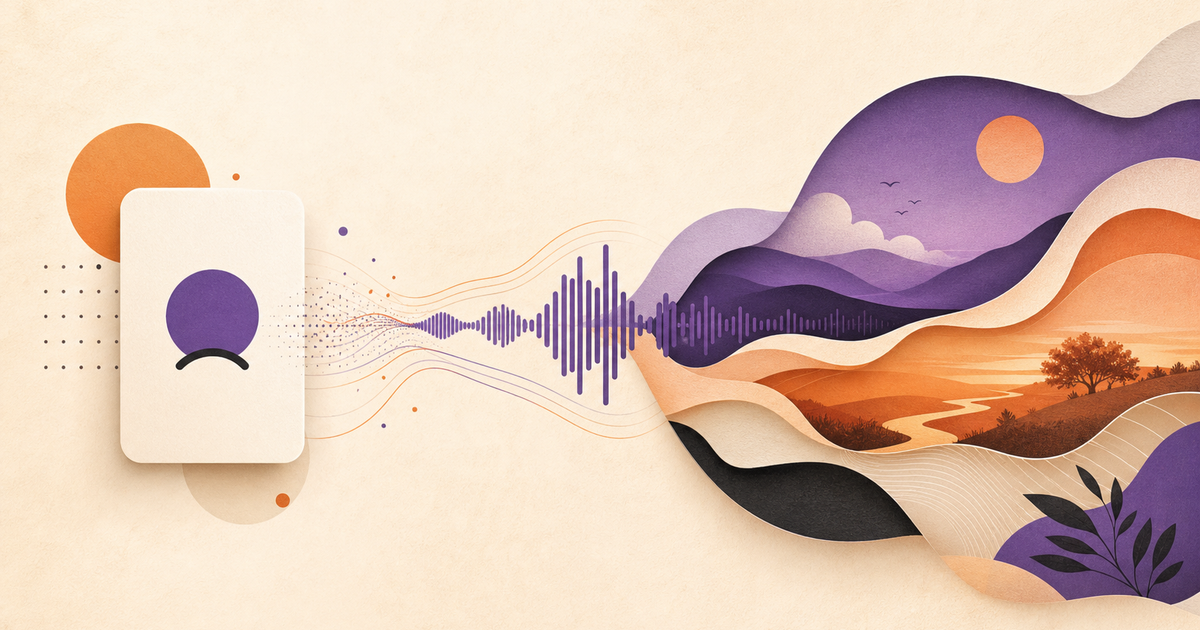
Your mood tracker says “sad.” Your voice explains why, and that is the difference between a label and a story.
Mood trackers are useful because they create structure. They help you notice that something changed. They make reflection quick enough to repeat.
But they can also flatten the thing you are trying to understand.
Sad can mean ten different things
“Sad” might mean you miss someone, feel exhausted or excluded, or are bored, disappointed, overstimulated, lonely, grieving, or quietly angry. The same label can point to different needs, which is why the context matters.
A voice journal app lets you keep the context without turning every entry into an essay.
Voice keeps the edges
When you speak, you capture the rough edges of the feeling.
You say:
“I think I am sad, but it is more like I am tired of being the one who notices.”
That sentence gives you more to work with than a mood dot.
You say:
“I was fine until I saw everyone making plans without me.”
Now the app has a clue about the trigger.
You say:
“I do not even think I want the thing. I think I want to stop wanting it.”
That roughness is why it is useful.
Mood data gets better with words
A mood label can tell you what day was hard. Words can tell you what kind of hard, and over time, that matters.
Maybe “sad” clusters around Sunday nights. Maybe it shows up after certain calls. Maybe it is connected to under-sleeping, skipped meals, or a project you keep postponing.
This is pattern recognition, not diagnosis.
The goal is to understand your own record well enough to make better decisions.
The best combination
You do not have to choose between mood tracking and voice journaling. Use the label for speed and voice for meaning.
Record a short entry that starts with:
“The mood label is sad, but the real thing is…”
Then talk for two minutes.
Do not solve it. Explain it, because that explanation becomes useful later.
What Lound adds
You talk, and Lound turns the recording into an entry with a transcript, a title, a summary, a mood it inferred from what you actually said, and themes, so the label never floats alone. Your emotional calendar colors each day by that mood, and you can tap any day to read what was behind it.
If a pattern shows up across weeks of entries, Lound can show it to you, with the entries behind it, without telling you what your life means. It hands you the evidence so you can decide what deserves attention.
Keep reading
For overthinking, read Voice Journaling for Overthinking. For the happiness side of this question, read When Do I Actually Sound Happy?. For a year-level view, read What Your Year Really Looked Like: The Emotional Calendar.
Questions people ask
Is voice journaling better than mood tracking?
They do different jobs. Mood tracking is quick and structured. Voice journaling adds context, story, and personal patterns behind the label.
Can Lound diagnose my mood?
No. Lound is not a diagnostic tool. It can help organize self-reflection, but it does not diagnose or treat mental health conditions.