Why Embarrassment Feels Like Everyone Noticed (They Didn't)
The spotlight effect makes awkward moments feel more visible than they are. A voice debrief turns social panic into facts.
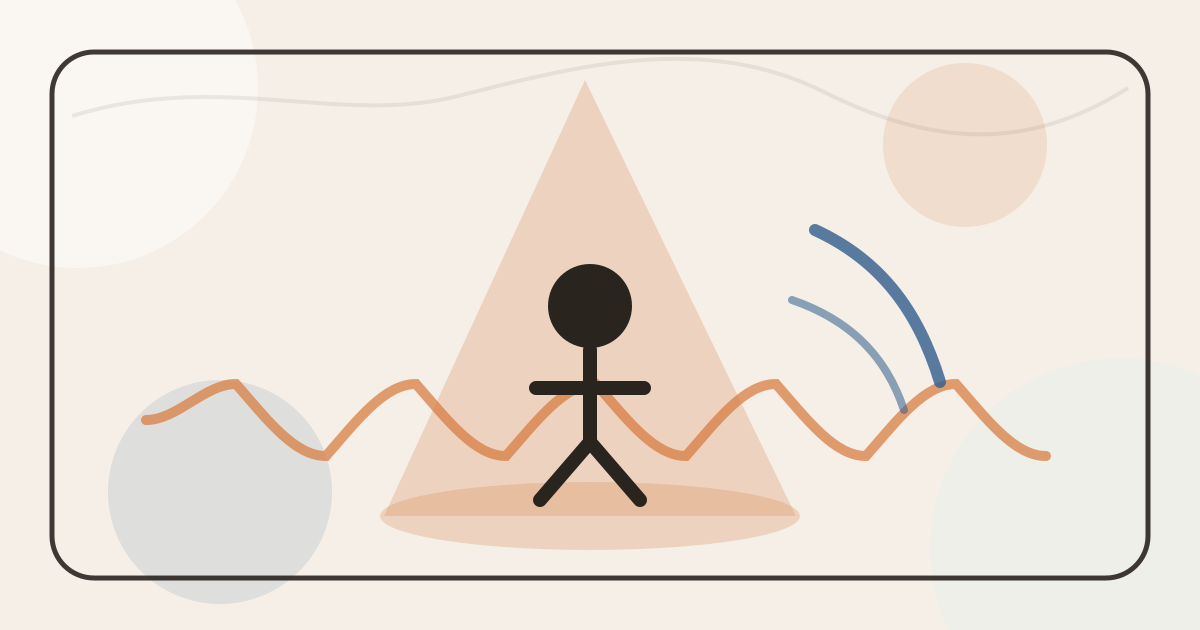
Embarrassment feels like everyone noticed. Most of the time, your brain is doing bad math.
It counts one awkward sentence as if everyone saw it, stored it, discussed it, and built a permanent file around it.
That is rarely what happened.
Psychologists call this the spotlight effect: we tend to overestimate how much other people notice our actions and appearance. In the classic paper on egocentric bias in social judgment, the core idea is simple and brutal: because you are central to your own experience, you can forget that you are not central to everyone else’s.
Why your brain invents an audience
After an awkward moment, your mind may replay the scene with imaginary commentary:
- “They definitely noticed.”
- “Now they think I am strange.”
- “I made the whole room uncomfortable.”
- “I should have said it differently.”
Some of that may contain useful information. Most of it is your internal camera pretending to be an external camera.
A voice journal for anxiety gives you a place to unload the replay without treating it as a transcript.
How to fact-check an awkward moment
Record for two minutes using two sections.
First: “What my embarrassment says happened.”
Second: “What I actually know happened.”
This sounds small. It is not. It forces the imagined audience to show its work.
“Everyone thought I was stupid” becomes “One person paused before answering.”
“I ruined the mood” becomes “The conversation moved on after 20 seconds.”
“They will remember this forever” becomes “I cannot name a similar mistake someone else made last week.”
The best debriefs are boring on purpose. You are trying to make the replay less cinematic.
Use blunt categories:
- What was observable?
- What did I infer?
- What did I predict?
- What would I know if someone else had done this?
That last question is useful because embarrassment makes your own mistake feel like a public event and everyone else’s mistake feel like background noise.
Let the journal do the subtraction
This is where AI can be genuinely useful.
Not by saying “do not worry.” That is usually useless.
Better:
- You used certainty words five times: “everyone,” “definitely,” “forever.”
- The factual section named one observable event.
- The fear section predicted other people’s thoughts without evidence.
- Similar entries cooled down after one day.
That is the kind of pattern a person can use.
The journal should not ask you to become calm before recording. It should accept the messy replay, then help you subtract:
panic minus observable facts.
identity story minus one awkward moment.
certainty words minus actual evidence.
Debrief before the replay becomes identity
Embarrassment becomes heavier when it turns into identity:
“I am awkward.”
“I am bad at people.”
“I cannot be trusted in groups.”
A better sentence is:
“I had an awkward moment, and my embarrassment is doing bad math.”
Then record the receipt.
Keep reading
For replay loops, read Post-Conversation Rumination. For a structured debrief, read The Difficult Conversation Debrief. For social fear, read Social Anxiety.
Questions people ask
Why does embarrassment feel like everyone noticed?
The spotlight effect makes you overestimate how much other people notice your actions, appearance, or mistakes.
How can voice journaling help after embarrassment?
A voice debrief can separate what happened from what your nervous system assumes everyone noticed.