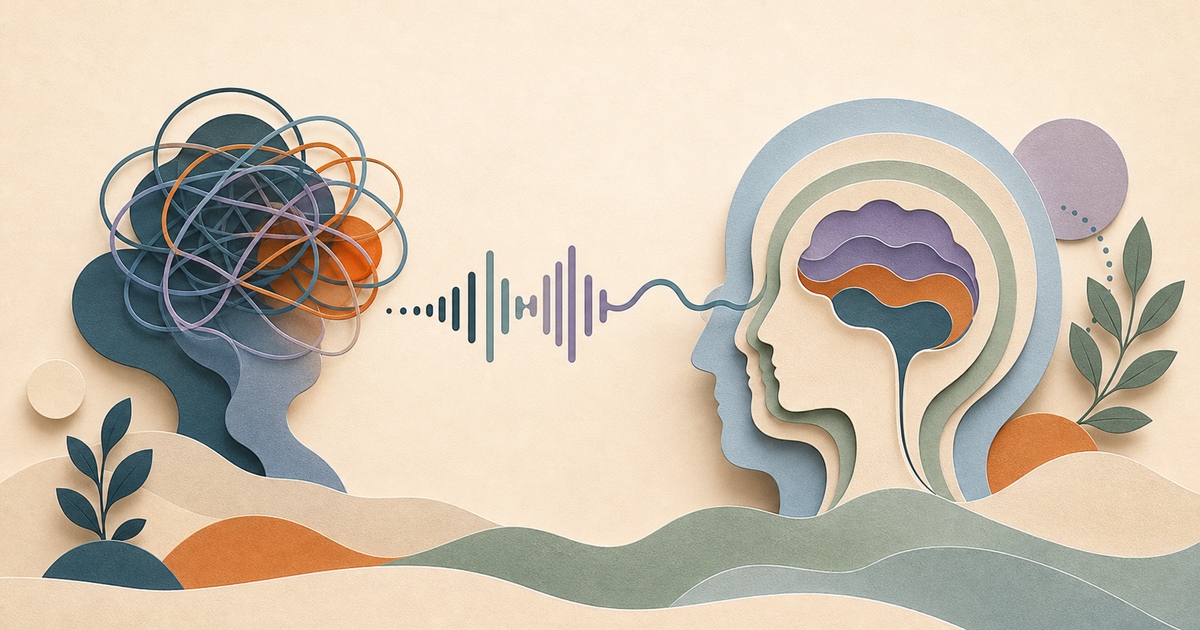
What To Do When You Can't Name The Feeling
Emotional clarity does not always start with the perfect word. Start with body, context, and contrast, then let the label emerge.
Sometimes you know you feel something, but you do not know what it is.
Not sad exactly.
Not angry exactly.
Not anxious exactly.
Just off.
That moment can be frustrating because so much emotional advice starts with “name the feeling.” But what if you cannot?
You do not have to start with the perfect word.
Feelings Often Arrive Before Language
Emotions do not always show up as clean labels.
They often show up as:
- Tight chest
- Heavy limbs
- Fast thoughts
- Irritability
- Avoidance
- Numbness
- Wanting to cancel everything
- Wanting someone to ask what is wrong
Your body may know before your vocabulary does.
This is why your body keeps score. Physical signals can be the first clue that something needs attention.
Start With The Body
When you cannot name the feeling, describe the sensation.
Say:
“My chest feels tight.”
“My stomach feels low and heavy.”
“My shoulders are tense.”
“My face feels hot.”
“My body wants to hide.”
This is still useful emotional processing. You are giving the feeling a shape before giving it a name.
Affect labeling research shows that putting feelings into words helps regulate emotional intensity. The word does not have to be perfect on the first try. Approximation is a start.
Use Context
Next, say what happened before the feeling appeared.
“I felt this after reading that message.”
“It started when I realized I had to make the decision today.”
“It came up after the meeting ended.”
“I noticed it when I got home and everything was quiet.”
Context narrows the field. A heavy feeling after rejection might be shame. A heavy feeling after too much responsibility might be overwhelm. A heavy feeling after good news might be fear of change.
The same sensation can mean different things depending on the situation.
Use Contrast
If you cannot say what the feeling is, say what it is not.
“It is not panic. It is slower than that.”
“It is not anger. It feels more like hurt.”
“It is not sadness exactly. There is some embarrassment in it.”
“It is not dread. It feels like pressure.”
Contrast is underrated. Eliminating wrong labels helps the right one emerge.
This builds emotional granularity, the ability to distinguish between similar emotional states. More precise emotional language often leads to better regulation because the response can fit the actual feeling.
The Lound Prompt
Press record and say:
“I cannot name this feeling yet. In my body, it feels like…”
Then continue:
“It started after…”
Then:
“It is not exactly…”
Then:
“The closest word might be…”
You might end up with one word. You might end up with a phrase:
“Tired but guilty.”
“Angry with embarrassment under it.”
“Lonely but also relieved.”
“Anxious because I care.”
Those phrases count.
Sometimes more than one label fits because the situation contains a real tradeoff. Mixed feelings about a decision can help you distinguish a missing fact from a cost you need to accept or reject.
Why Voice Helps
Writing can make you stop at “I feel bad” because finding the exact word takes effort.
Speaking lets you circle the feeling naturally. You can try words, reject them, revise, and listen to what sounds true.
Lound can preserve that exploration. Over time, it can also help you notice which vague feelings repeat and what they tend to become once you understand them.
You do not need the perfect label to begin.
Start with what your body knows. Let language catch up.
Questions people ask
What if I cannot name what I am feeling?
Start with physical sensations, context, and simple contrast. Say where you feel it, what just happened, and what it is not. The exact emotion label can emerge later.
Why is naming emotions hard?
Emotions often appear first as body sensations, urges, or vague discomfort before language catches up. Stress and overwhelm can also reduce emotional precision.
Does emotion labeling still help if the label is imperfect?
Yes. You do not need the perfect word immediately. Even approximate labeling, such as 'this feels like anxiety or dread,' can begin the regulation process.