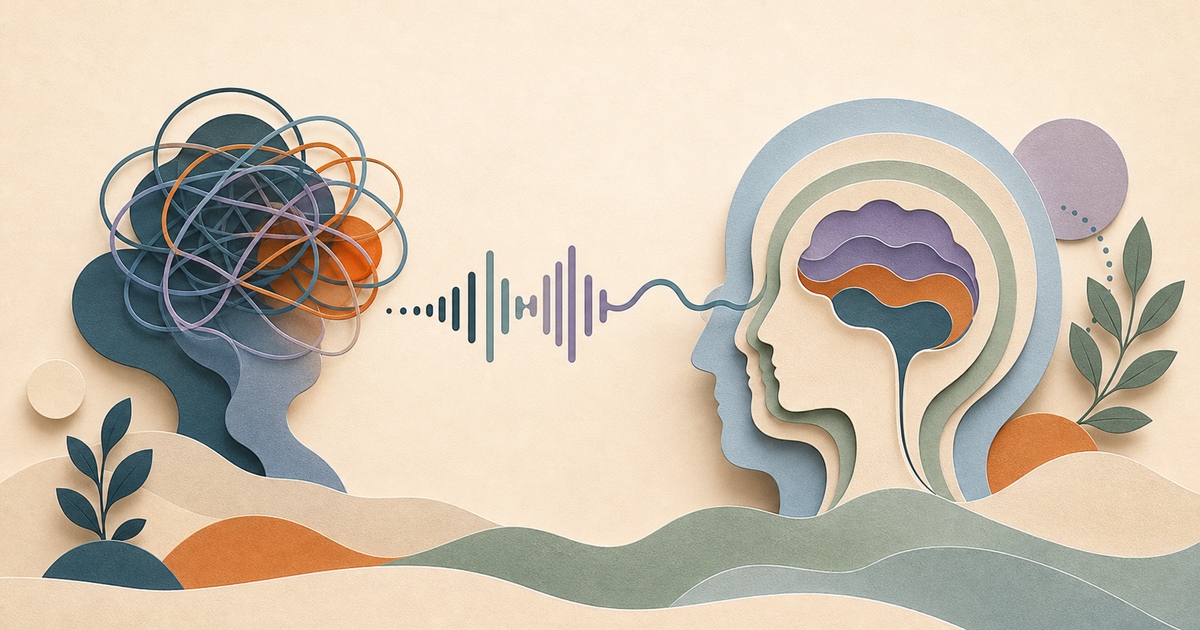
Why AI Journals Feel Dumb on Day One
Patterns in stress, decisions, and relationships need multiple entries to become visible. AI gets more useful as your history grows.
You cannot see a pattern from one point.
One voice entry can tell you what was happening that day. A month of entries can show what keeps happening.
That is why reflection gets more useful with time. Not because every entry is profound, but because ordinary entries become evidence.
One Entry Is a Snapshot
A single entry might say:
“I feel anxious about work.”
That matters. It may help you calm down, name the feeling, or decide what to do next.
But by itself, it cannot tell you whether work anxiety is rare, seasonal, attached to one person, worse after certain meetings, or part of a larger pattern of over-responsibility.
For that, you need more moments.
This is the core reason AI pattern recognition in journaling becomes more useful over time. The AI does not need to be mystical. It needs enough of your history to compare.
AI is better at the second part than the first. It cannot live your day for you, but it can scan across entries and notice repeated people, topics, emotions, and phrases you would not have time to manually review.
Patterns Hide Inside Normal Life
The most important patterns often do not announce themselves.
They sound ordinary:
- “I am tired again.”
- “I do not know why this person gets to me.”
- “I think I already decided.”
- “I keep putting this off.”
- “I felt better after saying it out loud.”
Each sentence can seem small in the moment. Repeated across entries, it becomes harder to dismiss.
That is why stopping goal-setting and noticing patterns can be more useful than forcing another plan. Sometimes the plan is not the missing piece. The missing piece is seeing the loop clearly.
Self-Monitoring Works Because It Creates Feedback
Reflection is a form of self-monitoring. You are creating a record of what happened, how it felt, and what you did next.
Behavior change research often treats self-monitoring as a key ingredient because it gives people feedback they would otherwise miss. A review summary from NCBI discusses Susan Michie and colleagues’ work on behavior change techniques, including self-monitoring, in health behavior interventions: Effective techniques in healthy eating and physical activity interventions.
Voice journaling is not the same as tracking calories or exercise. The mechanism is softer, but the principle is related. When you record experience over time, you stop relying only on memory.
Memory is useful. It is also mood-colored.
Your entries give you something steadier to return to.
Time Shows What Survives Mood
On a bad day, everything can sound bad.
On a good day, the same issue may seem manageable.
Neither day is the whole truth.
Patterns emerge when you can see what survives different states. If you mention the same relationship when you are sad, calm, excited, and exhausted, that relationship deserves attention. If a project keeps making you sound alive even when you are busy, that matters too.
This is where an emotional calendar can help. Seeing mood and topic over time gives you a larger view than any single entry can provide.
The Best Patterns Are Specific
Useful patterns are not vague labels like:
“I am stressed.”
Useful patterns sound more like:
- “I feel rushed before standing meetings with no agenda.”
- “I second-guess decisions after talking to one specific person.”
- “I get clearer when I explain the problem out loud before asking for advice.”
- “I use busyness to avoid grief.”
- “I am most grounded after walking and recording.”
Specific patterns create choices.
If you know the meeting is the problem, you can change the meeting. If you know advice makes you second-guess yourself, you can pause before asking. If you know walking helps, you can use it on purpose.
Your Own Words Carry Authority
There is a particular kind of credibility that comes from hearing yourself say the same thing more than once.
Advice from someone else can bounce off. A prompt can feel generic. But your own words, repeated across time, are harder to ignore.
That is why remembering your own insights matters. Insight is not only having a good thought. It is being able to find it again when you need it.
Search matters here too. A searchable journal makes old thoughts usable again, especially when AI can help surface the right thread at the right time.
Give the Pattern Enough Time
Do not judge the practice too early.
The first few recordings may feel like isolated thoughts. That is normal. Keep going long enough for the entries to begin speaking to each other.
Record when something is confusing. Record when something feels clear. Record after conversations, before decisions, and during ordinary days that do not seem important.
Later, those ordinary days may explain more than you expect.
Questions people ask
Why do journal patterns need time?
Patterns need time because one entry only shows one moment. Multiple entries show what repeats across moods, situations, relationships, and decisions.
How many entries do I need before patterns appear?
There is no exact number, but many people start seeing useful signals after a few weeks of repeated entries. The more varied your entries are, the easier it becomes to see what keeps showing up.
What kinds of patterns can voice journaling reveal?
Voice journaling can reveal repeated stressors, emotional cycles, decision loops, relationship dynamics, avoided topics, and moments when you sound most clear or alive.
Can AI help find journal patterns?
AI can help summarize repeated themes, topics, and mood signals across entries. It should offer evidence from your own words rather than making sweeping claims.