Busy Mind or Anxiety? How to Tell the Difference
A busy mind can reflect worry, planning, creative thought, stress, or unfinished tasks. The pattern and impact matter more than mental volume.

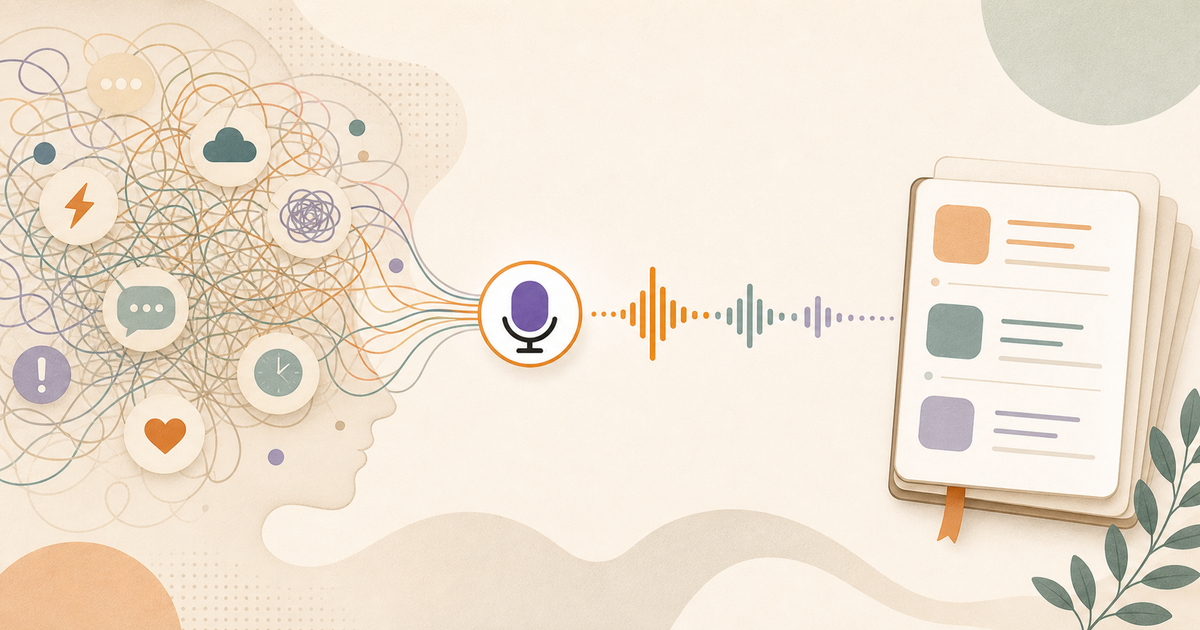
A busy mind and anxiety can overlap, but mental volume alone cannot tell you which one you are experiencing. A busy mind may move freely among plans, memories, ideas, and unfinished tasks. Anxious thinking is more often threat-focused, repetitive, difficult to control, and costly to sleep or daily functioning.
The useful questions are: What are the thoughts doing, how flexible are they, and what do they cost you?
A lot of thought is part of ordinary cognition
A recent neuroscience review estimates that people spend roughly 30% to 50% of waking life off task. The researchers distinguish relatively flexible spontaneous thought from more constrained forms such as worry and rumination.
That distinction is more useful than counting thoughts.
- Flexible thought changes topic and can produce ideas, plans, or memories.
- Constrained thought keeps returning to a narrow concern.
- Goal-directed thought may feel busy because you are deliberately solving something complex.
- Open-loop thought returns because a task, decision, or conversation remains unfinished.
All four can feel loud from the inside.
Compare movement, content, control, and cost
| Signal | Busy but flexible | More anxiety-like |
|---|---|---|
| Movement | Shifts among topics | Returns to the same threat |
| Content | Ideas, plans, memories, tasks | Danger, uncertainty, failure, loss |
| Control | Can often pause after capture or action | Feels difficult to postpone or redirect |
| Body | Activated by interest or workload | Tension, restlessness, dread, sleep trouble |
| Cost | Distracting but sometimes useful | Persistent distress or impaired functioning |
Use this table to describe the pattern, never to diagnose it. A clearer description helps you choose a more relevant response.
Anxiety is defined by more than thinking a lot
The National Institute of Mental Health describes generalized anxiety disorder as excessive worry that is difficult to control, lasts for months, and interferes with life. Its official GAD guidance also lists restlessness, irritability, concentration problems, fatigue, muscle tension, and sleep problems among possible symptoms.
Occasional worry does not meet that description. Neither does a mind full of neutral ideas, future plans, or self-talk by itself.
If you are wondering why your mind is never quiet, notice the verbs. Is it inventing, planning, rehearsing, checking, predicting, accusing, remembering, or solving? “Busy” hides those differences.
Unfinished tasks produce a specific kind of noise
Some busy thinking is a reminder system working overtime. A diary study of employees found that unfinished tasks predicted weekend rumination and poorer sleep, with affective rumination helping explain the link.
For open loops, try recording:
The unfinished thing is ___. The next visible action is ___. I will return to it at ___.
If the thought quiets after that, it likely needed a reliable return point. If it immediately generates five new threats, you may be dealing with a worry loop rather than a missing task marker.
The distinction between a thought loop and a thought stack is useful here. A stack contains several unresolved items. A loop repeats one item without producing new information.
Run a 60-second thought sort
Record one minute without trying to calm down. Then answer:
- Content: Are these thoughts mostly threats, tasks, ideas, memories, or social replays?
- Movement: Did the minute contain several topics or one repeated claim?
- Control: Can I set one thought aside after naming a next step?
- Cost: Is this blocking sleep, work, connection, or ordinary care?
- Duration: Did it begin with a recent stressor, or has it persisted across months and situations?
Match the response to the pattern:
- For a task stack, capture the next action and stop holding the whole project.
- For idea flow, save the best two ideas instead of organizing every branch.
- For a social replay, separate remembered facts from predictions about what others think.
- For persistent, hard-to-control worry, consider professional support instead of relying on a journaling technique alone.
Trying to force every active mind to relax can add another demand. The post on why your brain cannot just relax explains why active processing sometimes needs structure before rest becomes available.
Know when self-observation has reached its limit
Talking to yourself is common, and ordinary self-talk serves several cognitive jobs. A journal can help you describe frequency, triggers, and impact. It cannot determine a diagnosis.
Speak with a qualified mental health professional when worry is difficult to control, persists for months, or significantly affects sleep, work, relationships, or daily functioning. Bring a few concrete observations: what the thoughts focus on, when they start, what happens in your body, and what you can no longer do easily.
The number of thoughts is rarely the clearest signal. Their movement, subject, controllability, and cost tell you much more.
Questions people ask
Is a busy mind always anxiety?
No. A busy mind can reflect ordinary spontaneous thought, planning, creativity, stress, verbal processing, or unfinished tasks as well as anxiety.
What makes anxious thinking different from a busy mind?
Anxious thinking is more likely to be threat-focused, repetitive, hard to control, persistent, physically activating, and disruptive to sleep or daily life.
When should I get help for a busy mind?
Consider a qualified mental health professional when worry is difficult to control, persists for months, causes significant distress, or interferes with sleep, work, relationships, or daily functioning.