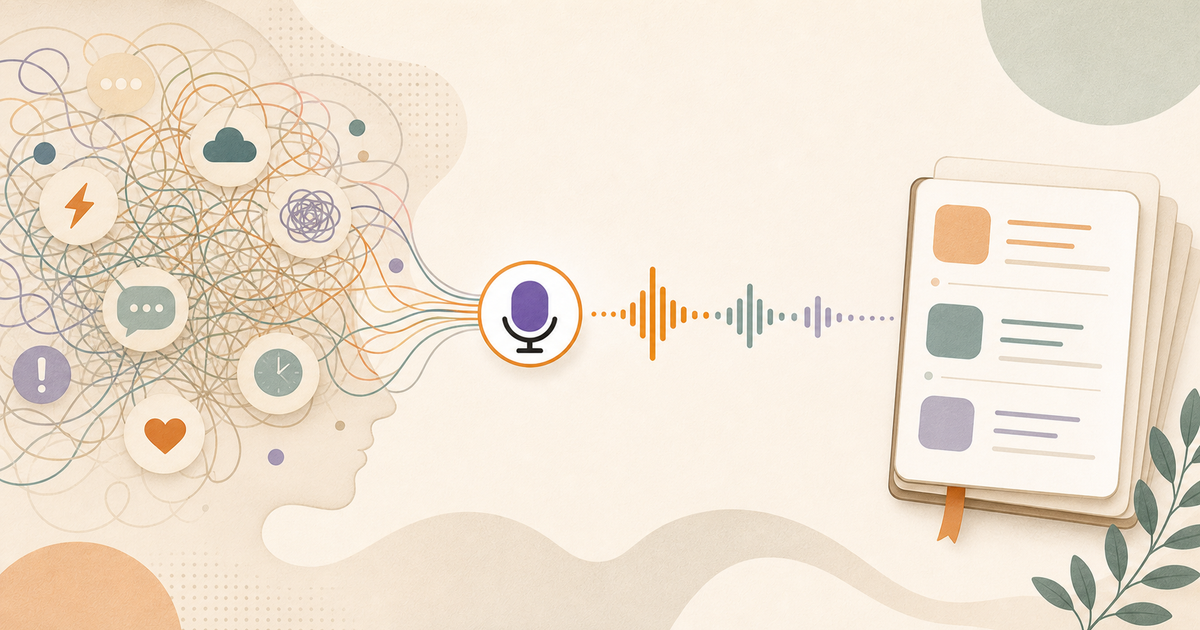
Worry Time: What to Do When 'Later' Doesn't Work
If a worry keeps reopening, capture the question, choose when you will revisit it, and return to the task in front of you.

You tell yourself you will think about it later, then reopen the same worry ten minutes later. A scheduled review is more useful when you have captured the actual question, chosen a time you can keep, and decided what you will do when that time arrives.
This is an everyday self-help option, not a promise that anxious thoughts will stop.
Give the concern somewhere to go
Suppose a friend has not replied about a weekend plan. While working, you keep checking whether the silence means they no longer want to meet.
A usable note might be: “I haven’t heard back about Saturday. I will check after dinner and send one practical follow-up if we still need to book.”
That is enough to preserve the issue. You do not need to transcribe every possible explanation for the silence. Leaving a question open can mean acknowledging what you do not know without spending the afternoon investigating it.
The NHS describes worry time as a short, designated period for considering worries, alongside distinguishing practical problems from hypothetical concerns. Its guidance suggests trying a brief daily window, rather than allowing worry to occupy the whole day.
What happens when the review arrives?
Read or listen to the note once. Decide which of these applies:
- Something needs doing: Send the booking question.
- You are waiting for information: Name what information and when it could reasonably arrive.
- There is no action available: Acknowledge the uncertainty without creating another checking task.
For the unanswered message, a booking deadline is actionable. “Prove my friend isn’t annoyed” is not a task you can complete with another reread of the chat.
This distinction keeps a scheduled review from becoming a daily appointment to rehearse the same worst-case scenario. You can end the review without solving an uncertainty that depends on someone else.
Why a specific plan differs from ‘later’
In experiments on unfinished goals, making specific plans reduced some of the interference those goals caused on other tasks. Participants did not have to complete the goal first. Those were laboratory measures, not a trial showing that a voice note treats anxiety.
That result supports a modest idea: specify what you will do next, rather than repeatedly remind yourself that something remains unresolved. The return time is part of the plan, not a deadline for feeling better.
When the thought comes back anyway
It can return even after you have written it down. That does not make the note a failure. Briefly check whether there is genuinely new information. If there is not, return to the activity you had chosen, without expanding the note each time.
In Lound, you can record the concern and use an entry’s “Come back to this” action to choose a return time. That preserves the context without making the app responsible for settling the uncertainty.
If worry repeatedly disrupts sleep, work, or daily life, talk with a qualified professional. A mind that never feels quiet has more than one possible explanation. For unfinished work rather than a hypothetical worry, a concrete restart note may fit the problem better.
Questions people ask
What does it mean to park a worry?
Capture the concern and decide a realistic time to revisit it, rather than repeatedly trying to solve it while doing something else.
Will postponing a worry make it disappear?
No. The point is not suppression; it is giving the concern a bounded place so it does not run every moment.
What if the worry is urgent?
Act on an immediate safety or practical need. Parking is for concerns that can wait until a planned review.