Record the Prediction Before You Know the Outcome
Outcomes edit your memory of what you expected. A prediction journal preserves your confidence, reasoning, and emotional forecast for review.
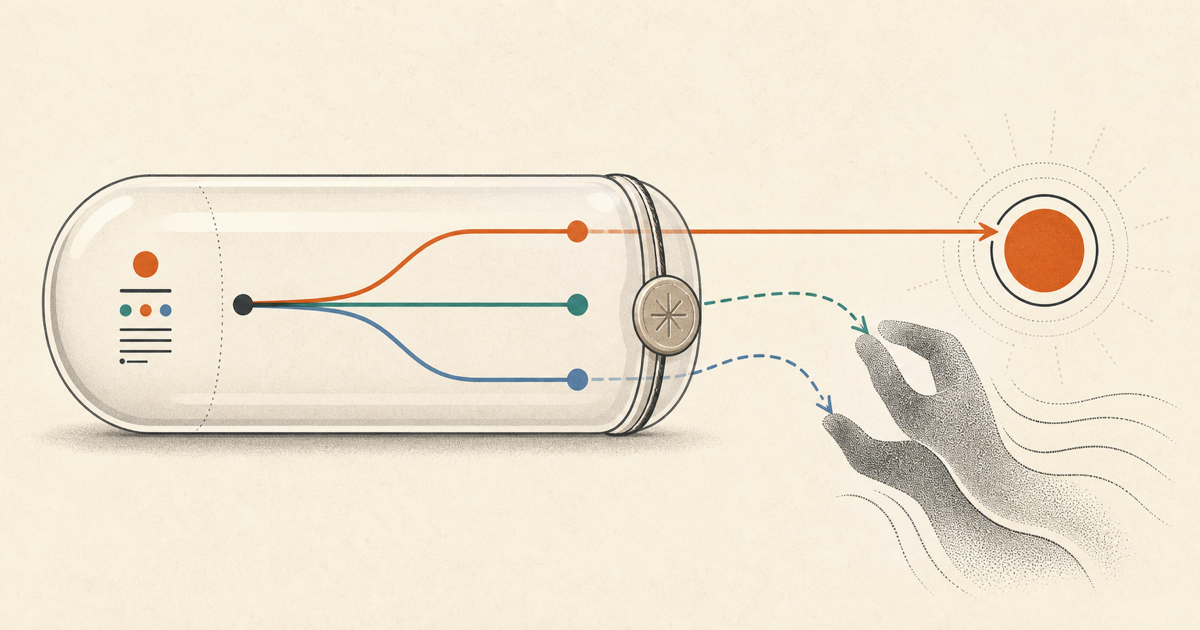
Record a prediction before the outcome if you want to learn how your judgment actually works. Once you know what happened, your memory starts making the result feel more expected than it was.
In two experiments on hindsight bias, participants made predictions immediately before learning the outcomes. They could not plausibly forget which option they chose, yet outcome information still changed how certain they remembered being and how strong they remembered their reasoning. A timestamped prediction gives future-you evidence that memory cannot quietly revise.
A useful prediction has a number
“I think the meeting will go badly” is difficult to review. Badly can mean discomfort, rejection, delay, conflict, or simply not getting an immediate yes.
Make it testable:
“I think there is a 70% chance they delay the project. I expect the conversation to feel 8 out of 10 stressful during it and 5 out of 10 an hour later.”
The number is not a claim of scientific precision. It forces you to distinguish “possible” from “probable” and “unpleasant” from “catastrophic.”
Record six fields
Use this template:
- Outcome: What exactly do I expect?
- Probability: How likely is it, from 0% to 100%?
- Evidence: What are the two strongest reasons?
- Uncertainty: What important fact do I lack?
- Emotion forecast: How intense, how frequent, and how long?
- Update trigger: What evidence would change the prediction?
Example:
“I predict a 60% chance I regret declining the offer. My evidence is the salary and the team’s reputation. The missing fact is how much travel the role really requires. I expect regret to feel 7 out of 10 for a month. A written travel estimate under 20% would change my view.”
Now you have something worth reviewing.
Predict the feeling, then inspect the miss
People often decide by imagining how an outcome will feel. That is useful, but the forecast has several parts.
Research on affective forecasts in major decisions found that people can be more accurate about some features of emotion than others. Research on “immune neglect” shows another problem: people can overlook the coping strategies that will shape how they actually feel.
Do not only predict intensity. Predict:
- intensity: How strong will the feeling be?
- duration: How long before it changes?
- frequency: How often will it show up?
- recovery: What will I probably do to cope?
You may learn that you predict the direction correctly but overestimate how continuously an event will dominate your life.
Review the process, not only the result
A good decision can have a bad outcome. A weak prediction can get lucky.
At the review date, ask:
- What happened?
- Which evidence mattered?
- What did I overweight?
- What did I ignore?
- Was my probability too high or too low?
- How did the actual feeling differ in intensity, duration, or frequency?
- Which coping response did I fail to anticipate?
This is where a decision journal becomes more than a record. Repeated forecasts reveal whether you are systematically too certain, too pessimistic about recovery, or too optimistic about other people’s follow-through.
For consequential choices, make the forecast during a voice-journaling decision review so the probability sits beside the values and tradeoffs that produced it.
Keep forecasts separate from self-worth
The purpose is calibration, not a scoreboard proving that you have good or bad intuition.
Use categories:
- well reasoned and correct
- well reasoned and wrong
- poorly reasoned and correct
- poorly reasoned and wrong
The second category often teaches more than the first. It shows where reality changed despite sound reasoning. The third protects you from rewarding a guess merely because it worked.
It also prevents an old insight from feeling obvious only after you rediscover it. The dated forecast shows what was actually visible at the time.
One forecast worth making today
Choose something with a review date within two weeks:
- how a conversation will go
- whether a task will take two hours or six
- how you will feel after saying no
- whether a worry will still matter next Friday
- whether rest will improve a problem you currently call urgent
Record the forecast before asking anyone else. Then let the outcome answer without editing the original question.
Questions people ask
What is a prediction journal?
A prediction journal records what you expect before an outcome, including confidence, reasons, emotional forecast, and what evidence would change your view.
How does a prediction journal reduce hindsight bias?
It preserves the original forecast so the known outcome cannot replace your memory of what you believed, how certain you were, or why.
What should I record before a decision?
Record the expected outcome, probability, strongest evidence, biggest uncertainty, predicted feelings, and a date for review.
Do people accurately predict their future feelings?
People can often predict the general direction of emotion, but research finds errors in expected intensity, duration, frequency, and the role of coping.