Why Rehearsing a Hard Conversation Can Backfire
Rehearsal helps when you practice your goal and likely branches. A perfect script can increase anxiety and collapse when the other person improvises.
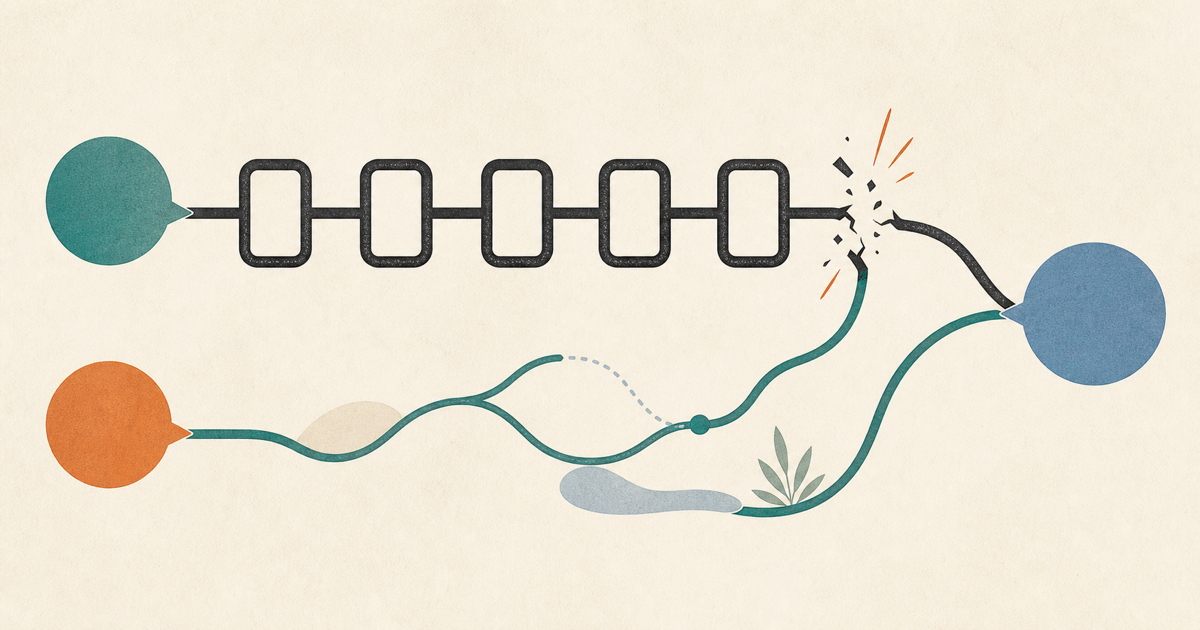
Rehearsing a hard conversation helps when it prepares you to act. It can backfire when you rehearse a perfect scene, repeat the most threatening outcome, or memorize wording that depends on the other person following your script.
Research makes the distinction clearer. In a classic process-versus-outcome simulation study, mentally practicing the steps improved planning and reduced anxiety more than imagining the desired result. Research on anticipatory processing found that repeatedly engaging the negative mental habits common in social anxiety sustained anxiety and raised peak anxiety during a later speech.
Preparation is useful when it produces options. Repetition without new options often becomes dread.
Check what your rehearsal is doing
Useful rehearsal answers:
- What do I need to say first?
- Which facts can I support?
- What am I asking for?
- What boundary will I hold?
- How will I recover if I get flustered?
Anxious rehearsal repeats:
- What if they think I am difficult?
- What if they deny everything?
- What if I cry?
- What if I forget the perfect wording?
- What if this ruins the relationship?
Both can feel like preparation because both happen before the event. Only the first set changes your ability to respond.
The memorized speech has a hidden dependency
A perfect script assumes a cooperative scene partner.
You plan:
“When I say X, they will understand Y. Then they will apologize, and I will explain Z.”
The actual person says, “I have no idea what you mean.”
Now you are not only surprised. You may feel that the conversation has already failed because it left the route you practiced.
Use a map with several branches instead:
| If they respond with… | Your job is… |
|---|---|
| Agreement | Make the next step specific |
| Confusion | Give one concrete example |
| Defensiveness | Return to impact and request |
| Counterattack | Pause rather than litigate everything |
| Refusal | State the boundary and what you will do |
This form of rehearsal protects the purpose even when the wording changes.
Rehearse four anchors
Record a private practice note with four parts.
1. Purpose
“I want us to agree on how weekend plans get made.”
The purpose should describe a workable result, not the other person’s emotional transformation.
2. Opening
“When plans change after I have arranged childcare, I lose time and money. I need us to confirm by Thursday.”
Keep it short enough to say while nervous.
3. Boundary
“If plans are not confirmed by Thursday, I will assume they are off.”
A boundary describes your action. It does not require the other person to agree that you are right.
4. Recovery line
“I am getting ahead of myself. The main point is Thursday confirmation.”
This is the sentence you use when you lose the thread.
The full guide to preparing for a difficult conversation can help with the content. This four-anchor practice is for keeping the conversation usable under pressure.
Run the anti-rumination test
After one rehearsal, ask:
- Did I add a fact, decision, boundary, or response option?
- Do I feel more able to act?
- Am I practicing my behavior or predicting their character?
If nothing new appeared, stop. You are likely replaying threat rather than training a response.
Use the remaining time for something that changes the conditions: sleep, notes, a calendar check, a specific example, or support from someone trustworthy. More rehearsal does not solve missing evidence.
If the conversation already happened, switch tasks entirely and use a difficult-conversation debrief instead of continuing to rehearse a scene you can no longer change.
Practice tone without chasing performance
Voice practice can reveal whether your opening is too long, vague, apologetic, or accusatory. Listen for understandable words, not a perfectly calm voice.
You may shake. You may pause. You may need notes. None of those outcomes make the boundary less valid.
For a specific refusal, practice saying no out loud in two versions: warm and direct. That gives you range without demanding a theatrical performance.
The ten-minute limit
Try this before the next hard conversation:
- 2 minutes: say what happened without interpretation
- 2 minutes: state what you need
- 3 minutes: practice the four response branches
- 2 minutes: shorten your opening
- 1 minute: record your recovery line
Then stop rehearsing.
The goal is to enter the conversation with a clear purpose and several ways forward. You cannot pre-record the other person’s part, and you do not need to.
Questions people ask
Should I rehearse a difficult conversation?
Yes, but rehearse your purpose, opening, boundary, and possible branches instead of memorizing a perfect speech.
Why does rehearsing make me more anxious?
Rehearsal can become anticipatory processing, where you repeatedly imagine failure, criticism, or humiliation without learning anything new.
What should I practice before a hard conversation?
Practice one clear opening, the facts you can support, the request or boundary, and how you will respond to agreement, confusion, defensiveness, or refusal.