Why 'Fine' Keeps You Stuck: Emotional Granularity Explained
'Fine' isn't a feeling. It's a placeholder. Emotional granularity means naming the specific emotion, and that precision helps you regulate what you're feeling.
You’re not actually feeling “fine.”
Or “bad.” Or “off.” Or “a lot.”
Those words are placeholders. They blur together different emotional states that need different responses. If you keep using one label for everything, your brain never gets the specificity it needs to understand what is happening.
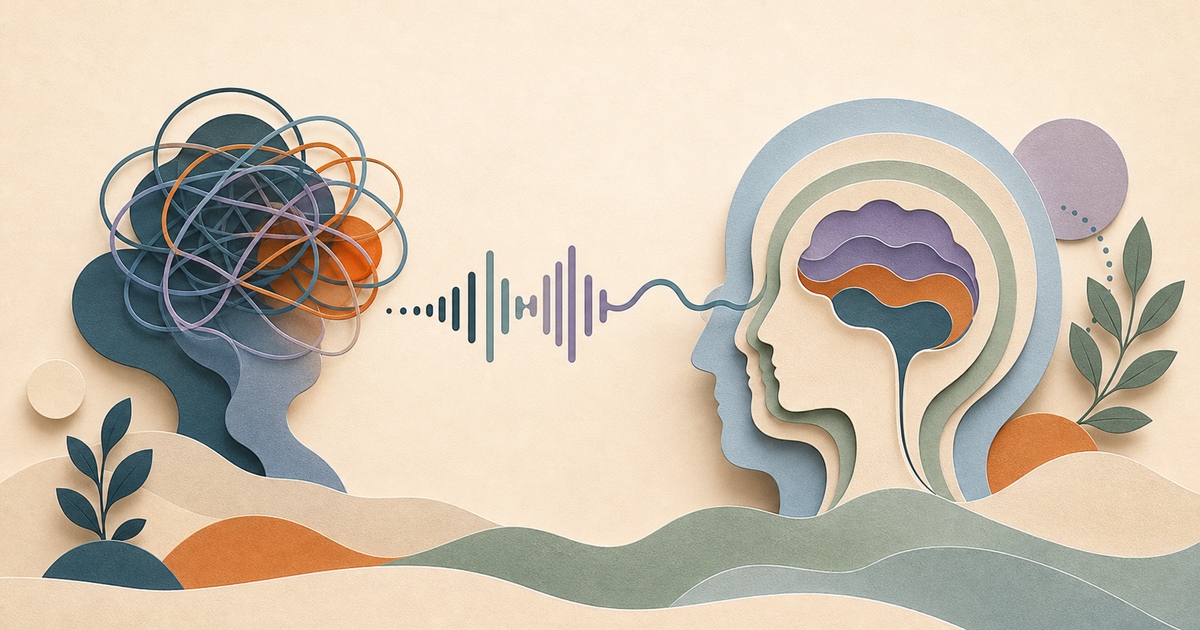
Psychologists call this emotional granularity. It means being able to tell the difference between similar emotions instead of lumping them into one vague category.
That matters because vague feelings are hard to work with. Specific feelings are manageable.
What emotional granularity actually means
Emotional granularity is the difference between:
- “I feel bad”
- “I feel disappointed”
- “I feel embarrassed”
- “I feel anxious”
- “I feel lonely”
- “I feel trapped”
Those are not interchangeable.
If you’re disappointed, you may need to grieve an expectation. If you’re anxious, you may need certainty, reassurance, or a plan. If you’re resentful, you may need a boundary. If you’re ashamed, you may need self-compassion and perspective rather than action.
When everything gets compressed into “fine” or “stressed,” the signal gets lost.
Why vague emotional labels keep you stuck
Your nervous system does not respond to poetry. It responds to clarity.
When you say “I’m just weird today,” nothing gets resolved. Your brain still has to keep scanning for the real problem. That creates the familiar feeling of being emotionally unsettled without knowing why.
This is why some people stay in low-grade distress all day. The emotion is present, but it never gets fully named. And unnamed emotions tend to keep running in the background.
Putting feelings into words helps because language turns an emotional blur into something your brain can organize.
Not solve instantly. Organize.
That alone often lowers the intensity.
”Fine” hides useful information
“Fine” can mean:
- “I don’t want to explain this right now.”
- “I don’t know what I feel yet.”
- “I feel several things at once.”
- “I’m upset but don’t want to look dramatic.”
- “I’m tired and emotionally flat.”
Those are very different states.
If you tell yourself “fine” when you’re actually angry, the anger doesn’t disappear. It leaks into your tone. If you say “fine” when you’re actually hurt, you may start acting distant and not understand why. If you say “fine” when you’re actually overwhelmed, you may keep pushing until your system crashes.
The issue is not the word itself. The issue is when the word replaces self-awareness.
Self-awareness through speaking works better than silent introspection for many people because speech forces you to keep refining the thought until it sounds true.
Why speaking helps you get more precise
You can think “I feel weird” for hours.
Once you start talking, that usually changes:
“I feel weird. No, not weird. I feel tense. Actually I feel tense because I’m bracing for tomorrow’s meeting. And I think I’m also annoyed that I had to spend all day fixing something I didn’t break.”
That’s emotional granularity happening in real time.
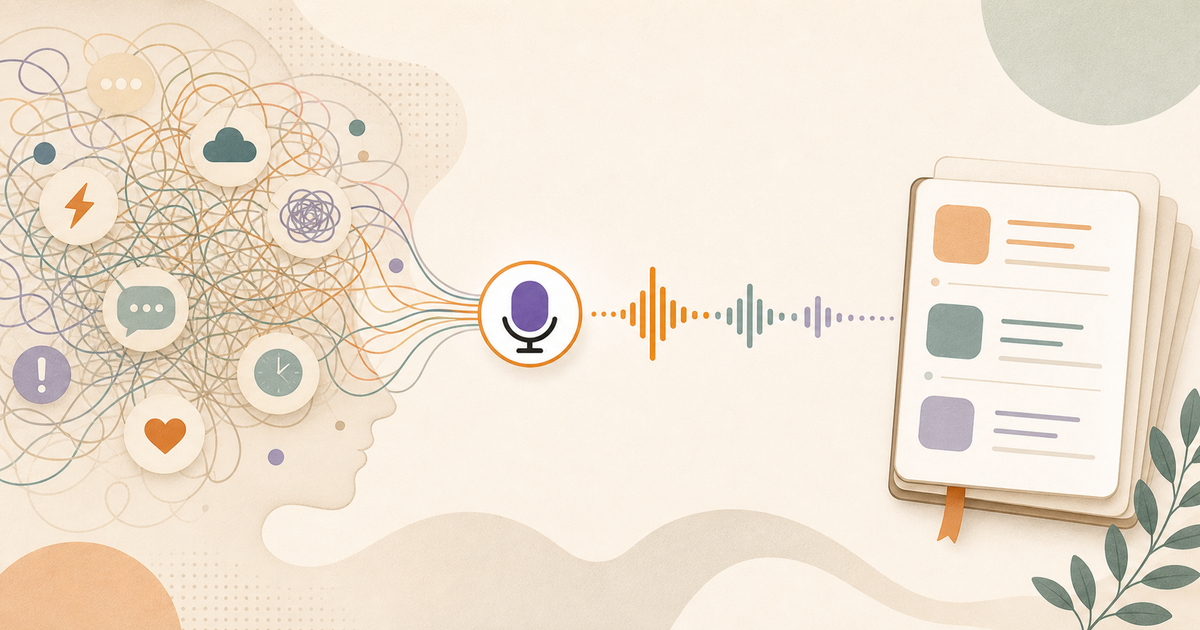
Speech creates forward motion. You hear the vague word, notice it is not accurate enough, then replace it with something closer.
That is one reason processing emotions out loud often works better than staring at a blank page. You are not trying to produce a polished insight. You’re getting warmer until the emotional language clicks.
Voice also preserves tone. When you say “I’m not angry” in a clipped voice, you learn something immediately. Your voice reveals emotional patterns you might miss in silent reflection.
Precision changes the next step
Once the emotion gets specific, the response gets more useful.
If the real feeling is anxiety
You may need to make a plan, reduce ambiguity, or stop rehearsing disaster.
Affect labeling can lower the intensity enough for your thinking brain to come back online.
If the real feeling is resentment
You may not need calming. You may need a boundary.
Why boundaries feel selfish becomes easier to understand when you realize the feeling is not generic stress. It’s accumulated resentment from over-giving.
If the real feeling is sadness
You may need rest, comfort, grief, or time. Pushing harder is usually not the answer.
If the real feeling is shame
You may need perspective, repair, or a kinder interpretation. Shame often gets misread as “motivation,” which is why people keep attacking themselves and calling it accountability.
One label can hide all of this.
A 3-minute voice exercise for better emotional granularity
Try this when you notice yourself saying “fine,” “bad,” or “stressed.”
Step 1: Start with the vague word
Say the lazy version first.
“I feel off.”
Step 2: Challenge it out loud
Ask:
- “Off how?”
- “What kind of off?”
- “If I couldn’t use the word stressed, what would I say?”
Keep talking until the answer gets more exact.
Step 3: Separate primary from secondary emotion
Often the first feeling named is the outer layer.
“I feel angry. Actually underneath the anger I feel dismissed.”
“I feel anxious. Actually the stronger feeling is dread.”
“I feel sad. Actually I feel rejected.”
Emotional regulation through self-talk improves when the label fits the actual experience.
Step 4: Name what the feeling is about
Don’t stop at the emotion word.
“I’m disappointed that I worked this hard and still didn’t get the outcome I wanted.”
“I’m embarrassed because I was trying to sound confident and I could hear myself stumbling.”
“I’m lonely, not because I’m alone, but because I don’t feel understood by the people around me.”
Now the emotion has shape.
Emotional granularity is not overthinking
This is where people get confused.
Granularity is not endless analysis. It is not dissecting every mood until you are lost in it.
It is simply moving from blurred language to accurate language.
Overthinking sounds like:
- “Why am I like this?”
- “What does this say about me?”
- “What if this means something is seriously wrong?”
Granularity sounds like:
- “I’m disappointed.”
- “I’m ashamed.”
- “I’m overstimulated.”
- “I’m grieving.”
One creates clarity. The other creates spirals.
Overthinking and deep thinking are not the same thing.
What if you feel multiple things at once?
That is normal. Most real emotions come in clusters.
You might be:
- grateful and resentful
- excited and terrified
- relieved and sad
- proud and lonely
Emotional granularity does not require one perfect label. It requires honest ones.
Sometimes the most accurate sentence is:
“I’m excited about the opportunity and grieving what it will cost.”
That is much more useful than “I feel weird about it.”
The goal is not sounding smart
You do not need a therapist’s vocabulary. You do not need to become a human feelings thesaurus.
The goal is simple: stop flattening your emotional life into three words.
If you can move from “fine” to “disappointed,” from “stressed” to “resentful,” or from “bad” to “lonely,” you’re already doing the work.
Tracking mood over time with voice gets more useful when your labels are specific. Patterns emerge faster. You stop seeing only “rough week” and start seeing “every Thursday I sound depleted after that meeting.”
The bottom line
Emotional granularity means naming what you feel with more precision than “fine” or “bad.” That precision matters because different emotions need different responses.
Vague emotional labels keep your brain scanning. Specific labels create relief, perspective, and better next steps.
Voice helps because it turns blur into language in real time. You hear yourself refine the feeling until it becomes true enough to work with.
The next time “fine” comes out of your mouth, don’t stop there.
Ask what kind of fine.
Questions people ask
What is emotional granularity?
Emotional granularity is the ability to describe your emotional state with precision. Instead of saying 'I feel bad,' you can tell the difference between anxious, disappointed, embarrassed, lonely, resentful, or overwhelmed.
Why does naming emotions more precisely help?
Precise emotional labeling gives your brain a clearer target. 'Overwhelmed' calls for a different response than 'ashamed' or 'angry.' The more specific the label, the easier it is to choose a useful next step.
How does voice journaling improve emotional granularity?
Speaking slows vague emotion into specific language. As you talk, you often move from 'I'm fine' or 'I feel off' to a more accurate description like 'I'm anxious about tomorrow and resentful about today.' That clarity is the point.
Is saying 'fine' always bad?
No. Sometimes 'fine' is enough for casual conversation. The problem is when 'fine' becomes your main emotional vocabulary, especially in private reflection. Then it hides information you actually need.