When a Reason Is Really a Reminder
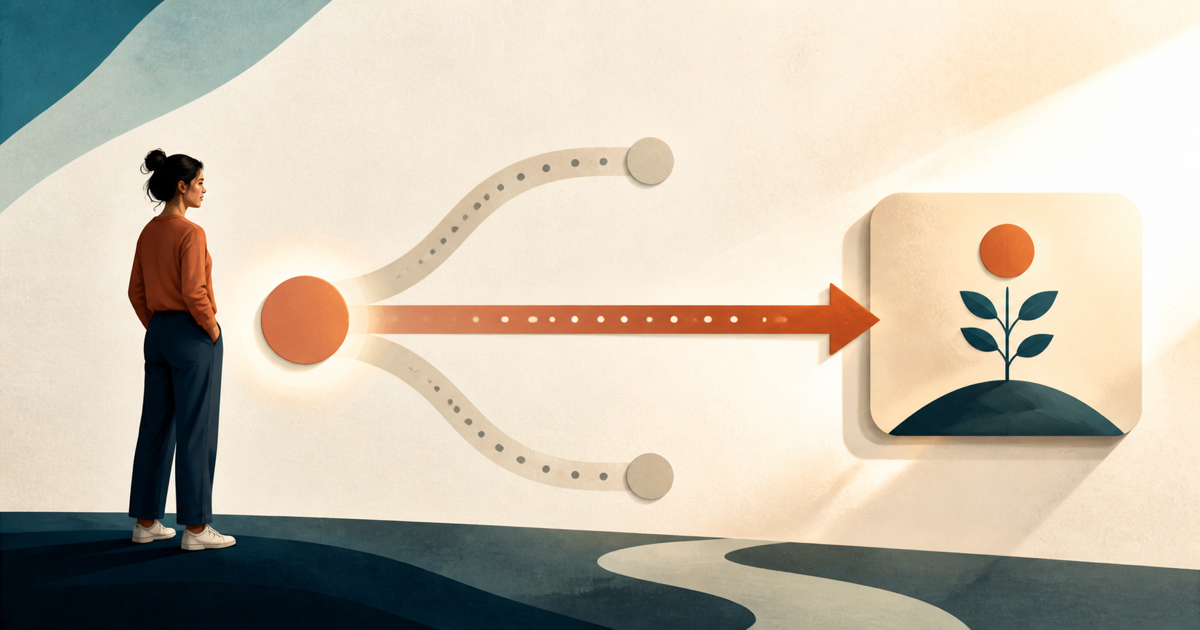
A reminder tells you what to do next. A reason explains why it matters. Keeping them separate can make a plan easier to revise.

A reminder can tell you when to act without telling you why the action still matters. Pair a cue with a reason you endorse, then make the action small enough to do. That makes it easier to revise a plan when reality changes instead of treating a notification as an order.
“Send the form” is a reminder. “Send the form today so the clinic can confirm the appointment” is a reminder connected to a reason.
Cues and reasons do different jobs
A reminder reduces the need to remember a time or task. A reason helps you decide whether the task deserves attention and what tradeoff you are making. Mixing them can create brittle plans: the alarm rings, but you no longer remember why the task was important or whether the plan still fits.
Specific if-then plans can be useful because they connect a situation to an action. A meta-analysis of implementation intentions found benefits across studies when people formed those plans. The evidence does not mean every notification produces motivation. It supports making the cue and response explicit.
Build a reminder in three parts
Prospective-memory research makes a similar distinction between remembering an intended action and carrying it out in context. In a laboratory study, McDaniel and Einstein examined how implementation intentions supported prospective remembering. A notification can be a useful cue, but it still needs a feasible action.
Try this format:
- Cue: “At 4 p.m. on Thursday …”
- Action: “… I will open the budget and list the three questions.”
- Reason: “… so I can ask for accurate information on Friday.”
The reason should be concrete, not an accusation. “Because I should be more responsible” usually adds shame without making the next action clearer. “So I can avoid another late fee” names a consequence you can evaluate.
If you keep breaking a promise to future you, inspect the plan before judging your character. Why plans fail across time can involve an unrealistic cue, a changed situation, or a future cost that was not represented clearly.
Let the reason change the plan
When a reminder fails, ask whether the reason remains true. If it does, reduce the action. If it does not, remove or replace the reminder. A system that permits revision is more honest than a list of stale commands.
This also helps with progress avoidance. Checking progress can feel threatening when the reminder sounds like a verdict. Reframe it as an information check: “Open the document for five minutes so I can see what is actually left.”
Lound can preserve a short spoken reason beside your plan, but it cannot decide which goal should matter most. Use it as a record for reflection, and use appropriate professional guidance when the action involves legal, medical, financial, or safety decisions.
Keep the next alert earnable
Before setting another alert, say the cue, action, and reason aloud. If any part sounds implausible, edit it now. The goal is not more reminders. It is a plan your future self can recognize and realistically begin.
Questions people ask
What is the difference between a reminder and a reason?
A reminder supplies a cue for an action, such as “call at 3.” A reason explains the value or consequence behind the action, such as “confirm care before the deadline.”
Why do reminders stop working?
A cue can become background noise when it is not connected to a feasible action, a real constraint, or a reason you still endorse.
How can I make a reminder more useful?
Add the specific action, the cue or time, and a short reason in your own words. Revise the reminder when the situation changes.