How to Self-Validate Without Asking Everyone
Sometimes you do not need more opinions. You need a place to hear your own. Self-validation is not pretending you are always right. It is trusting your internal signal enough to hear it clearly.
You ask one friend.
Then another.
Then a sibling. Then your partner. Then maybe your therapist, your group chat, the internet, and the notes app where you try to compare all the advice.
At some point, you are not gathering perspective anymore. You are trying to outsource certainty.
That usually means you do not trust your internal signal enough to hear it without help.
That is where self-validation comes in.
Self-validation does not mean “I am always right”
This matters.
Self-validation is not arrogance. It is not refusing feedback. It is not shutting other people out.
It means:
- my reaction is real
- my feelings count as data
- my preferences do not need a trial
- I can hear myself before I poll the room
You can still want perspective. The difference is whether perspective comes after you have heard yourself, or instead of hearing yourself.
Why outside opinions feel so good
Other people’s opinions can temporarily reduce a lot of discomfort:
- uncertainty
- guilt
- fear of making the wrong call
- fear of disappointing someone
- fear of being “too much”
If someone else says, “no, you’re not overreacting,” you get relief.
If someone says, “yes, you should leave,” you get permission.
If someone says, “I would do the same thing,” you get cover.
That relief is real. It is also temporary if you still do not trust yourself underneath it.
What usually gets outsourced
People rarely outsource every decision equally.
Usually it clusters around:
- boundaries
- relationships
- career changes
- conflict
- big purchases
- emotional reactions
In other words, the places where your own judgment feels most expensive.
That is why self-validation is not just a mindset issue. It is often about tolerating the emotional weight of having an opinion before someone else approves it.
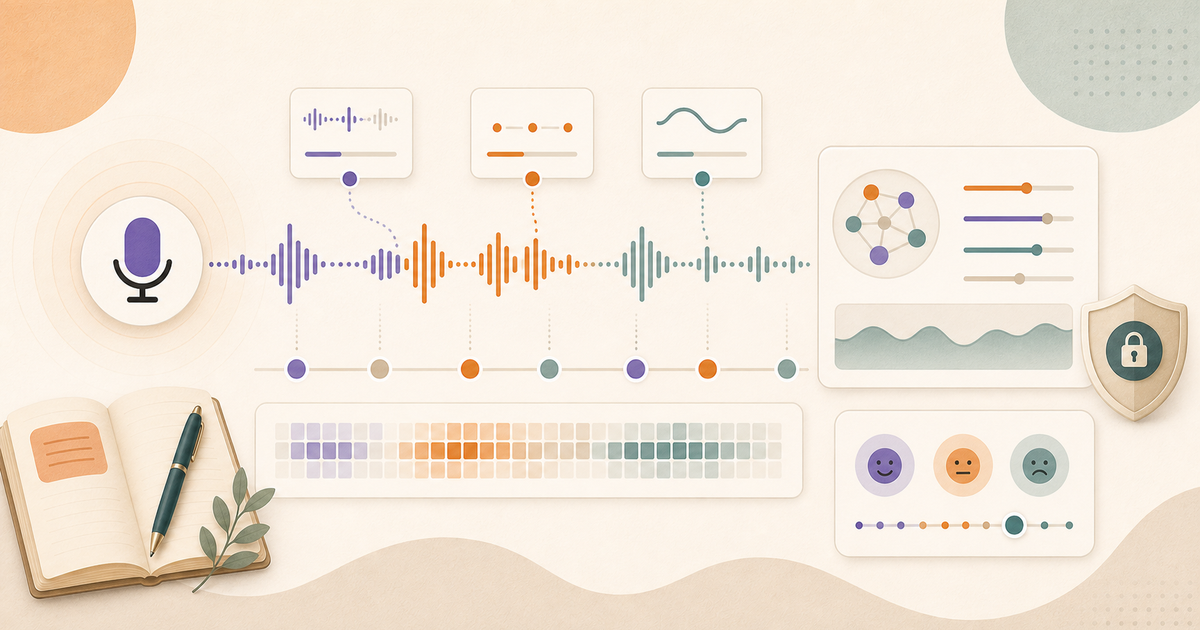
Voice helps because it lets you hear yourself first
Most people who struggle with self-validation do not actually have no inner voice. They have too many outer voices arriving too early.
Before you can feel what you think, someone else is already in the room:
- “Maybe you’re being too sensitive.”
- “I would just let it go.”
- “You should definitely do it.”
- “Don’t overthink it.”
Voice processing creates a short protected space before all that.
Ask yourself out loud:
- “What do I think happened?”
- “What do I actually want?”
- “What feels off here?”
- “If no one could answer for me, what would I already know?”
Self-awareness through speaking often works better than silent reflection because the answer has to become audible before it can disappear into someone else’s opinion.
A simple self-validation practice
Use this before you ask anyone else.
Step 1: State the situation plainly
“My friend cancelled again.”
“I got the offer and I’m not excited.”
“I’m angry about what happened in that meeting.”
“I think I want to move, but I’m scared.”
Step 2: Name your first honest reaction
Not the balanced one. The first one.
“I feel dismissed.”
“I feel relieved, which probably means something.”
“I feel guilty for being upset, but I am upset.”
“I want someone to tell me what to do.”
That is already self-validation. You are acknowledging what is true before trying to edit it.
Step 3: Ask what you are hoping someone else will tell you
This question is crucial.
Are you looking for:
- permission
- reassurance
- contradiction
- proof you are not overreacting
- rescue from responsibility
Now you know what role outside advice is playing.
Step 4: Say what you know before you ask anyone else
“I know I do not want to keep making excuses for them.”
“I know I am not excited because this job is a status upgrade, not a fit.”
“I know my body is saying no before my mind will admit it.”
That is the part you usually skip.
Self-validation and feelings
Many people think self-validation means proving their feelings are justified.
It does not.
You can validate a feeling without declaring it the objective truth.
For example:
- “I feel hurt” does not require “they intended to hurt me.”
- “I feel anxious” does not require “danger is definitely present.”
- “I feel resentful” does not require “they are evil.”
Validation means the emotional experience is real. Interpretation can come after.
Emotional granularity helps here because the more precisely you can name the feeling, the less likely you are to need someone else to translate it for you.
When advice is still useful
There is nothing wrong with asking for perspective.
The healthier sequence is:
- hear yourself
- identify what you know
- notice what kind of help you want
- then seek input intentionally
That way, outside advice becomes perspective instead of replacement.
You are comparing it to your own signal, not using it to drown your own signal out.
Why this is hard after long-term self-doubt
If you spent years getting told you were:
- too sensitive
- too emotional
- too intense
- too dramatic
- too impulsive
then of course trusting your own read may feel shaky.
Sometimes the habit of checking with everyone else is a survival strategy from older environments where your internal reality was not treated as trustworthy.
That does not mean you have to keep living that way.
The bottom line
Self-validation means hearing your own thoughts, feelings, and reactions as real before asking the world what they mean.
It is not assuming you are always right. It is refusing to disappear before the conversation even starts.
Voice helps because it lets you hear yourself first, before everyone else’s opinion arrives and rearranges the room.
Ask for perspective if you need it.
But know what you think before you hand the microphone away.
Questions people ask
What does self-validation mean?
Self-validation means acknowledging your own thoughts, emotions, and reactions as real without needing immediate outside agreement. It is not the same as assuming you are always correct.
Why do I keep asking other people what I should do?
Because outside input can feel safer than owning your own judgment. You may be looking for certainty, permission, reassurance, or relief from the pressure of deciding.
How do I validate myself without becoming self-centered?
Self-validation is not closing yourself off to feedback. It means hearing your own internal data before outsourcing your judgment. You can still seek perspective after you know what you think.
Can voice journaling help with self-validation?
Yes. Speaking out loud helps you hear what you actually feel and think before other people's opinions start shaping the answer.