Why Do I Talk in Circles When I'm Upset?
Upset thoughts can loop because negative affect and rumination feed each other. Naming the loop early works better than stretching it longer.

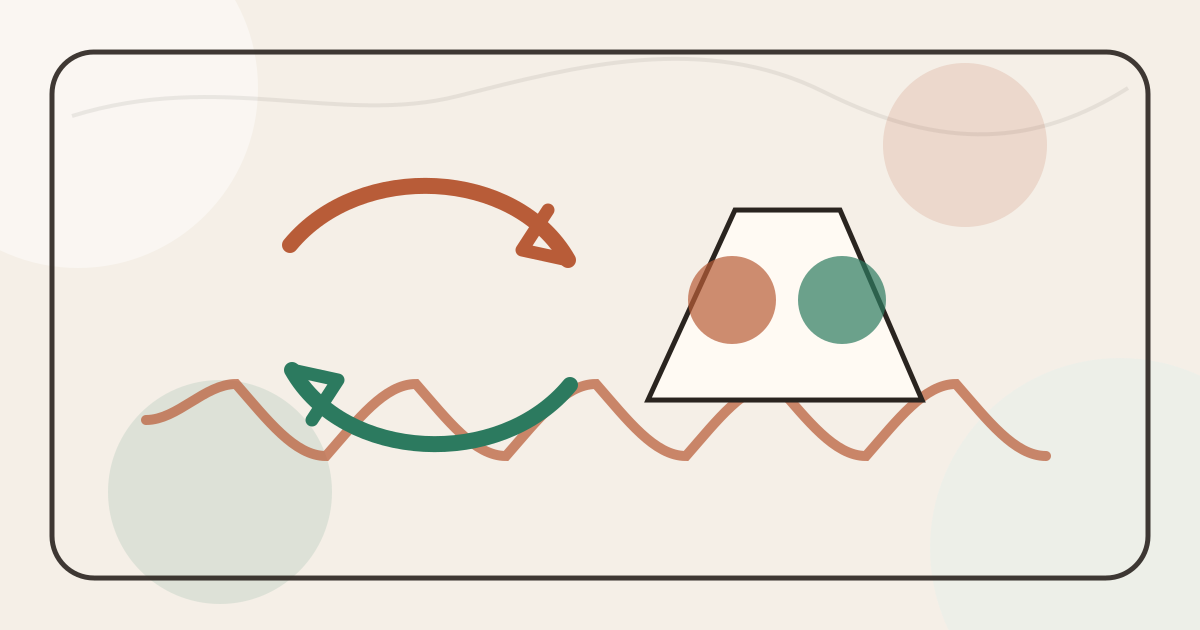
You talk in circles when you are upset because strong emotion and repetitive thought can keep feeding each other. The feeling keeps the thought active, and the thought keeps the feeling active.
That is why talking can help for a minute, then quietly turn into the spoken version of rumination. The useful question is not whether you are talking. It is whether each pass adds anything new.
Upset thinking narrows the workspace
Rumination is not just “thinking a lot.” It is repetitive thinking that stays stuck on the same concern, often with the same emotional charge.
A meta-analysis on repetitive negative thinking and cognitive control found that people high in repetitive negative thinking had particular difficulty discarding no-longer-relevant material from working memory. If the same sentence will not leave the workspace, it is easy to keep saying it again.
The emotional side matters too. Research using dynamic structural equation modeling found reciprocal short-term effects between negative affect and rumination. Feeling bad can increase rumination, and rumination can intensify negative affect afterward.
That loop works in speech as well as in silence.
Spoken repetition can feel productive without being productive
Many people mistake movement for progress:
“I have talked about this for ten minutes, so I must be processing it.”
Sometimes you are. Sometimes you are replaying the same sentence with slightly different wording.
That is the distinction behind thought loop or thought stack. A stack develops. A loop rehearses.
What a spoken loop sounds like
You are probably looping if:
- the same claim keeps returning
- the same villain stays in place
- the same certainty words keep appearing
- the next minute adds no new evidence
Examples:
- “They clearly do not respect me.”
- “I always do this.”
- “Nothing is going to change.”
If the wording changes but the structure does not, you are probably circling.
Name the loop before you solve the problem
The fastest interrupt is often a label:
“I am in the part where I keep proving the same sentence.”
That is a cousin of affect labeling. Naming the state does not finish the problem, but it gives you a little distance from the repetition.
Then ask one of these:
- What is actually new here?
- What am I guessing?
- What would count as fresh evidence?
- What is the next concrete move?
If the answer is “nothing new,” the next useful step may be to stop, not to keep expanding.
Voice helps when it shows the loop back to you
Voice journaling is useful here because it can make repetition audible. You can hear the moment where the thought stopped developing. That is harder to notice while you are inside it.
This is why voice journaling for overthinking works best with a short container. Five focused minutes can expose a loop. Twenty unbounded minutes can deepen it.
Talking in circles when you are upset does not mean you are dramatic or incapable of reflection. It usually means your brain is trying to resolve distress with a tool that has stopped producing new information.
The fix is not silence. It is getting specific enough to leave the circle.
Questions people ask
Why do I keep repeating the same point when I am emotional?
Strong emotion can narrow attention and keep the same concern active in working memory, which makes repetition more likely.
Is talking it out always helpful?
No. Talking can become spoken rumination if each pass repeats the same claim without adding new information, evidence, or action.
How do I stop talking in circles?
Name the loop, set a time limit, and ask what new fact, question, or next step would make the next minute different from the last one.