Why Journaling Doesn't Stick: Fix the Part You Avoid
Abandoned another journal? Find the exact sticking point: starting, stopping, privacy, rereading, or the pressure to make every entry profound.

If you keep abandoning journals, find the exact part you avoid before trying another routine. A blank page, a twenty-minute commitment, and nowhere private to write are three different problems. They need different changes.
Think about the last time you intended to journal and didn’t. What happened between remembering the intention and doing something else?
When starting feels like an essay assignment
“Write about your day” leaves a surprising number of decisions open. Where should the story begin? Which event matters? How much context does it need?
Give the entry a smaller job. Instead of reconstructing Tuesday, answer one concrete question:
What happened today that I might misunderstand or forget by next week?
For example: “The client wasn’t rejecting the proposal. They needed the legal review before agreeing to a date.” That’s a useful record even if you have nothing profound to add.
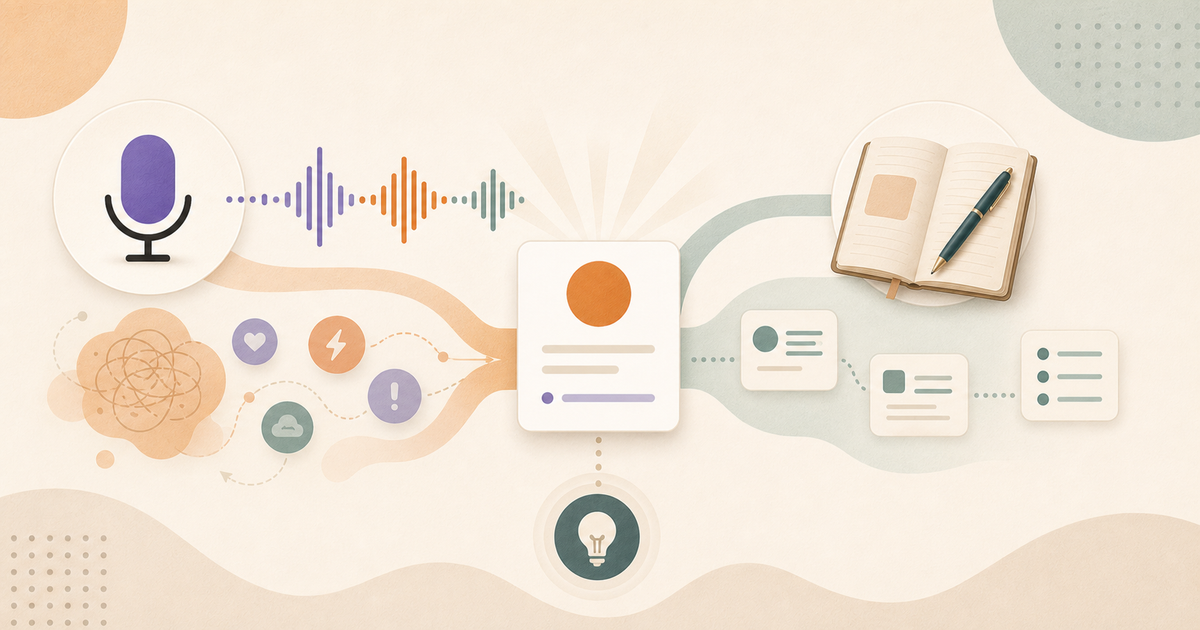
If you can explain the event but keep editing the first sentence, try saying it into a recorder. If speaking feels performative, keep a written note. Our voice-versus-writing comparison helps separate format preference from claims about which is inherently better.
When you start but can’t finish
An entry about one awkward lunch can expand into a review of every friendship you’ve ever had. Next time, remembering that effort may be enough to put you off starting.
Decide what would count as enough before you begin. For an ordinary frustration, try three pieces: the event, your current interpretation, and anything you want to check later.
“I think she was irritated” can remain a tentative interpretation. You don’t have to resolve the relationship to finish the entry. If you are repeating the same accusation without adding information, our guide to venting versus processing offers a useful distinction.
- The first sentence takes too much effort
- One entry expands into an hour
- Old entries disappear into the archive
- Answer one question about one event
- Define the stopping point before starting
- Give the entry a title you could search for
When missing a day turns into quitting
A gap doesn’t create an obligation to reconstruct everything you missed. You can restart with today’s date and today’s concern.
There’s a useful finding behind that permission. In Lally and colleagues’ habit-formation study, volunteers repeated a chosen eating, drinking, or activity behavior in a consistent setting. Missing one opportunity did not materially affect the habit-formation process.
That wasn’t a journaling study, and it doesn’t mean repetition never matters. It does challenge the assumption that one missed day necessarily destroys what you’ve built.
For a routine, choose a cue you actually encounter: after closing your laptop, for example. For an event-based journal, choose an occasion: after a decision you want to remember. You don’t need to turn both into daily requirements.
When privacy is the real obstacle
A voice journal is a poor fit when someone can overhear you. A paper journal can be uncomfortable when other people might read it. Neither concern disappears because a habit is supposedly good for you.
Choose the level of detail and medium you can use comfortably. You could note “conversation with M: revisit tomorrow” and elaborate in private. Check an app’s storage, processing, and deletion policies before adding sensitive details.
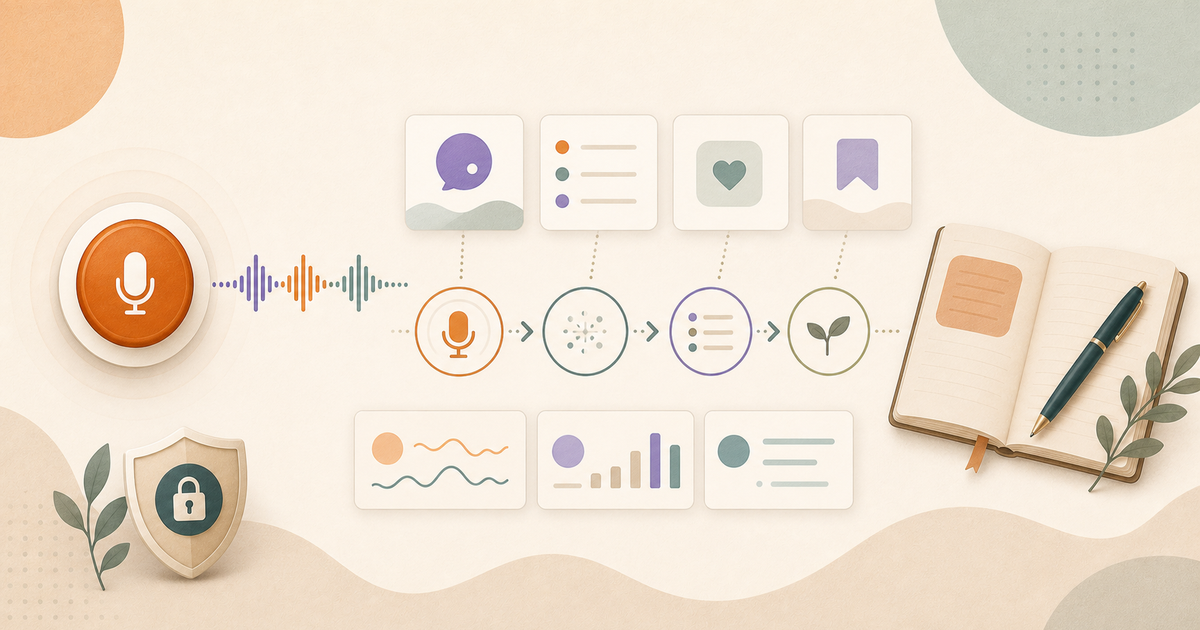
Lound lets you speak or type, and you can choose whether to retain audio locally. Its transcription and AI processing use cloud services. Our privacy policy explains the arrangement; a “private journal” label alone shouldn’t make the decision for you.
When you keep asking whether journaling is working
Define what you want from it. Remembering a decision, preparing a conversation, and treating anxiety are very different goals.
A 2022 review of twenty randomized trials found some evidence of benefit from journaling interventions, but substantial differences between studies and methodological limitations restricted its conclusions. Those interventions were expressive writing or gratitude journaling. The review doesn’t prove that any journal, at any frequency, will improve your mental health.
For an everyday journal, choose an observable use: “Can I find why I made that decision?” is easier to assess than “Am I a better person now?”
If writing leaves you distressed, stop. You don’t owe a journal increasingly painful material. Persistent distress is a reason to seek qualified support rather than increase the assignment.
Restart with an entry worth returning to
Try this example structure in whichever format you prefer:
I nearly declined the invitation because I assumed everyone else knew each other. I asked, and two people are also coming alone. Next time I hesitate, I want to check that assumption before deciding.
Give it a searchable title: “Invitation: ask who else is new.” It contains an event, a revision to your interpretation, and something future-you can use.
Lound can turn a spoken version into a transcript and summary, but you should check that the summary preserves the distinction between your assumption and what happened. For help making that first recording, use the voice-journaling guide. Start with one entry whose purpose you can name.
Questions people ask
Why can't I stick to journaling?
Look at the specific point where you stop: choosing a topic, finding privacy, writing too much, or seeing no reason to return. Change that part before adding a stricter schedule.
Do I need to journal every day?
No. You can keep an event-based journal or use a repeatable cue when it suits you. A missed entry doesn't require catching up on every day.
What if journaling makes me feel worse?
Stop if an entry becomes distressing or repetitive. You can choose a less intense topic or a different activity. Persistent distress deserves professional support; journaling is not a substitute for care.
Will voice journaling fix my journaling habit?
It can help if composing or typing is the sticking point. It won't automatically solve lack of privacy, repetitive thinking, or entries that feel too demanding.