Why Retelling a Story Can Change Your Memory
Retelling can preserve an event, but the goal and audience shape what survives. Record facts before the polished version becomes easier to recall.
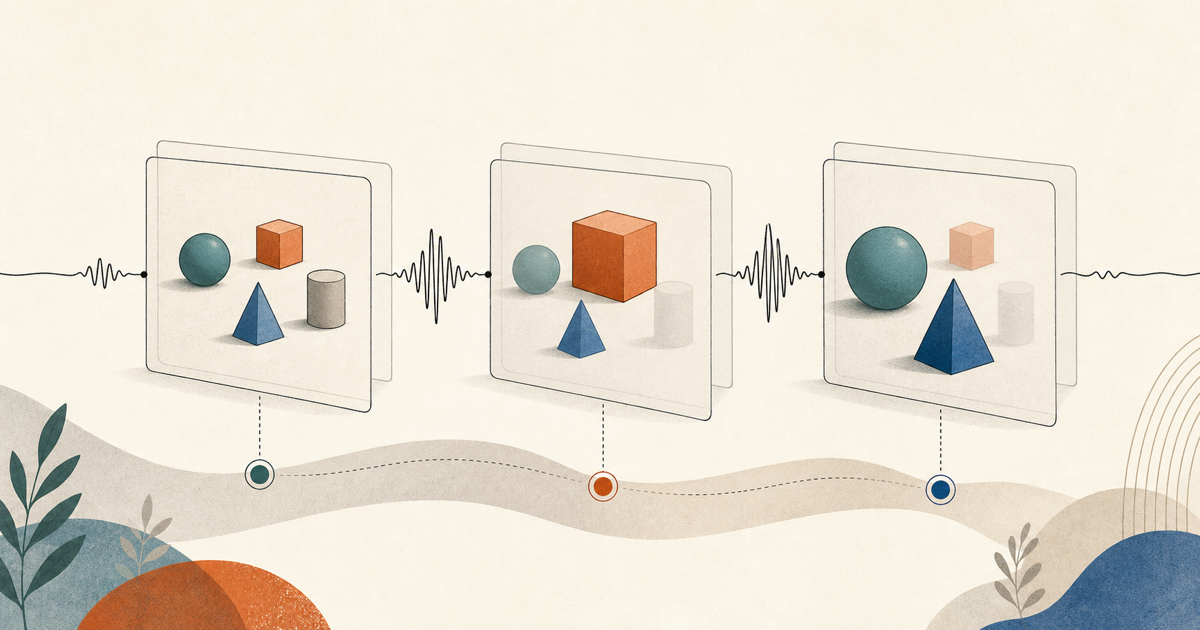
Retelling a story can strengthen your memory of the event while also changing which version becomes easiest to remember. The purpose of the retelling matters.
In a 2025 study of social retelling, people who retold stories for accuracy remembered more specific details a day later than people who retold them as if talking to friends. Both retelling groups remembered more than people who did not retell the stories. Earlier research also found that the style of retelling influenced later recall, especially among older adults.
Preserve the first account before the story acquires a job.
Every retelling has a job
You change a story depending on what the listener needs.
For a friend, you make it entertaining. For a manager, you make it defensible. For a partner, you may soften your role. For yourself, you may organize it around the part that hurts.
Those choices affect:
- which details you include
- which details you omit
- where the story begins
- what caused what
- who appears reasonable
- what emotion becomes the theme
None of this requires deliberate dishonesty. Communication always involves selection.
The polished version is easier to retrieve
Suppose a meeting felt confusing. The first account is uneven:
“The agenda changed. Priya asked about cost. I thought Mark looked annoyed, but I am not sure. Then someone said we had already approved it. I need to check who.”
By the third retelling:
“They tried to push through an unapproved cost, and Mark was furious.”
The second version is cleaner. It has motive, certainty, and a strong emotional arc. It may also contain claims the first version marked as unknown.
Once you have repeated the clean version several times, it can feel more familiar than the original uncertainty. That familiarity should not be mistaken for proof.
Make a fact layer and a meaning layer
After an important event, create two labeled sections.
What I can observe
- exact words you remember
- sequence of events
- who was present
- documents, messages, or times you can verify
- details you are unsure about
What I think it means
- likely motives
- emotional impact
- patterns it resembles
- what you wish had happened
- what you plan to do
Both layers belong in a journal. Keeping the labels prevents an interpretation from quietly graduating into a fact.
The five-minute aftermath window is useful because it catches details before compression. For a consequential choice, a decision journal preserves what you knew before the outcome changed the story.
Keep uncertainty in the transcript
Words such as “maybe,” “I think,” and “I am not sure” look weak in polished prose. In a private record, they are valuable metadata.
Compare:
“She dismissed the idea.”
“She moved to the next topic after ten seconds. I read that as dismissal, but she may have been watching the clock.”
The second account gives future-you more to inspect. You can later add evidence without pretending you knew it earlier.
This is one reason a spoken first account can help. You can preserve the hesitations and self-corrections that a polished written summary often removes. If the event involves another person, make the private first draft before you turn it into a message designed to persuade.
Retell for different purposes on purpose
You can keep more than one version:
- The record: What happened, with uncertainty intact.
- The meaning: What the event brought up for you.
- The social version: What you want to share with this audience.
- The update: What later evidence changed.
A searchable journal makes those versions comparable. You can see when certainty increased, which details stayed stable, and where a later explanation entered the story.
That comparison is one of the practical benefits of a searchable journal: you can retrieve the earliest account rather than relying on the version that is easiest to tell now.
One prompt for the next charged event
Record:
“If I had to testify only to what I directly observed, I would say ____. The story I am already building around it is ____. The part I may be smoothing over is ____.”
If the same event changes as you tell it to different people, audience tuning explains why the listener matters.
You are still allowed to make meaning. You are simply preserving the route by which you got there.
Questions people ask
Does retelling a story change your memory?
It can. Retelling strengthens retrieval, but the audience, purpose, wording, and details you emphasize can influence what you later remember.
Does talking about an event make memory more accurate?
Accuracy-focused retelling can improve later recall. Social retelling also helps more than no retelling in some research, but it tends to preserve fewer specific details.
How can I journal an event more accurately?
Record a factual first account soon after the event, separate observation from interpretation, and keep later meaning-making as a labeled second layer.