Journaling in a Second Language: What Changes?
The same event can sound different in another language. Try comparing two short accounts without assuming one is more honest or rational.

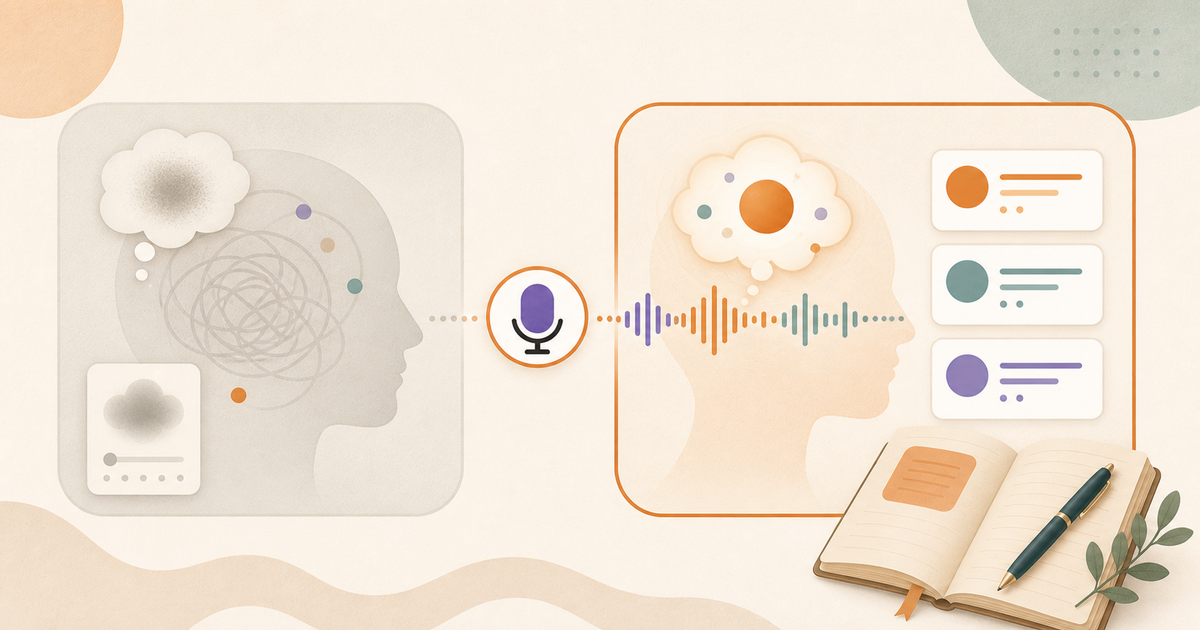
If you use more than one language, try describing the same ordinary event in each and compare the details. A second-language journal can give you different wording to examine, but neither language automatically produces a truer, calmer, or more rational account.
What language experiments actually found
In Keysar, Hayakawa, and An’s 2012 experiments, using a foreign language reduced a framing effect in decision problems and reduced loss aversion in betting tasks. Those findings concern choices made under particular experimental conditions. Participants weren’t comparing the long-term value of bilingual journals.
The effect also doesn’t extend reliably to every kind of judgment. A later set of experiments found no evidence that a foreign-language context changed outcome bias or use of the representativeness heuristic. Switching languages isn’t a general-purpose correction for biased thinking.
For reflection, the more modest question is interesting enough: what becomes easier or harder to say when you change the words available to you?
Compare two accounts before trying to translate
Choose a low-stakes event you can describe comfortably, such as asking for help at work or declining an invitation. Write or speak a few sentences in one language. Then describe the event again in the other without translating sentence by sentence.
Look for concrete differences. Did you mention a person’s reaction in one account but leave it out of the other? Did one description include a clear request while the other stayed with how you felt? Did you use a stronger word because the subtle one wasn’t available?
These differences can come from vocabulary, familiarity, context, or what happened to occur to you on the second attempt. You don’t have to assign them a deep psychological meaning.
Simpler wording can clarify or flatten
Suppose your first account says, “I felt taken for granted.” In the other language, the phrase you can readily produce means “I was upset because they didn’t ask me.”
The second version names an action you could discuss. It might also lose a distinction you care about: being excluded once feels different from repeatedly being expected to help. Keep both details if both fit.
- Which facts appear in only one version?
- Which feeling becomes more specific?
- Which request becomes easier to name?
- Did limited vocabulary make the wording stronger?
- Did a useful nuance disappear?
- Did I think of something new on the second attempt?
Let some phrases stay untranslated
A family expression, a term of affection, or a phrase from the conversation may carry a meaning you don’t want to replace. Keep it and add what it means to you in this situation. You can mix languages without making the entry a language-learning exercise.
The same principle applies to private thoughts you keep polishing: grammatical elegance doesn’t have to be the goal. If searching for the correct tense interrupts the reflection, use the language that lets you continue.
Try a change of perspective even in one language
You don’t need another language to compare descriptions. You can contrast inner and spoken wording or try speaking to yourself by name and notice what changes. These are different exercises, not interchangeable mechanisms.
For the bilingual version, use whichever notebook or recording tool handles your chosen languages well. Finish by keeping the detail you want to remember: a missing fact, a phrase that fits, or a question you can now ask more clearly. You don’t need to pick a permanent language for every future entry.
Questions people ask
Should I journal in my first or second language?
Use the language that lets you describe the experience with the detail you need. If both feel comfortable, compare short accounts and notice which words or examples change.
Does using a second language make decisions more rational?
Some experiments found changes in specific decision biases, but other studies found no effect on other biases. That doesn't establish that second-language journaling produces better decisions.
Is it okay to mix languages in a journal?
Yes. A personal journal can keep the phrase that fits, even if it comes from another language. You can add an explanation for your future self without forcing an exact translation.