Taking Photos Can Change What You Remember
A photo can preserve a scene while leaving out its sounds and context. Studies show that how you take pictures matters for what you remember later.
A photograph can tell you exactly what the table looked like while leaving you unsure why everyone was laughing. Taking pictures can change which parts of an experience receive your attention, and the memory findings depend on how the pictures are taken. A useful journal note adds context the frame cannot contain.
The camera does not have the same memory task you do
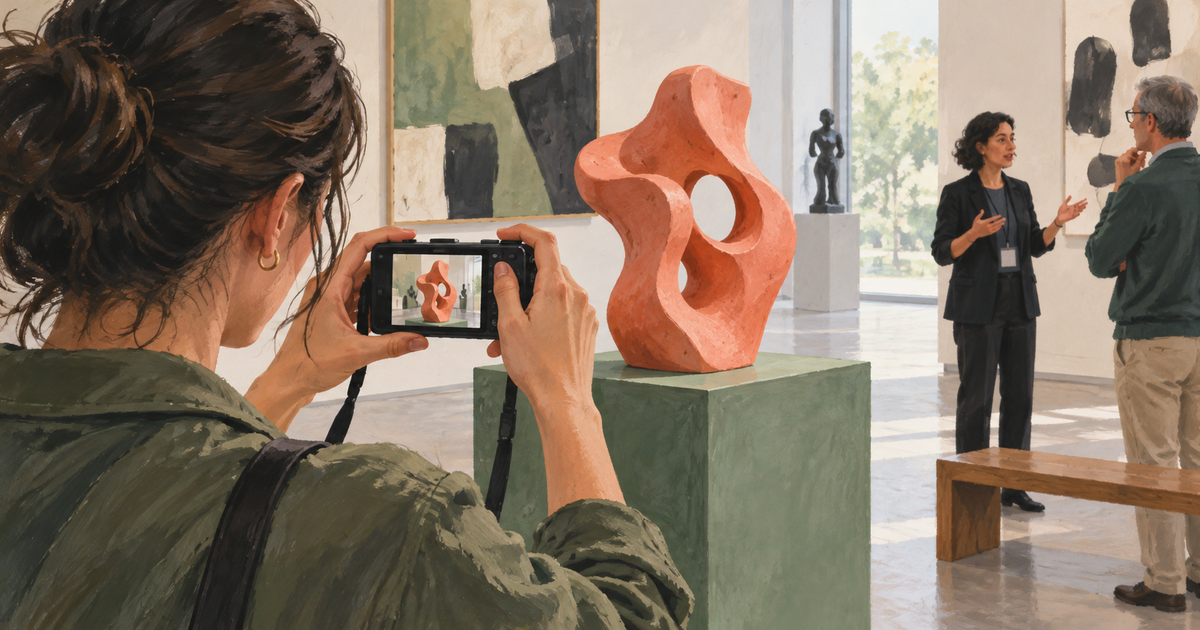
In Linda Henkel’s museum-tour experiments, people were instructed to photograph some objects and observe others. Photographing whole objects was followed by poorer memory for the objects, details, and locations than observing them. But when participants zoomed in on a specific part, that impairment was not found, including for details outside the zoomed area.
That qualification matters. The finding doesn’t mean every photograph damages memory, and it doesn’t show that deleting the camera app would improve your life. It concerns particular instructions and later memory tests.
A different series of studies on freely chosen photo-taking found better recognition of visual material and worse recognition of auditory material among people able to take photos. This occurred without looking at the photos afterward. The authors interpreted the findings as a shift of attention toward what could be seen and away from what could be heard.
Taken together, these studies make a blanket rule difficult to defend. Choosing a subject, following instructions to photograph it, and listening while taking pictures are different activities. The result also depends on whether a test asks about sights, sounds, locations, or details.
Add the part outside the frame
Imagine a photo from a family dinner. It contains the cake, the plates, and a blurred hand reaching across the table. A note saying “family dinner” adds little. A more useful note might say:
We ate late because the train was delayed. That was the first time my brother told us he was changing courses. The cake leaned to one side because we carried it on the bus.
Those details give the image a setting. You don’t need to document the whole evening. Choose the part you would have trouble reconstructing from the picture alone, and respect anyone else’s privacy when deciding what to preserve.
Let some of the experience happen before documenting it
You can decide which moment needs a picture and when you want to put the camera away. At a talk, for example, taking a photo of an intricate diagram may serve a clear purpose. Photographing every slide while missing the explanation may leave you with files whose significance is hard to recover.
Afterward, one sentence about the idea you wanted to remember can be more useful than another near-identical image. This is a choice about what you want to keep, not a requirement to be perfectly present. Sometimes the photograph is the whole point, and taking it is part of enjoying the occasion.
The same applies to ordinary days worth recording. A scene doesn’t need to be beautiful to deserve a note. The relevant detail may be a familiar route you took differently or a conversation that made the afternoon feel different.
Keep a later reconstruction separate
If you look at a picture months later and infer what must have happened, label that as a later thought. “I think this was after the train delay” is different from a note made that evening. Retelling can change a remembered story, so a confident caption is not automatically an accurate one.
In Lound, you can record a short account and revisit its transcript. You can also keep your context in another journal alongside the photo; the guide to journals with photos and other media discusses different ways to organize that record.
For the next picture you care about, ask what someone could never learn by looking at it. Record that detail while it is available, without turning the rest of the occasion into a documentation task.
Questions people ask
Does taking photos make you forget an experience?
Not uniformly. Some experiments found poorer memory after instructed photography, while others found that freely taking photos improved visual recognition but reduced recognition of what people heard. The task and type of memory matter.
What is the photo-taking impairment effect?
In museum-tour experiments, people remembered fewer photographed objects and details when instructed to photograph whole objects rather than only observe them. A focused zoom condition did not show the same impairment.
What should I write or say alongside a photo?
Add something the image cannot show: why you were there, what surprised you, or what was being discussed. Describe remembered speech as a paraphrase unless you know the exact words.