What AI Summaries Leave Out of Your Journal
AI summaries compress by selecting. They can lose uncertainty, corrections, and minor threads, so the source entry must remain inspectable.
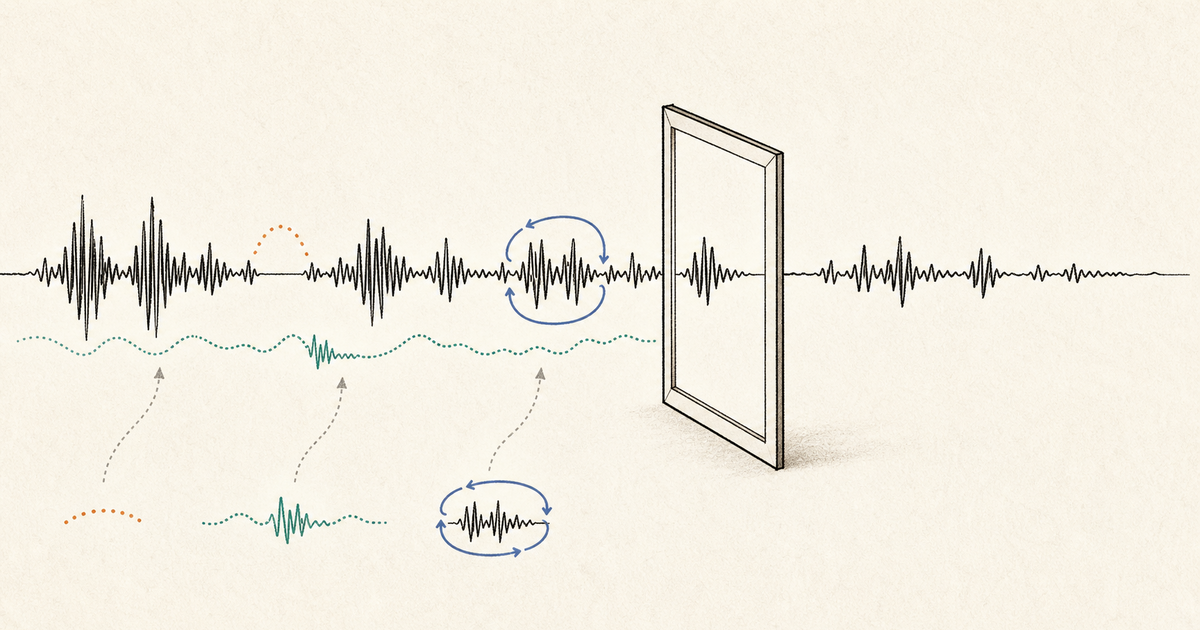
An AI journal summary leaves things out because omission is the job. The risk appears when compression removes the qualifier that changed the meaning, promotes one theme over a quieter one, or adds a connection that the source never made.
Use a summary as an index into the entry, not as a replacement for it. Important claims should point back to exact words or timestamps, and the original transcript or audio should remain available according to your storage preferences.
Fluency can hide a source error
An abstractive summary rewrites ideas rather than only copying sentences. That produces clean prose, but it also creates opportunities for unsupported details.
In a large human evaluation, researchers found that neural summaries could contain substantial content unfaithful to the source. Systems and model versions differ, but factual consistency remains an active research problem. A fine-grained study of dialogue summarization errors identified problems involving negation, who did what, and specific details.
Journal entries are dialogue-like even when one person is speaking. They contain restarts, corrections, implied references, and turns in thought. A polished paragraph can conceal how much interpretation was needed to produce it.
The five details a clean summary tends to flatten
Uncertainty
“I think I was angry, but I may have been embarrassed” can become “I was angry.” The summary is shorter and more certain than the source.
Self-correction
“I want to quit, no, I want the workload to change” contains a meaningful repair. Removing the first phrase loses the path that produced the second.
Chronology
An entry may jump between Monday’s argument, today’s message, and a memory from last year. A summary can make them sound like one sequence.
The minority thread
You may spend eight minutes discussing work and forty seconds admitting that you miss someone. The shorter thread can matter more even though it loses the word-count election.
Negative evidence
What you did not say matters. If the source never names a motive, relationship pattern, or diagnosis, the summary should not supply one.
These are also reasons to question AI claims about emotion in voice. A neat label can remove uncertainty that belongs in the result.
Make the summary point back to evidence
A trustworthy journal summary should be inspectable. Ask it to include:
- one source quote or timestamp for each major theme
- a separate list of unresolved questions
- the strongest self-correction or change of mind
- any statement containing “maybe,” “I think,” or “I do not know”
- alternative interpretations when causality is unclear
Then test the summary with one adversarial prompt:
“Which sentence in this summary is least directly supported by my entry?”
This is a better use of an AI journal that can challenge your framing than asking it to make the story more insightful.
Summary, transcript, and audio do different jobs
| Layer | Best use | Main failure mode |
|---|---|---|
| Summary | Fast review and pattern scanning | Omission and over-smoothing |
| Transcript | Search, quotes, and close reading | Loses some acoustic context and may contain transcription errors |
| Audio | Pace, pauses, emphasis, and original delivery | Slow to scan and more sensitive to store |
No layer deserves automatic authority. The useful setup lets you move from a pattern to the relevant entry, then to the source detail when needed.
That is why searchable journal entries matter. Search should retrieve the evidence, not only a model’s compressed memory of it. It is also why open exports give a journal an exit plan: your source material should not disappear behind a proprietary summary.
Audit one week in ten minutes
Choose three entries with AI summaries and run this check:
- Underline every claim about cause, intent, or emotion.
- Find the source phrase supporting each claim.
- Restore any uncertainty the summary removed.
- Add one omitted thread that still feels important.
- Correct the summary instead of rewriting the original entry.
The point is not to reject compression. Without summaries, a long-running journal becomes hard to navigate. The point is to keep the ladder back down to the source.
A useful summary saves time while preserving your ability to disagree with it.
Questions people ask
Are AI journal summaries accurate?
They can capture the main thread, but accuracy varies. A summary may omit qualifiers, merge events, or add an unsupported connection, so important claims should link back to the source entry.
What information is most likely to disappear in a summary?
Uncertainty, self-corrections, exceptions, chronology, and smaller themes are vulnerable because a short summary rewards a clean main story.
How do I verify an AI-generated journal summary?
Ask for source quotes or timestamps, check every causal claim, preserve unresolved questions, and compare the summary with the original transcript or audio.