Why Can't I Find the Word I Know?
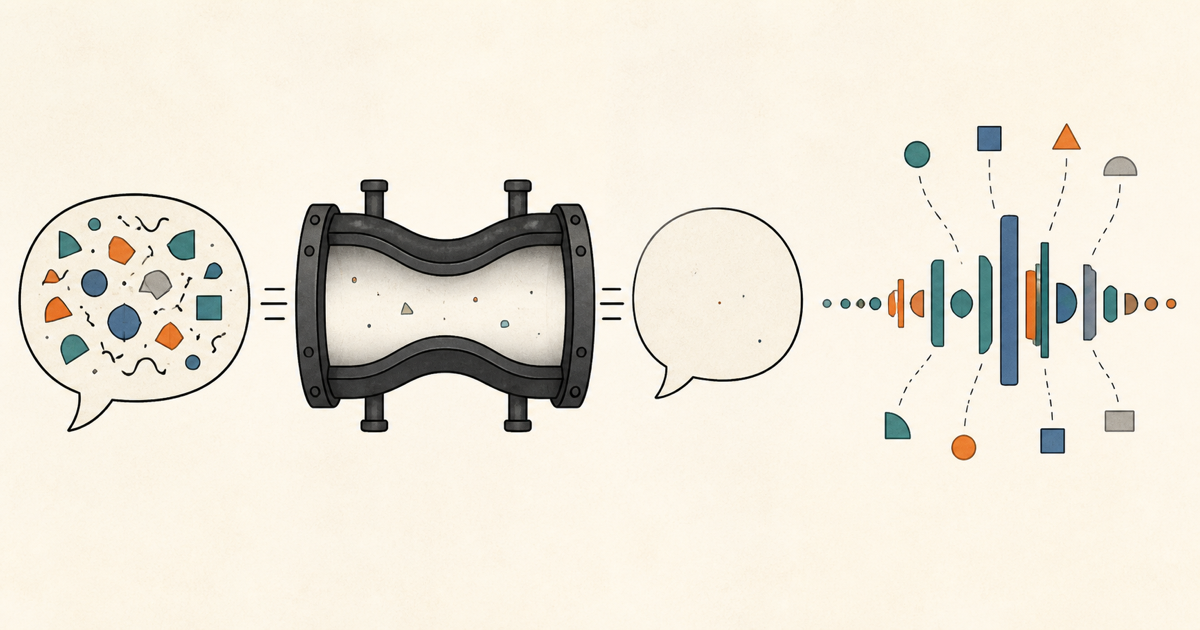
A tip-of-the-tongue state gives you part of a word without enough sound information to say it. Specific cues work better than forcing recall.
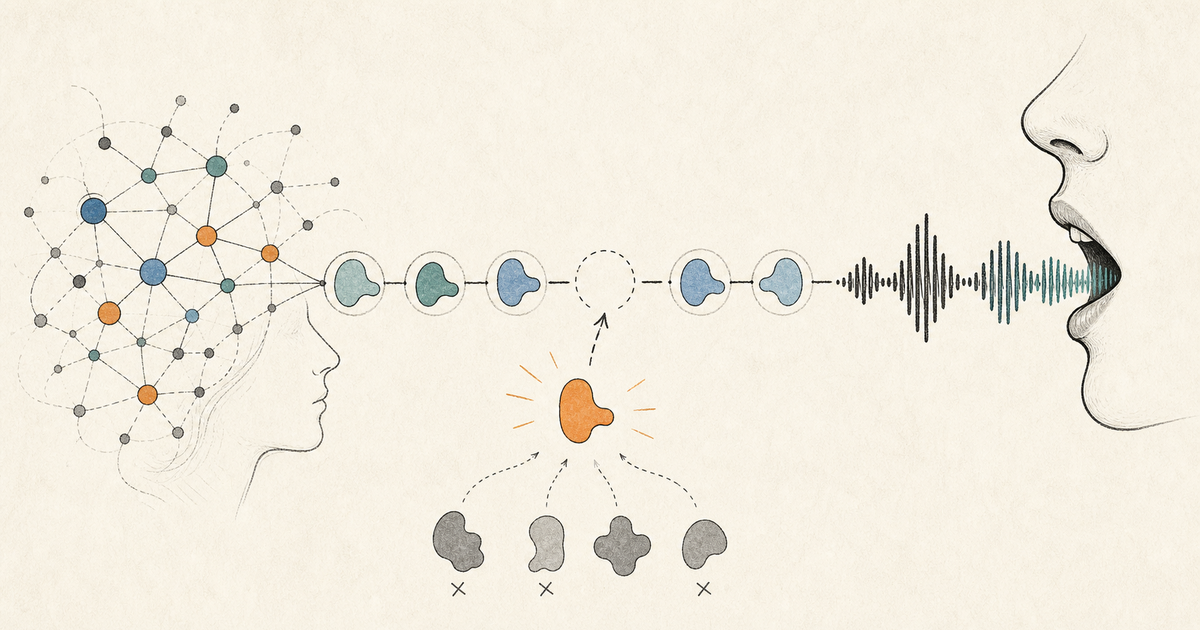
You can know a word’s meaning, shape, or first sound and still fail to say it because word retrieval has several stages. In a tip-of-the-tongue state, the concept is available but the full sound pattern is not active enough for speech.
That strange certainty, “I know this word,” is real information. It does not guarantee that waiting harder will retrieve it. A targeted sound cue can help, while repeatedly grinding through the same failed route can make the problem more likely to recur.
Knowing the meaning is not the same as retrieving the sound
Imagine trying to remember the word “sextant.” You may know it is an old navigation instrument, picture its curved frame, remember that it begins with an S, and still be unable to produce the word.
Tip-of-the-tongue research uses these partial fragments to study lexical access. People can sometimes retrieve grammatical or sound information about a missing word even when they cannot name it. A study with Italian speakers found that participants could report features such as a noun’s grammatical gender and initial sound during some retrieval failures.
The word has not vanished from memory. You simply have uneven access to its parts during that retrieval attempt.
Why the wrong word keeps intruding
A nearby word can become too available. You are looking for “astrolabe,” but “astronomy” keeps appearing. Both share meaning or sound, and the stronger candidate competes for retrieval.
Stress adds another problem. In a tense conversation, you are also tracking the other person and your response. That is why the perfect wording often arrives after the conversation, when the social and working-memory load has dropped.
The late word does not prove you failed to think. It shows that retrieval conditions changed.
Use sound cues, not a larger search party
When a word stalls, try this sequence:
- State the meaning. “It is the tool sailors used to measure angles.”
- Name the category. “Navigation instrument.”
- Collect sound fragments. First sound, number of syllables, rhyme, or stress pattern.
- Generate related sounds. Say a few words with the suspected first syllable.
- Stop after a short attempt. Look it up or leave a placeholder.
The sound cue needs enough structure. In three experiments, first-syllable primes improved tip-of-the-tongue resolution, while first-letter primes did not produce the same benefit.
That explains why “It starts with S” may be useless while hearing “sex-” unlocks the whole word.
Do not rehearse the failure for five minutes
Persistence feels sensible, but the retrieval attempt itself can be learned. Researchers studying repeated tip-of-the-tongue states found evidence that spending longer in a failed state increased the chance of failing on that item again later.
Use a short retrieval window. If focused cues do not work, get the answer and say it aloud in a complete sentence. That gives memory a successful route to practice.
This also fits the broader production effect in learning: producing the recovered word can make it more distinctive than silently glancing at it.
A voice note preserves the search path
Typing often tempts you to stop and find the exact word. Speaking lets you keep the concept moving:
“I cannot remember the term, but it is the feeling that a familiar place is strangely unfamiliar.”
The missing term may arrive later. Even if it does not, the description remains searchable in a transcript. You have preserved the idea instead of letting one unavailable label block the entry.
This is especially useful after an emotional exchange. A private voice note after a hard conversation can capture the meaning first, then let you refine the wording when retrieval is easier.
Let the placeholder do its job
Use a phrase such as “word missing” and continue. Later, search the transcript for that marker, fill in the word, and say the corrected sentence once.
The useful skill is not instant recall under every condition. It is keeping one missing word from taking the rest of the thought hostage.
Questions people ask
Why can I know a word but not say it?
Meaning and sound are retrieved through partly distinct processes. In a tip-of-the-tongue state, you can access the concept and fragments of the word without activating enough of its sound pattern to produce it.
What helps a tip-of-the-tongue word come back?
Describe the meaning, recall related words, and test possible first syllables or sounds. Research finds that a matching first syllable can help more than seeing only the first letter.
Should I keep trying until I remember the word?
Try focused cues briefly, then look it up or move on. Repeatedly practicing the failed retrieval route can make the same word more likely to get stuck again.