Why Do I Need to Hear Myself Say It?
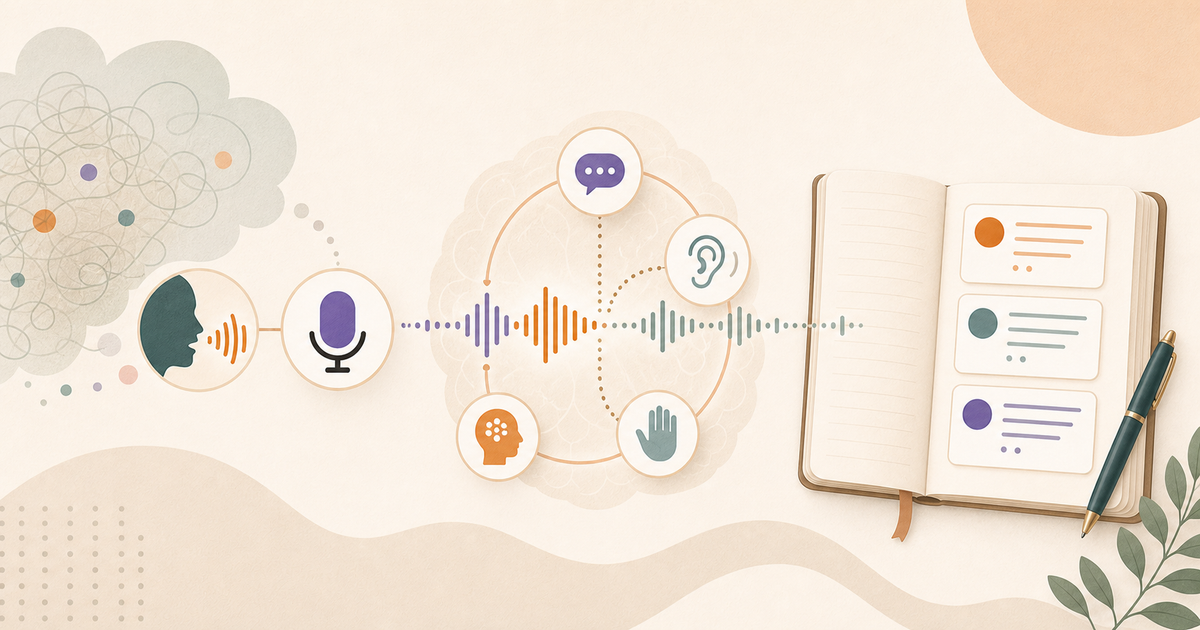
Some people clarify meaning partly through self-heard speech. Hearing your own words can help specify what you meant, not just what you planned.

You may need to hear yourself say it because speech is not always the final output of a fully finished thought. For some people, hearing the sentence back is part of how the thought becomes clear.
That does not mean you had no idea before speaking. It means the idea was still being specified. The spoken version gives your brain another pass at the meaning.
Auditory feedback does more than catch errors
A narrow view of speech monitoring says hearing yourself mainly helps you detect mistakes. A broader view says feedback also helps specify what you meant.
That is the argument behind the self-comprehension hypothesis. In that work, Andreas Lind and colleagues propose that auditory feedback helps speakers monitor meaning at a high level, not only sound-level errors.
In plain English, hearing yourself can contribute to understanding yourself.
That helps explain why a sentence can feel fuzzy in your head and more definite once spoken.
Hearing your own voice shapes agency too
Recent work on hearing one’s own voice and agency suggests that self-voice can influence the sense that “I said this” and help shape conscious judgments about one’s own speech acts.
That does not prove every insight requires audio. It does support a basic idea: self-heard speech is not neutral background noise. It is part of how speech is experienced and evaluated.
This is why some people think mid-sentence
If you have ever said, “I do not know what I think until I hear myself say it,” you are describing a familiar verbal-processing pattern.
That is why what-is-verbal-processing resonates so strongly for some readers. The speaking is not a presentation layer added after thought. It is one of the routes thought uses.
You can hear this process in real time:
- a vague opening
- a sharper phrase halfway through
- a better question near the end
The shift often happens after the speaker hears the sentence and notices what it is missing.
Internal speech and recorded speech are not identical
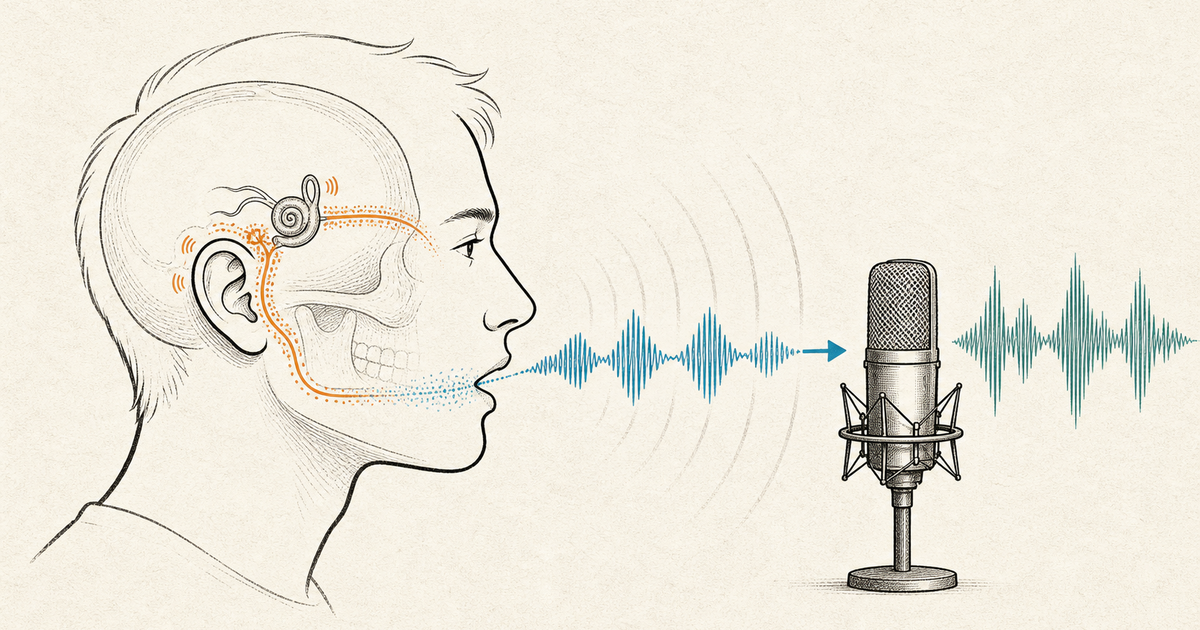
The loop changes depending on what you hear. Real-time self-hearing, silent inner speech, and a later recording each give different information.
That is part of why your recorded voice sounds different. A recording changes the route and the context. It can still be useful, but it is not the same as hearing yourself while the thought is forming.
How to use this without overexplaining
The thinking loop may involve more than hearing. People gesture even when nobody can see them, and meaning-related gestures can support some explanation tasks. Let natural movement happen without assuming it will help every kind of reasoning.
If hearing yourself helps, build around it:
- talk through one question at a time
- stop after the sentence that changes the idea
- note the exact phrase that felt more true
This works best when you are not trying to sound polished. If you perform the answer too early, you may miss the moment where the real point appears.
That is also why short voice notes often work better than elaborate rehearsals. You get enough feedback to clarify the meaning without turning the exercise into performance.
For some people, hearing themselves is not a crutch. It is part of how clarity arrives.
Questions people ask
Why do I understand my thoughts better after I say them out loud?
For some people, spoken feedback is part of how thought gets specified. Hearing the sentence helps reveal whether it actually matches the intended meaning.
Is this the same as verbal processing?
It overlaps. Verbal processors often discover structure while speaking, not only before speaking.
Does hearing myself matter if I already know what I mean?
Sometimes yes. Auditory feedback can expose vagueness, conflict, or missing structure that was hard to detect internally.