Why Does My Recorded Voice Sound So Different?
Your recorded voice removes the bone-conducted sound you normally hear. The unfamiliar result is useful, but it is not the whole experience.
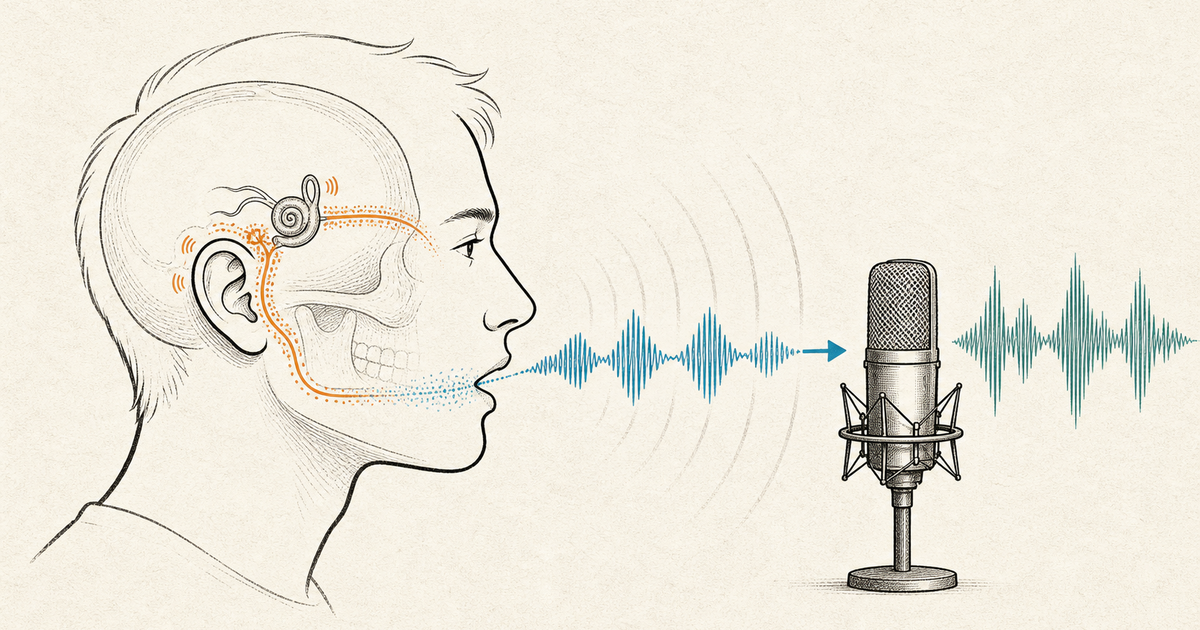
Your recorded voice sounds different because you normally hear yourself through two routes at once. Sound travels through the air to your ears, and vibrations also travel through your head. Playback gives you the air-conducted version without that second route.
That makes a recording unfamiliar, but not perfectly objective. The microphone, room, distance, compression, and playback speaker all color it too. What other people hear is closer to the recording than to the voice inside your head, though no single recording is the definitive version of your voice.
Your voice takes two routes to your ears
When another person speaks, most of the sound reaching you has traveled through the air. When you speak, your own voice also reaches the inner ear through vibrations in the body.
Researchers studying own-voice perception describe this as a combined air and bone-conducted signal. A brain-imaging study of own-voice perception notes that ordinary recordings preserve the air route but omit the bone route. Another study of voice recognition found that adding bone-conducted vibration helped people distinguish their own transformed voice from someone else’s.
The important point is broader than “bone conduction adds bass.” Your familiar voice is a mixed sensory event. Playback changes the mix.
Why the difference feels personal
You have heard your internal version thousands of times. A recording presents a version that is both recognizably yours and outside your prediction.
That mismatch can make ordinary features feel exaggerated:
- a pitch you did not expect
- a regional accent you barely notice while speaking
- pauses that felt shorter in the moment
- breath sounds captured by a close microphone
- sibilance or room echo emphasized by a phone speaker
Dislike is not proof that the recording sounds bad. It often means the sound has not earned the familiarity of the version you hear every day.
This is one reason a first attempt at audio journaling can feel awkward. The discomfort comes from playback, not necessarily from speaking honestly.
Is the recording what everyone else hears?
Roughly, but not exactly.
A person across a table hears your voice in a room. Your phone may record from six inches away, reduce background noise, boost certain frequencies, and play the result through a tiny speaker. Video-call software may add another layer of processing.
Try this comparison:
- Record the same sentence with the phone close to your mouth.
- Record it again from about an arm’s length away.
- Listen once through the phone and once through headphones.
You will hear several different “recorded voices” from one speaker in one minute. That is a useful correction to the belief that one unpleasant memo has exposed a secret true voice.
How to stop cringing at playback
Do not begin by evaluating whether you sound intelligent, attractive, confident, or strange. Those are large judgments with no stable measuring stick.
Listen for one feature at a time:
- Pace: Where do you speed up?
- Clarity: Which words disappear at the ends of sentences?
- Pauses: Where does silence help the idea land?
- Energy: Which topic changes your delivery?
- Content: What did you say that you did not know before speaking?
For a voice journal, content is usually the useful layer. Playback can preserve context, while the transcript makes the entry searchable. You do not need to turn every recording into a performance review.
If you keep audio, make that a deliberate privacy choice. Check how the app handles storage and deletion, just as you would for any AI journal containing sensitive data.
Your voice is not one signal
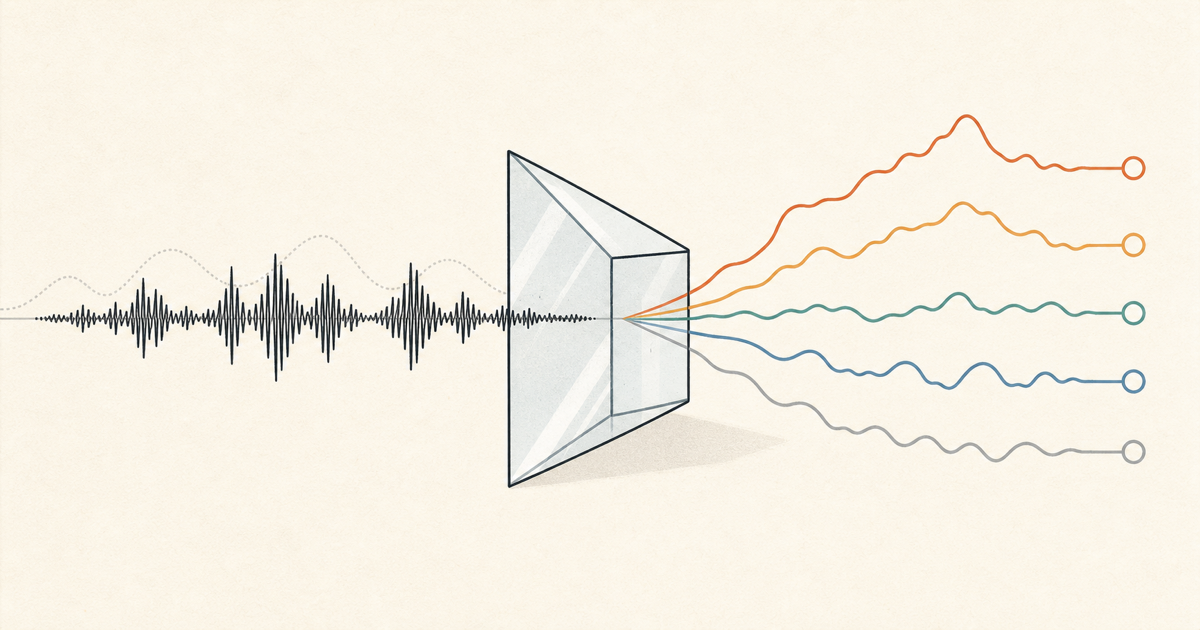
The voice in your head, a phone memo, a studio microphone, and the voice heard across a room are related versions shaped by different transmission paths.
Use recordings as evidence about pace, wording, and patterns. Give your ears time to learn the unfamiliar sound before deciding what it means about you.
Questions people ask
Why does my voice sound higher in recordings?
When you speak, you hear sound through both air and vibrations conducted through your head. A recording plays back only the air-conducted signal, which can make it seem thinner or higher than the voice you expect.
Is my recorded voice how other people hear me?
It is closer to what other people hear than your internal version, but the microphone, room, speaker, distance, and audio processing still change the result.
How can I get used to hearing my recorded voice?
Use short, low-stakes recordings and listen for one concrete feature, such as pace or clarity. Repeated exposure makes the sound more familiar and reduces the urge to judge the whole voice at once.