Why Do Interruptions Make Me Lose My Thought?
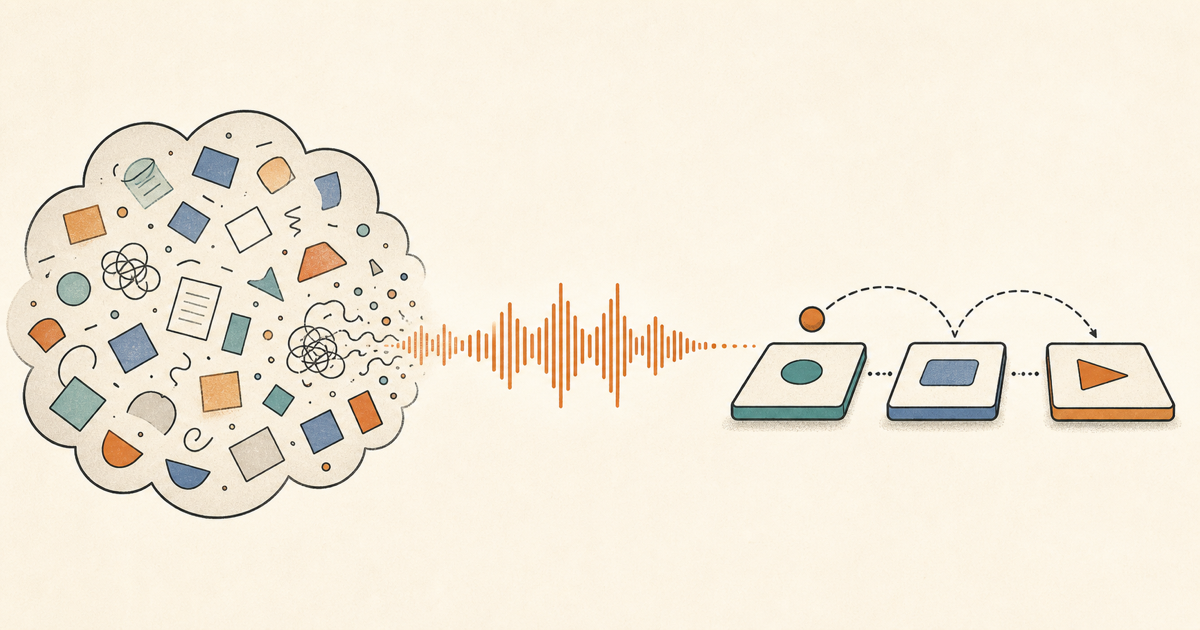
Interruptions pull attention away from the goal you were holding in working memory. A spoken bookmark makes resuming much easier.

Interruptions make you lose your thought because they do more than break your rhythm. They force your attention onto a new task while your original point is still being held in working memory.
That switch costs more than people think. You are not simply pausing a sentence. You are trying to preserve a goal, a structure, and often a specific next word while another demand takes over.
Interruptions and distractions are not the same
A distraction is something you try to ignore. An interruption is something that demands attention.
That distinction matters. A cognitive paradigm developed to study distractions versus interruptions in working memory treats interruptions as attended interfering events, not just background noise. Once you have to engage the new task, your original material becomes harder to maintain.
A later study on task interruption and working memory performance found worse post-interruption performance and stronger disruptive effects as interruptions accumulated.
In everyday conversation, “Wait, one second” can be enough to knock the thought loose.
Your brain has to rebuild the goal
When the interruption ends, your system has to answer several questions quickly:
- What was I doing?
- Where was I in the sentence?
- What was the point?
- What came next?
If that sounds bigger than “I forgot one word,” it is. The problem is often goal reactivation, not simple forgetting.
This is why interruptions can feel worse than ordinary losing your point while speaking. The structure was already interrupted from the outside.
Use a spoken bookmark before switching
The best recovery tool is usually not silent effort. It is a quick external marker.
Say one of these before turning away:
- “My next point is cost.”
- “I was about to explain the deadline.”
- “Come back to the example.”
That tiny bookmark keeps the resumption target concrete.
It works for conversations, meetings, and solo work. The same principle shows up in narrating tasks out loud: a verbal marker reduces the amount your brain has to reconstruct from scratch.
Do not rely on memory alone when the thread matters
An expected interruption can also make you reluctant to begin. If one appointment seems to consume the whole morning, choose a smaller task with a clear stopping point and leave a note about where to resume.
If the point is important, capture it. A fast voice note can hold the exact unfinished thought before the interruption chain gets longer.
This is especially useful for the kinds of fleeting thoughts described in 8 Seconds Before That Idea Disappears. If you know interruptions are part of your day, external capture is not overkill. It is realistic.
The recovery question is simple
After the interruption, do not ask, “What was I saying?”
Ask:
“What was the next thing?”
That question is easier to answer because it points at the unfinished edge, not the whole lost structure.
Interruptions do not only steal time. They steal the active state of a thought. A bookmark helps you rebuild less of it.
Questions people ask
Why do I forget what I was saying after someone interrupts me?
An interruption forces attention onto a new task while the original goal is still being held in working memory. That switch makes the old goal harder to reactivate.
Are interruptions different from ordinary distraction?
Yes. Interruptions usually demand a response, which makes them more disruptive than background distraction you can try to ignore.
How can I get my thought back faster?
Leave yourself a spoken bookmark such as the next keyword, next step, or unfinished clause before you switch away.