Why Do I Lose My Point When I Speak?
You can lose your point when speech planning outruns working memory. Smaller chunks and verbal placeholders help you keep the thread.

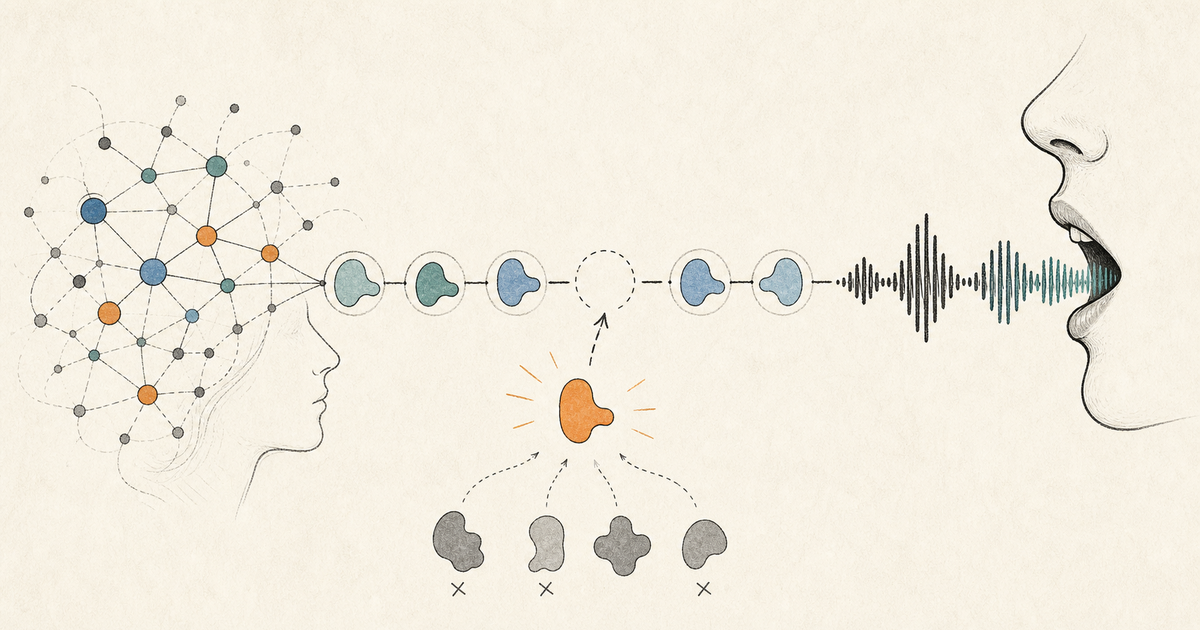
You can lose your point while speaking because speech is not just talking. It is message planning, word retrieval, monitoring, and social attention happening at the same time. When working memory is carrying too many pieces at once, the main thread is the part most likely to drop.
That is why this often happens when you are excited, stressed, multitasking, or trying to explain three layers of an idea before finishing the first one. The problem is usually load, not intelligence.
Speaking uses a small temporary workspace
Language production relies on working memory at several stages: holding the message goal, retrieving words, shaping sentence structure, and tracking what has already been said. A systematic review of fMRI studies on language and working memory describes language production as a layered process that depends on working memory from planning through phonological and motor encoding.
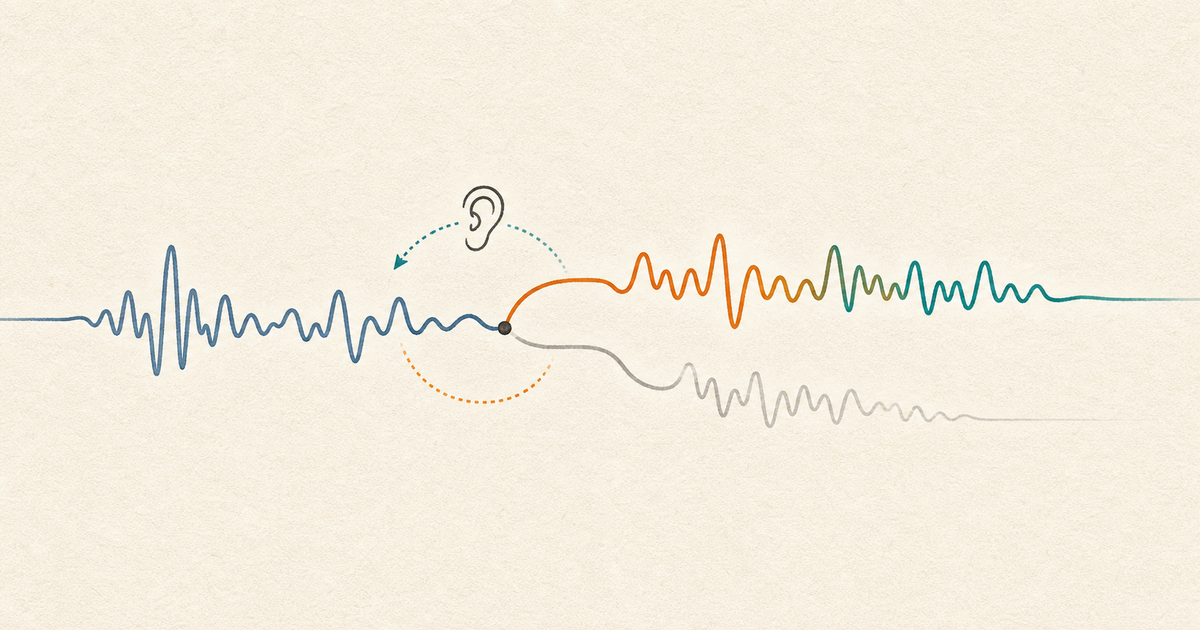
Speech also depends on self-monitoring. Research on auditory feedback and fluent speech production shows that people continuously monitor what they say and adjust in real time. That monitoring is useful, but it also consumes capacity.
If you are holding:
- the main point
- an example
- the exact word you want
- the other person’s reaction
you have built a crowded workspace. The first casualty is often the original point.
Losing the thread is different from not knowing the idea
Many people assume, “If I lose the sentence, I must not know what I mean.”
That does not follow.
Sometimes you know the point perfectly well, but your sentence got ahead of your planning. This is close to what happens in speech self-repair. You begin with one plan, monitoring detects a mismatch, and the structure has to be rebuilt while you are still speaking.
Word retrieval can make the problem worse. If one key term stalls, the entire sentence can wobble. That is part of why tip-of-the-tongue states feel bigger than one missing word.
The fix is usually chunking, not more force
Trying harder often makes the load worse. A better move is to reduce what working memory has to hold at once.
Use this pattern:
- Say the point in one short line.
- Name the next part before expanding it.
- Add one example.
Example:
“The main issue is timing. The second part is cost. The example is what happened last Thursday.”
That structure keeps the thread alive in public.
Use verbal placeholders on purpose
When you feel the sentence slipping, do not fill the gap with panic. Buy yourself a second with a useful placeholder:
- “The main point is…”
- “Let me say this simply…”
- “The word I want is not coming, but the idea is…”
Placeholders keep the goal active. They also work better than going silent and hoping the thought returns instantly.
If this happens often after interruptions, the interruption may be the real issue. That pattern is different enough to deserve its own fix in Why Do Interruptions Make Me Lose My Thought?.
Voice notes make the dropped thread visible
A short voice note helps because you can hear exactly where the point vanished. Did it happen when you added too many qualifiers? When you chased the perfect word? When you reacted to an imagined listener?
That makes this a good companion exercise to science-of-speaking-your-thoughts. You are not just capturing content. You are watching how the idea survives or falls apart in motion.
The practical goal is not flawless speech. It is keeping the main point intact long enough to finish it.
Questions people ask
Why do I forget what I was saying while I am talking?
Speaking uses working memory to hold the main point, the current phrase, and what comes next. When that load gets too high, the thread drops.
Does losing my point mean something is wrong with my memory?
Not usually. It often reflects temporary overload, distraction, stress, or trying to carry too many sub-points at once.
How can I keep my train of thought while speaking?
Use shorter idea units, say a placeholder out loud when you need a second, and name the next point before expanding it.