Voice-First AI vs Chat AI: What Actually Differs
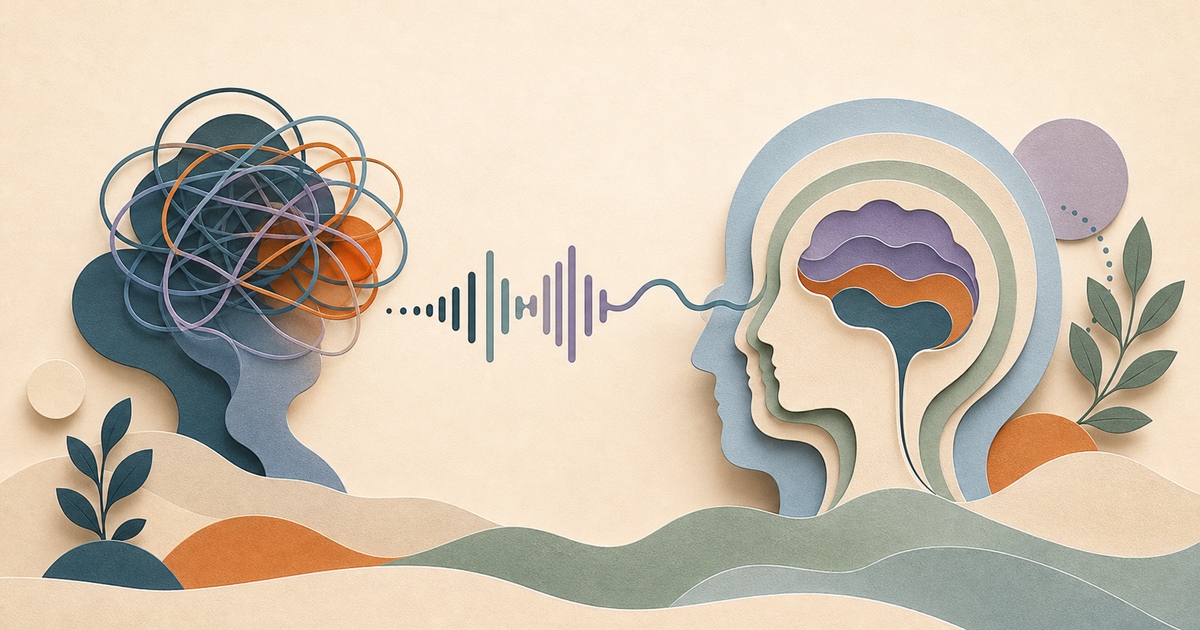
Chat AI is a conversation you type into. Voice-first AI starts with you talking freely and structures it after. Here's what that changes for reflection.
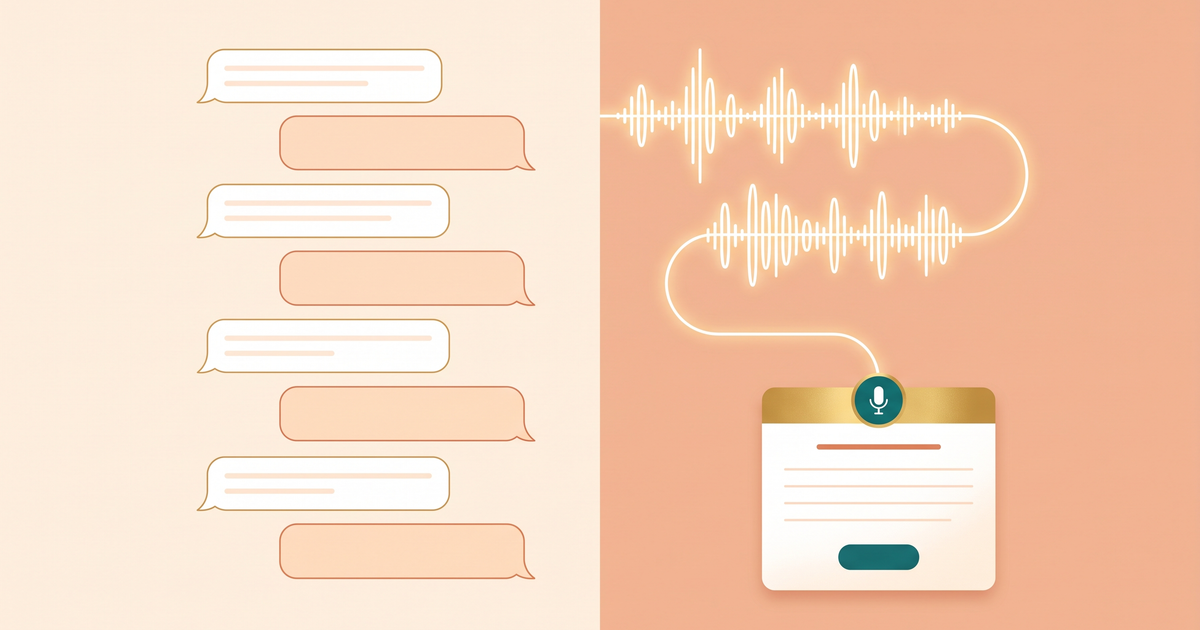
ChatGPT, Claude, and similar tools changed how people use AI. You type a question, get a thoughtful reply, and keep going, turn by turn.
That pattern is great for a lot of things. But when the goal is sorting out your own head, working through a feeling, or noticing what keeps coming up week after week, the interaction pattern matters as much as the model behind it. Voice-first AI for self-reflection changes two things: how your thoughts get in (you talk, freely, for as long as you need) and when the AI responds (after you stop, not in the middle).
Both approaches read your words. The difference is in how those words get produced, and what happens to them next.
What Chat-Based AI Does Well
Chat is built around a back-and-forth. You write something, the AI answers, you respond to the answer. That structure is a real strength when:
- You have a specific problem and want it broken down step by step
- You want to be pushed back on, questioned, or offered alternatives
- You need written output at the end (an email, a plan, a summary)
- You’re gathering and synthesizing information
Even for emotional topics, chat can help you think when the job is mostly cognitive: weighing a decision, mapping out options, getting perspective. If you write “I’m feeling overwhelmed,” a good model engages with that sentence thoughtfully.
The limitation is that the conversation shape steers you. Each turn is a reply to the AI’s last message, so you end up answering its questions instead of following your own thread. And because you’re typing, you’re also editing.
What Voice-First AI Does Differently
You talk first, and the structure arrives after
In a voice-first tool the recording is the entry. You press record and talk about the day, the argument, the thing you can’t stop replaying, and you keep going until you’re done. Nobody replies mid-thought. Nobody asks a follow-up question that pulls you off track. When you stop, the AI turns what you said into a title, a summary, a mood, the themes, and a short reflection.
That order matters. In chat, structure is imposed as you go, one prompt at a time. In voice-first journaling, structure is applied to a complete thought after the fact. You get to be messy first and organized second.
Speaking is faster than typing
A Stanford study found speech input was about three times faster than typing on a phone, with fewer errors. For a brain dump that translates to more of what’s actually in your head making it out. Ten minutes of talking is a lot of words. Ten minutes of typing on a phone is a few paragraphs, and you’ll have spent half of it fixing typos.
Less self-editing
When you type, you reread the sentence, delete half of it, and make yourself sound more coherent than you feel. Speech moves too fast for that. What comes out is closer to what you’re actually thinking, contradictions and half-finished sentences included. For racing thoughts in particular, the gap between typing speed and thinking speed is the whole problem, and voice closes most of it.
Naming feelings out loud
There’s a specific benefit to saying a feeling rather than typing it. Affect labeling research shows that putting an emotion into words dampens the amygdala’s response, and it works whether you write the word or say it. A voice journal has you doing this constantly, without trying: “I think I’m mostly angry, actually, not sad” is affect labeling, and it happens naturally when you narrate your day.
Memory across entries
The other real difference shows up over time. A chat conversation is one thread. A voice-first journal is a growing record of dated entries, each with a mood and themes attached. That’s what makes patterns visible: the same worry surfacing every Sunday, a stretch of low days that started around a specific date, a person whose name shows up in every stressed entry. Tools like Lound build an emotional calendar from this, coloring each day by the mood inferred from what you said, and can search or chat across your own history.
What Voice-First AI Reads (and What It Doesn’t)
Worth being precise here, because a lot of writing about “voice AI” blurs it. Researchers are studying whether vocal features like pace, pitch, and pauses carry reliable emotional signal, and some of that work is promising. But it’s a separate field from voice-first journaling as it exists today. Lound, for example, transcribes your recording (via AssemblyAI) and reads the transcript. The mood, themes, and summary come from your words. Nothing analyzes the sound of your voice, there’s no vocal biometric profile, and the audio isn’t kept on its servers after transcription. What you get is closer to a very good listener who takes notes than a machine that reads your tone.
That’s also why the “voice vs text” question for self-reflection comes down to input and interaction, not some hidden layer of acoustic emotion detection. The words are the data. Voice just gets more of them out, with less filtering, and hands them back organized.
When Each One Fits
Reach for chat-based AI when
- You want a dialogue: something to argue with, ask questions of, or refine an idea against
- The output needs to be written (a message, a decision doc, a list)
- You’re somewhere you can’t talk out loud
- The problem is mostly analytical and you already know roughly what you think
Reach for voice-first AI when
- You need to get everything out first and make sense of it later
- You’re processing a feeling more than solving a problem
- Typing would slow you down enough that you’d stop
- You want a record you can look back on: dated entries, moods, and patterns over months, not one long chat thread
Privacy: What to Ask Either Way
Because voice-first tools handle recordings, the questions are slightly different from a chat tool’s. Ask any voice-first service:
- Is the audio stored, or transcribed and discarded?
- Where does transcription happen and who provides it?
- Is anything analyzed from the sound of your voice, or only from the words?
- Is your data used to train models?
- Can you export and permanently delete everything?
A tool that reads only the transcript and doesn’t retain audio has a much smaller privacy surface than one building acoustic profiles. Ask, and expect a clear answer.
Using Both
You don’t have to pick one. A pattern that works for a lot of people:
- Voice in the morning or on the drive home to get the day out of your head, unedited
- Chat when a specific problem emerges and you want to reason through it with something that pushes back
- Voice again at night to close the loop on how it actually went
- Read your own transcripts and moods later, in text, when you want to see the pattern
Match the mode to the job. Talking for externalizing and processing, typing for analysis and output.
The Bottom Line
Chat-based AI is a conversation partner, and a good one when you know what you’re asking. Voice-first AI is a place to think out loud first and get the structure afterwards. Neither reads your mind, and today neither reads your tone; both work from your words. The difference is that voice gets more of those words out of you, faster and less filtered, and a voice journal keeps them somewhere you can see the pattern later.
If your best thinking happens while you’re talking, that’s the modality to start with.