Why You Say 'Um' (And Why Listeners Use It)
A filler can change which object a listener expects you to mention. What speech research says about 'um,' word-finding, and private voice notes.

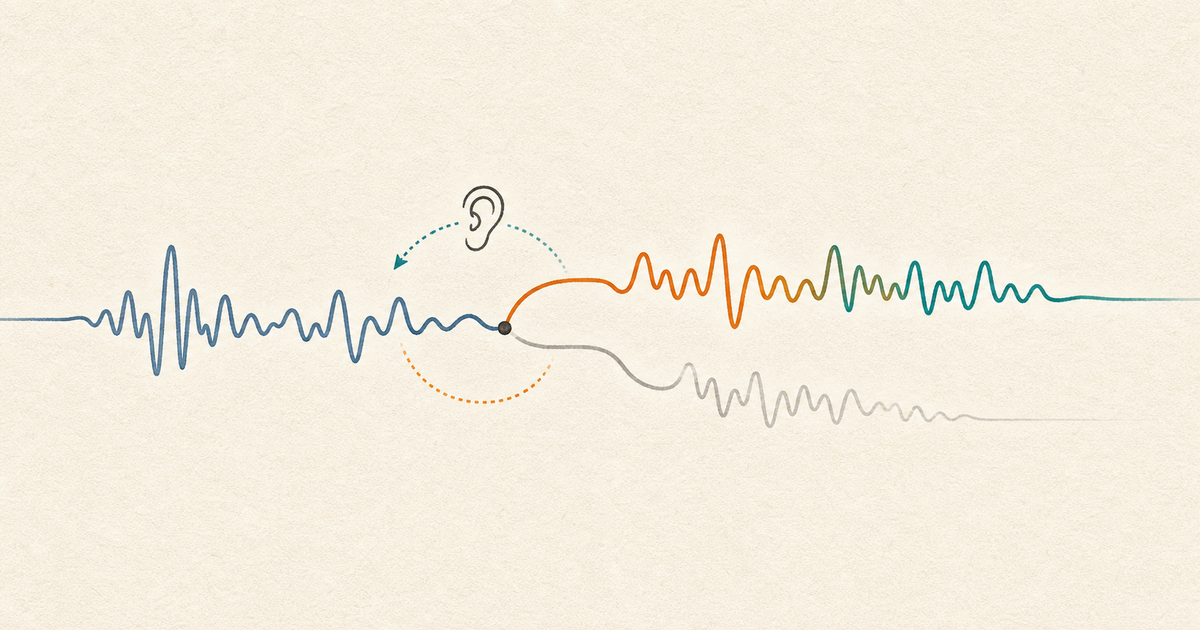
You know what you want to discuss, but halfway through the sentence you say “um.” You might be finding a word, planning the next phrase, or deciding how much detail to include. That pause gives the listener information about the process, even before the next substantive word arrives.
An occasional filler doesn’t establish that you’re confused, dishonest, or bad at thinking. It also doesn’t reveal a hidden truth. Its meaning depends on what is happening in the conversation.
”Um” can announce that a delay is coming
Herbert Clark and Jean Fox Tree examined large collections of spontaneous speech in their paper on using “uh” and “um”. They proposed that speakers use these expressions to announce anticipated delays, for example while searching for a word or deciding what to say next. They also discussed how fillers can help manage whose turn it is to speak.
That proposal treats the sounds as part of communication rather than meaningless material between the important words. It isn’t a universal decoder: you can’t reliably classify someone’s motive by whether they said “uh” or “um.”
For ordinary conversation, a filler may simply keep the turn open while the sentence catches up with the thought.
Listeners use the cue before the noun arrives
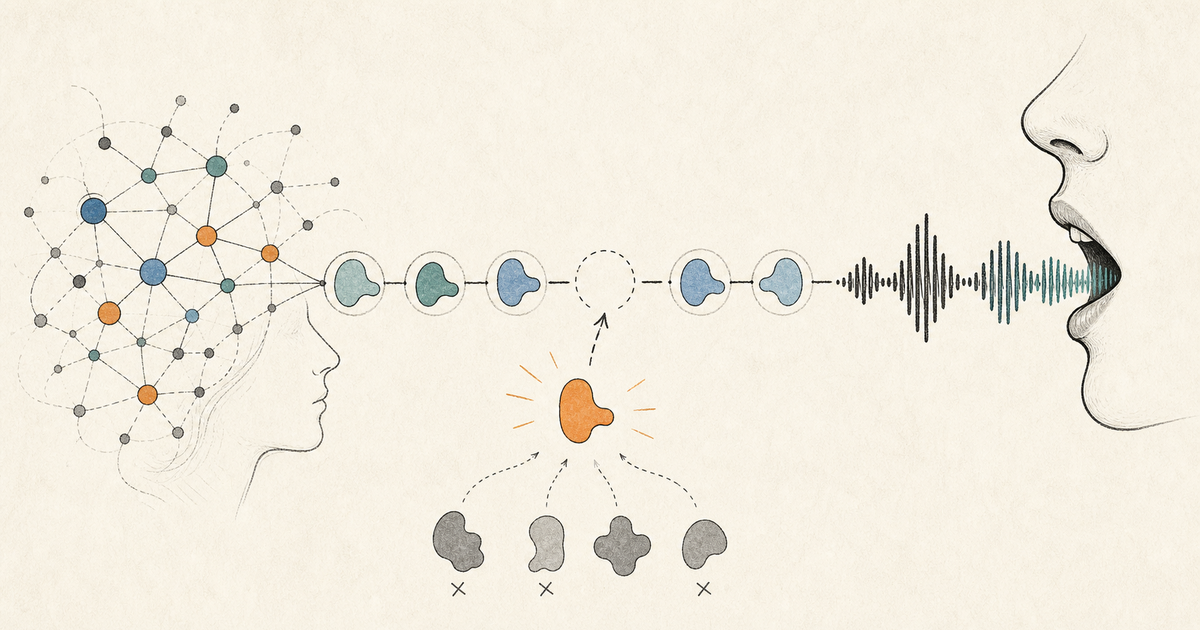
In a 2004 eye-tracking study, Jennifer Arnold and colleagues monitored where listeners looked while following instructions involving objects on a display. A fluent phrase biased them toward an object already mentioned. A disfluent phrase biased them toward an object that hadn’t been mentioned yet.
The filler helped listeners anticipate what kind of reference was coming. They were doing more than politely waiting for the speaker to finish.
A later set of experiments on filled pauses and recall found that fillers could improve memory for spoken material in the tested conditions. This is a finding about particular listening tasks, not advice to insert “um” into a presentation or a claim that every hesitation improves communication.
Decide whether the pause changes the meaning
For a private voice note, the useful distinction is between surface roughness and a meaningful revision. Compare these invented examples:
- I need to, um, call the repair shop
- A readable transcript can say: I need to call the repair shop
- I was angry. Um, more embarrassed than angry
- Keep the correction; angry alone would misrepresent the entry
You don’t need every filler represented in writing, but a transcript or summary should preserve an important change of mind. That is closely related to why you correct yourself while speaking. A filler and a correction can occur together or separately, so check what changed in the sentence rather than counting its pauses.
When searching for a word, describe what you have
If a private note stalls on one missing word, describe the thing instead of repeatedly restarting. “The fee for leaving the contract early” can preserve your meaning while “termination charge” remains out of reach.
You can return to the exact term later if it matters. Knowing a word but being unable to retrieve it is a different problem from having nothing to say. Keeping the description lets the rest of the thought continue.
If you are speaking to another person, “Give me a second to find the word” can make the delay explicit. This is a communication option, not a requirement to apologize for ordinary speech.
If you are on the listening side, be careful about reading rejection into a pause. A break in flow can feel uncomfortable without revealing what the speaker thinks of you.
Keep fluency practice separate from private reflection
A presentation may benefit from rehearsal, shorter sentences, and fewer distracting repetitions. Your personal journal has a different purpose: preserving what you were trying to work out. Restarting an entry every time you hesitate can make that purpose harder to achieve.
On your next recording, let one imperfect sentence finish. Then decide whether you need to clarify a name, uncertainty, or correction. That decision is more useful than counting fillers.
If timing or delivery matters to you, listen to the original recording when available. A transcript and a recording preserve different information; neither a pause nor an AI interpretation of it can tell you, by itself, exactly what you felt. The surrounding words and your own context still matter.
Questions people ask
Why do I say um when I'm thinking?
You may be planning the next phrase, searching for a word, deciding what to say, or holding your turn. The filler alone doesn't identify which process is happening.
Can filler words help listeners?
In controlled studies, listeners used disfluency to anticipate previously unmentioned information. Some experiments also found better recall with filled pauses, but that doesn't mean adding more fillers always helps.
Should I remove every um from a voice journal?
There is no need to make a private recording perfectly fluent. Preserve meaningful corrections and uncertainty; a readable transcript can omit some fillers without changing the thought.